
Frecciarossa Business Class: Is It Worth It? (Seats, Perks, Tickets)
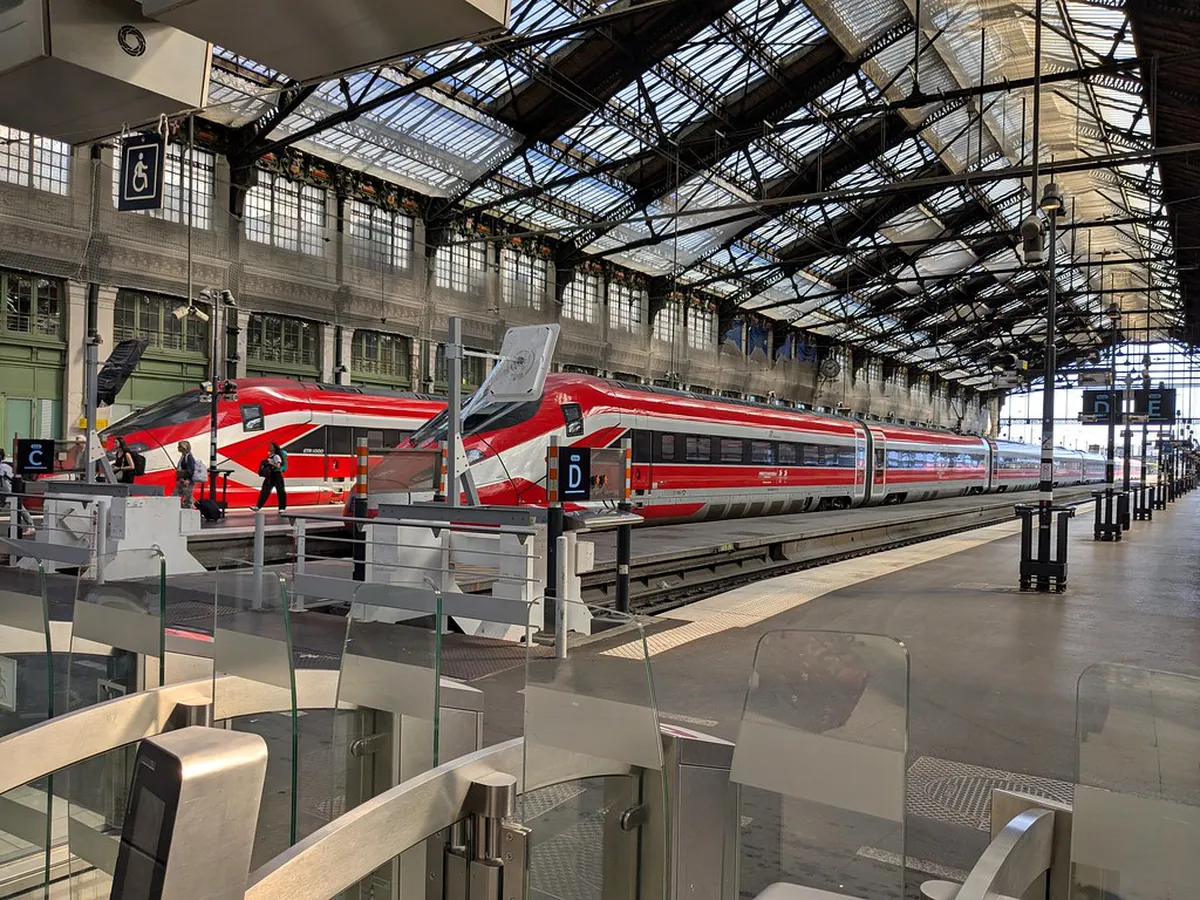
Last updated November 2026: Frecciarossa Business Class is Trenitalia's 1st-class level, with 2+1 seating, a welcome drink and snack box, and more elbow room than Standard or Premium. It suits couples, solo travellers and anyone who wants to work on a leg of 3h or more. Budget travellers can skip it, and our overview of Italian high-speed rail shows where the cheaper classes fit.
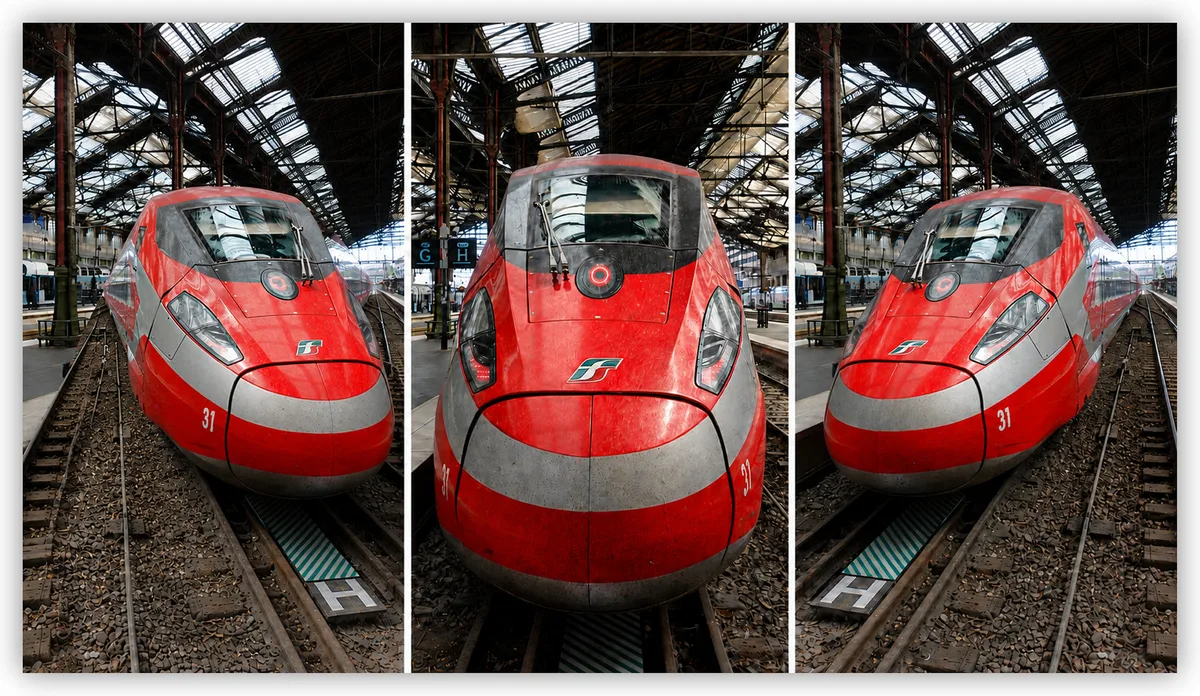
Featured image: marsupilami92, CC BY 4.0, via Flickr.
Frecciarossa Business Class at a glance
Business sits above Standard and Premium and below Executive in Trenitalia's four-level ladder. Seats are arranged 2+1 across the car, against 2+2 in the two 2nd-class levels. Fares include a welcome drink and a snack box. Check the service details on Trenitalia before you book, as onboard services change.
- Class ladder: Standard, Premium, Business and Executive, with Executive sold only on some train types
- Seating: leather seats in 2+1 rows, with face-to-face tables for two on one side of the aisle and tables for four on the other
- Included: welcome drink, snack box, free WiFi and power sockets
- Quiet option: one Business car is set aside as the Area Silenzio
- Speed: up to 300 km/h in service on the Frecciarossa 1000 and 500
- Seat choice: every seat is reserved, but you cannot pick the direction of travel
What you get in Business Class
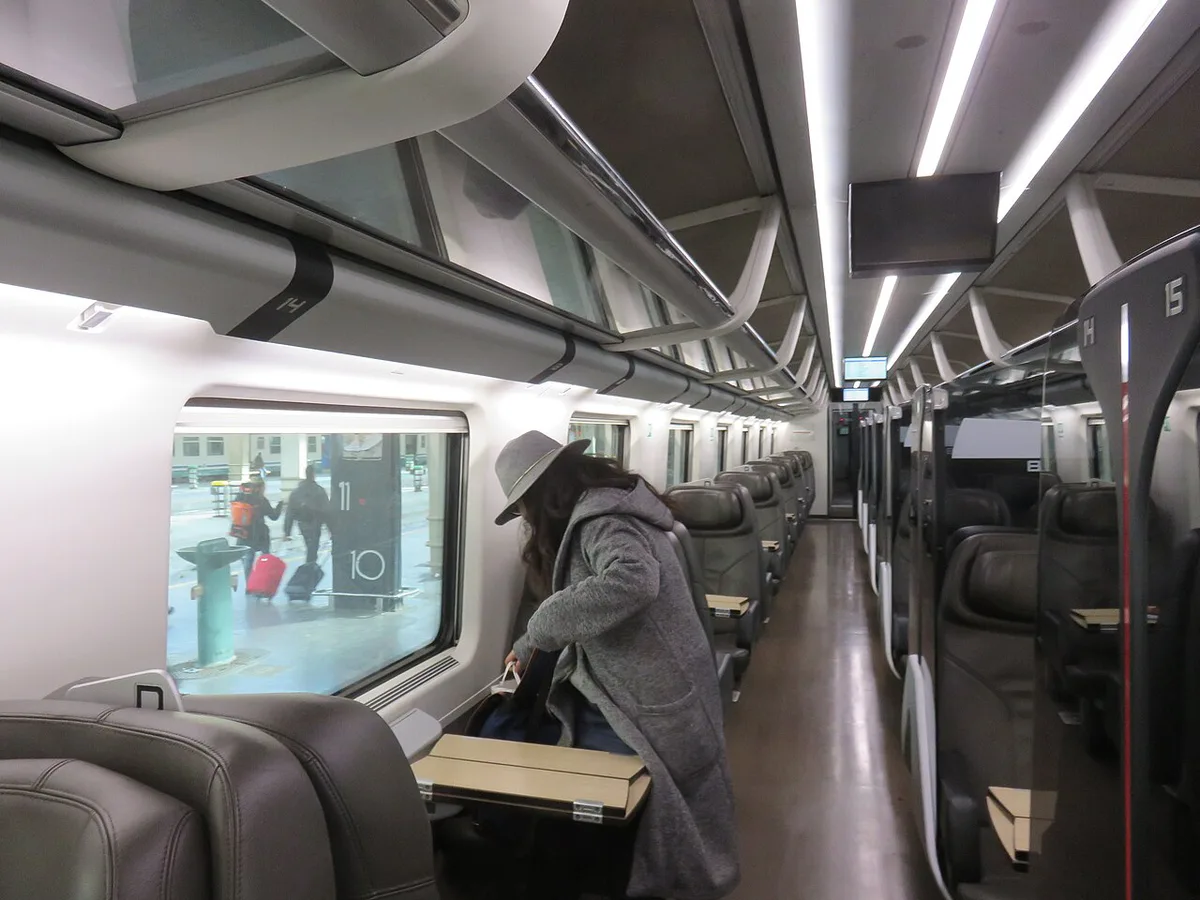
Business seats are leather and roomier than the 2nd-class seats, with noticeably more elbow room. One side of the aisle has single seats and face-to-face tables for two. Tables for four sit across the aisle. Each table for two gives both passengers a window seat that is also an aisle seat, which makes it the natural pick for couples.

Luggage space is generous. Overhead racks take anything up to backpack size, and bags fit between the seat backs. Racks at the end of each car take large suitcases. Nobody weighs or measures bags on Frecciarossa services, so the practical limit is what you can carry.
Power sockets and free WiFi come with every class. WiFi runs through an onboard portal with films, news and travel information. Reliability is mixed on some trains, so download anything essential before departure.
One Business car is designated as the Area Silenzio, where phone calls are discouraged. You choose it at booking by selecting the Silence option. Some travellers dislike the shushing decals on its windows because they restrict the view, which is a matter of taste rather than a rule.
Frecciarossa 500 trains also have two enclosed four-seat salottini in Business. These suit a small group that wants privacy, and a salottino seat costs a little more than a regular Business seat. Frecciarossa 1000, 600 and 700 trains have no salottini.
Business vs Standard, Premium and Executive
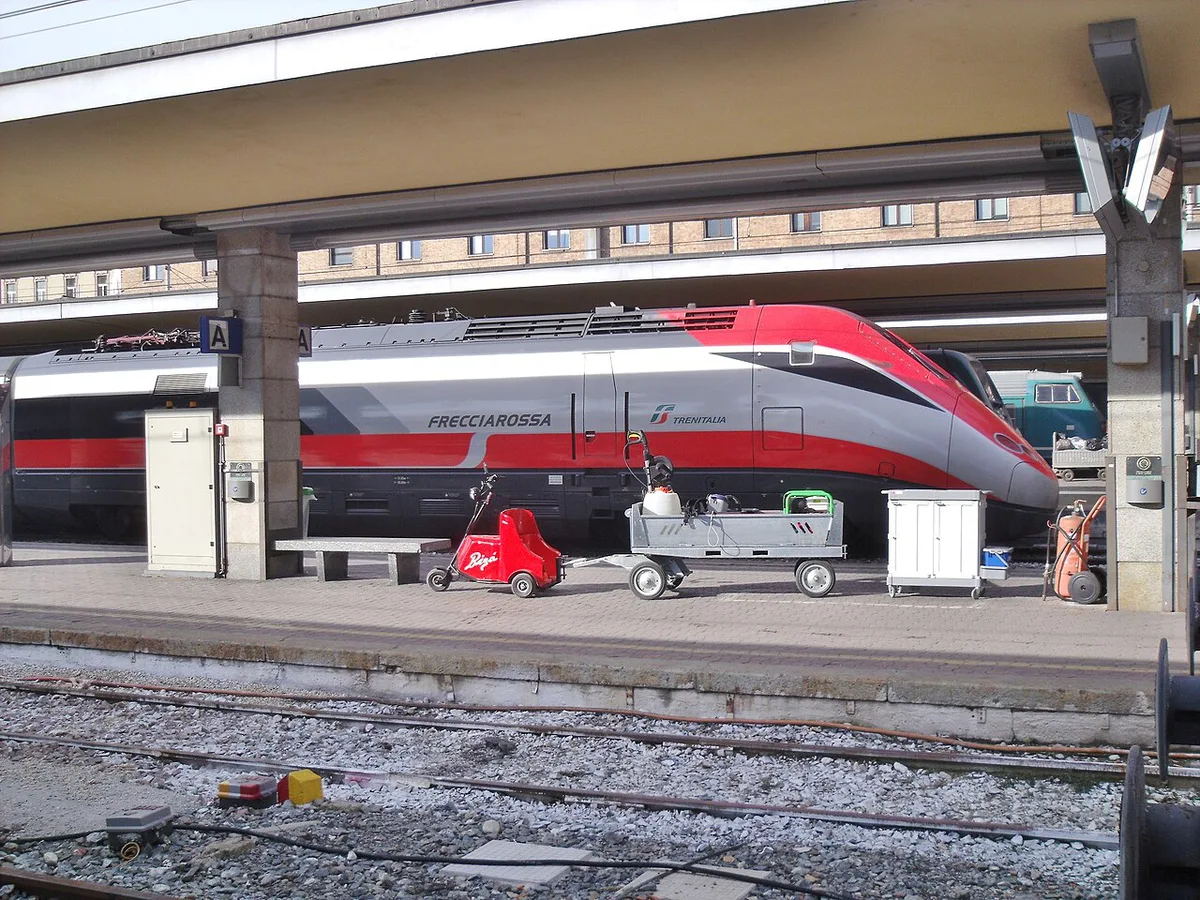
Standard and Premium share the same 2+2 layout and the same leg room. Premium adds leather seats on every train type and a welcome drink. Standard seats are cloth on the Frecciarossa 500 and leather on the 1000, 600 and 700. Business changes the layout itself, which is why it feels different from the two classes below it.
| Class | Seating | Included on board | Best for |
|---|---|---|---|
| Standard | 2+2, cloth on the 500, leather on the 1000, 600 and 700 | Free WiFi and power sockets | Budget travel and short hops |
| Premium | 2+2, leather on all train types | Welcome drink, free WiFi, power sockets | A small upgrade for a modest price gap |
| Business | 2+1, leather, tables for two and four | Welcome drink, snack box, free WiFi, power sockets, Silenzio car option | Couples, solo travellers, long legs, work |
| Executive | Reclining leather armchairs, rotating seats | Dedicated steward, cold tray meal or snack, drinks, Frecciaclub lounge access | Corporate travel or a one-off treat |
- Executive is the top tier, with a small number of rotating armchairs, and it exists only on the Frecciarossa 1000 and 500.
- Executive passengers can use Frecciaclub lounges at major stations for up to 3h before departure.
- Executive also includes a meeting room on some trains, so check the train type before assuming it is available.
Is Frecciarossa Business Class worth it? A decision guide
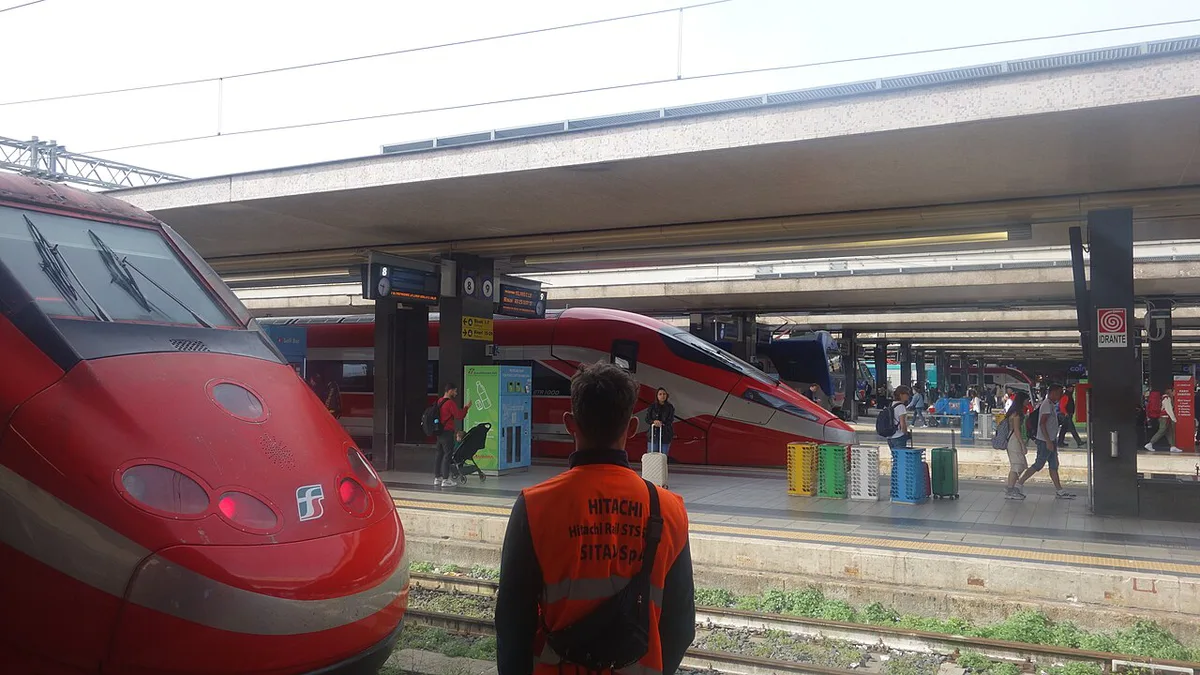
Business pays off when the extra space changes how the journey feels. It matters less on a short hop or when the fare gap is large. Compare Business and Standard on the same departure before deciding. Price depends on route, time, advance purchase and fare type, so no single upgrade figure applies.
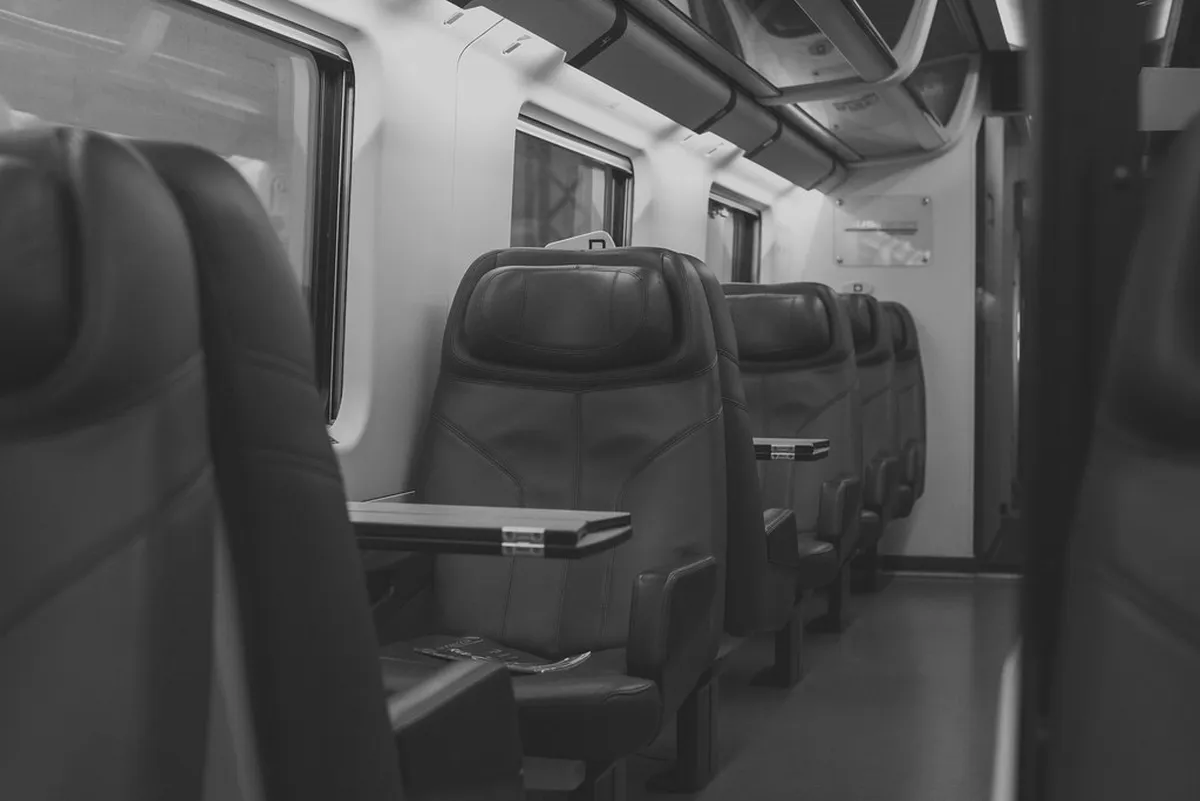
- Worth it if you are a couple: the face-to-face table for two gives you both a window and an aisle.
- Worth it if you travel solo and want a single seat with nobody beside you.
- Worth it if you need to work for 3h or more, especially in the Area Silenzio car.
- Worth it if you carry a large suitcase and want generous space between and around the seats.
- Worth it if the fare gap is small on your departure. In our editorial assessment, a small gap makes Business an easy choice.
- Skip it if you are on a tight budget, because Standard and Premium are comfortable enough.
- Skip it on a short leg such as Rome to Florence, which takes as little as 1h23.
- Skip it if your family wants a table for four, since Standard and Premium also have bays of four around a table.
Mistakes to avoid with Business tickets
Most Business disappointments come from assumptions about the train rather than the class. A few checks at booking prevent them.
Rome to Florence takes as little as 1h23, and trains reverse at Rome and Florence, so even a short leg can leave you facing backwards.
- Assuming every train has every class: the 600 and 700 have no Executive, and salottini exist only on the 500.
- Choosing a seat for the view ahead: trains reverse direction at Milan, Florence, Rome and Naples, so a forward-facing seat can end up facing backwards.
- Skipping the fare comparison: check Business against Premium and Standard on the same departure.
- Forgetting that rail pass holders must reserve before boarding.
- Counting on the snack box on a Saturday, when one report says it is not served.
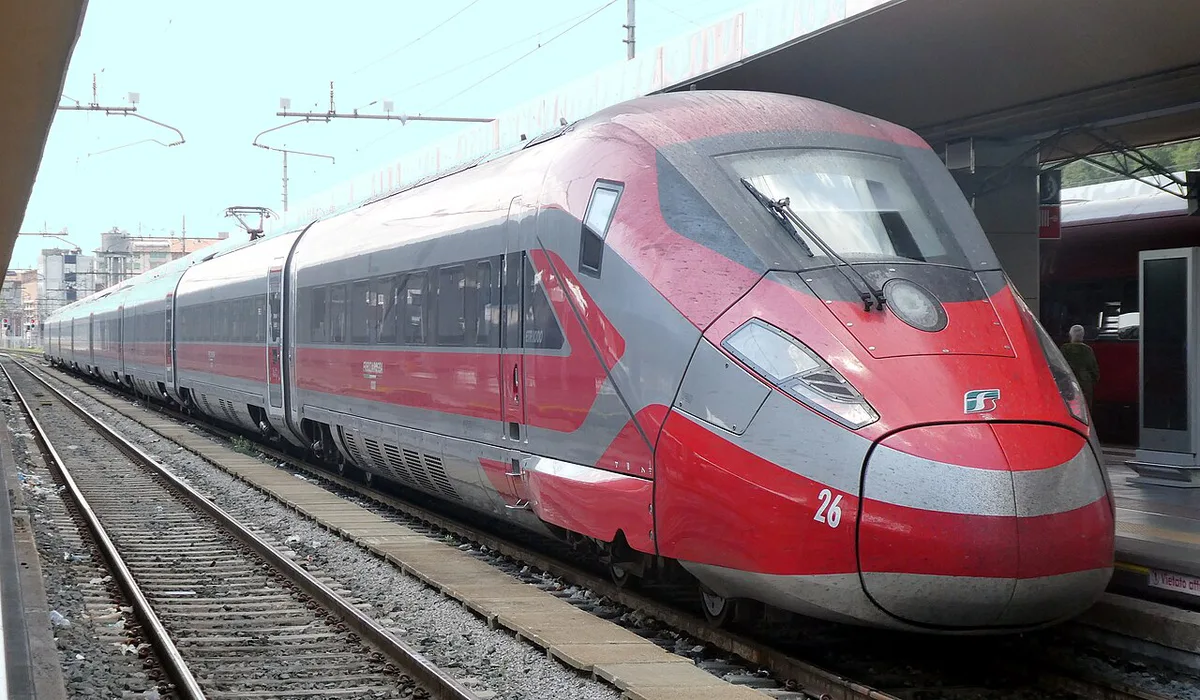
Which Frecciarossa train will you be on?
Four train types carry the Frecciarossa name, and features differ between them. Class and car mix are not guaranteed on every departure. To check, search on Trenitalia's website and read the train name above the departure time. If it says only Frecciarossa, click the 'i' icon beside the details and look for ETR 500, 600 or 700 in the description.
- Frecciarossa 1000: Trenitalia's flagship since 2015, with 4 classes, a cafe-bar and service at up to 300 km/h on the Turin, Milan, Bologna, Florence, Rome and Naples line.
- Frecciarossa 500: the workhorse, also with 4 classes, and the only type with Business salottini. It also serves Milan, Ancona, Bari and Brindisi.
- Frecciarossa 600: formerly branded Frecciargento, with 3 classes, no Executive and a top speed of 250 km/h.
- Frecciarossa 700: 3 classes, no Executive and 250 km/h, running mainly on Turin, Milan, Verona and Venice plus the direct Rome to Trieste service.
Food and drink on board
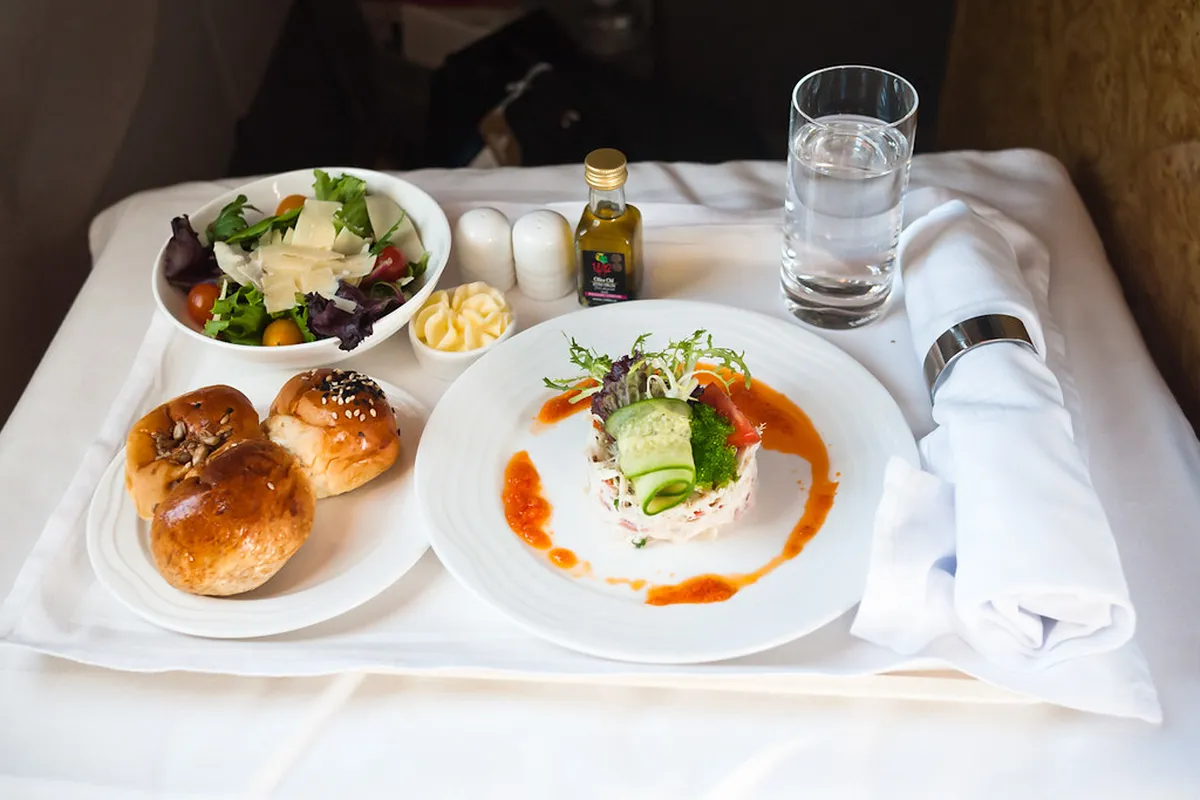
Business fares include a welcome drink of coffee, juice, a soft drink or prosecco, plus a snack box. One morning box held a small filled roll, an orange juice and a packet of nuts, and contents vary with the time of day. Trenitalia's own pages are the final word on current contents. One report says the snack is not served on Saturdays, so do not rely on it for breakfast that day.
Every Frecciarossa has a cafe-bar open to all passengers. It sells coffee, tea, wine, beer, sandwiches, salads and light meals, and extra items are paid for. Queues can build at the counter, and you may bring your own picnic. Executive passengers get at-seat catering with a cold tray meal, so Business gets a snack where Executive gets a meal.
How to buy Frecciarossa Business tickets
Start a search on Trenitalia's website or app, or on a third-party seller such as Trainline or ItaliaRail. Pick a Frecciarossa departure, choose 1st class, then select Business under comfort options. All Frecciarossa seats are reserved, so a seat comes with the ticket. Choosing a specific seat from the seat map may cost a small extra fee, and the map does not show which way seats face.
Fare families include Base, Economy, Super Economy and Speciale Frecce. Cheaper fares sell out first on busy departures. Business costs more than Standard on the same train, but the gap varies by route, time and how early you buy. Trenitalia's booking page shows both prices side by side.
Business customers can make last-minute changes at the FrecciaDesk near the platforms at major stations. Children under 4 travel free without their own seat, and children aged 4 to 15 pay a reduced fare.
Interrail and Eurail pass holders must reserve every Frecciarossa journey, and a reservation fee applies. A first-class pass is seated in Business. Read the current fee on the Trenitalia or Interrail pages before you plan your budget.
On the platform, the departures board shows whether Executive and Business cars are at the front (in testa) or the rear (in coda). Indicator screens above the platform then show where each car stops.
Business class on popular Frecciarossa routes
Journey times from Milan to Rome start at 2h55, Rome to Florence at 1h23 and Rome to Venice at 3h45. Business matters most on the legs of 3h or more, and less on the Rome to Florence hop. That is a judgement call rather than a rule, so weigh it against the fare gap on your date.
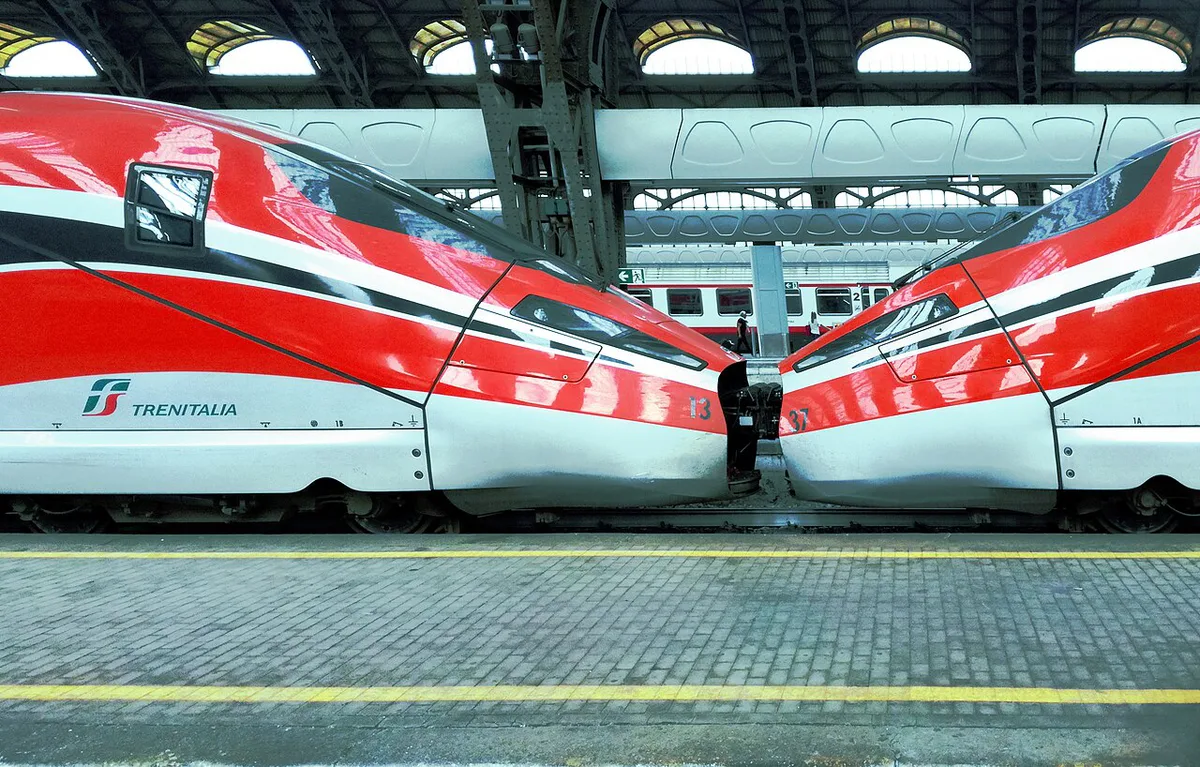
Milan to Rome starts at 2h55, just under the 3h benchmark for working on a train, so check your exact departure time.
- Rome to Florence: the short leg, so Standard or Premium usually do the job. See Rome to Florence by train.
- Rome to Naples: served by Frecciarossa 1000 and 500 trains, so Business is available on this corridor. See Rome to Naples by train.
- Milan to Rome: the clearest case for Business if you want to work for close to 3h. See Milan to Rome by train.
- Rome to Venice: at 3h45, a good fit for couples wanting a table for two. See Rome to Venice by train.
- Milan to Venice: Frecciarossa 500 and 700 trains run here, and both have Business. See Milan to Venice by train.
- Florence to Venice: Frecciarossa 1000 and 500 trains serve it, plus a few 600s. See Florence to Venice by train.
- Milan to Florence: sits on the main Turin to Naples line served by the 1000 and 500. See Milan to Florence by train.
- Bologna to Florence: a short hop where Business is rarely needed. See Bologna to Florence by train.
- Milan to Verona: part of the Turin to Venice route run by the 500 and 700. See Milan to Verona by train.
Frecciarossa Business vs Italo
Italo's 1st-class level is Prima, and Italo's official fares and services are described on its own site. Frecciarossa has a cafe-bar on every train, while Italo offers a drinks and snacks trolley in Prima. Frecciarossa Business uses tables that line up with the windows, whereas Italo seating is mostly unidirectional. Children under 4 travel free on Frecciarossa, against under 3 on Italo.
For a full comparison, read our guide to how the two operators compare. Our profile of Italo's trains and classes covers the alternative in more detail.
Practical questions before you travel
Sockets differ by train type. Trenitalia's standard outlet is the rectangular Italian type, and some newer trains also take round two-pin plugs, so pack a compact adapter. Wheelchair spaces are located in a Business coach, and Trenitalia's mobility service handles assistance requests.
Small pets in a carrier travel free, while larger dogs need a ticket. Folding bikes are allowed, and other bikes must be disassembled and bagged. Carrier and bag dimensions are set by Trenitalia, so check them there before packing.
On Paris to Milan, one source reports that Premium seats are sold as Standard without free drinks. Read our Paris to Milan rail guide and confirm what your fare includes before assuming Business perks apply.
Rail notes for your next trip
Optional updates when our rail guides change.
Related guides
More guides
Picked from the same area