
AVE Train in Spain: Routes, Classes, Tickets & Tips
Last updated November 2026. The AVE train is Renfe's high-speed service, and its name stands for Alta Velocidad Española. Services link Madrid with Barcelona, Seville, Valencia, Málaga and other major cities. This guide shows where AVE runs, which class to pick, how to buy tickets and which station to use.
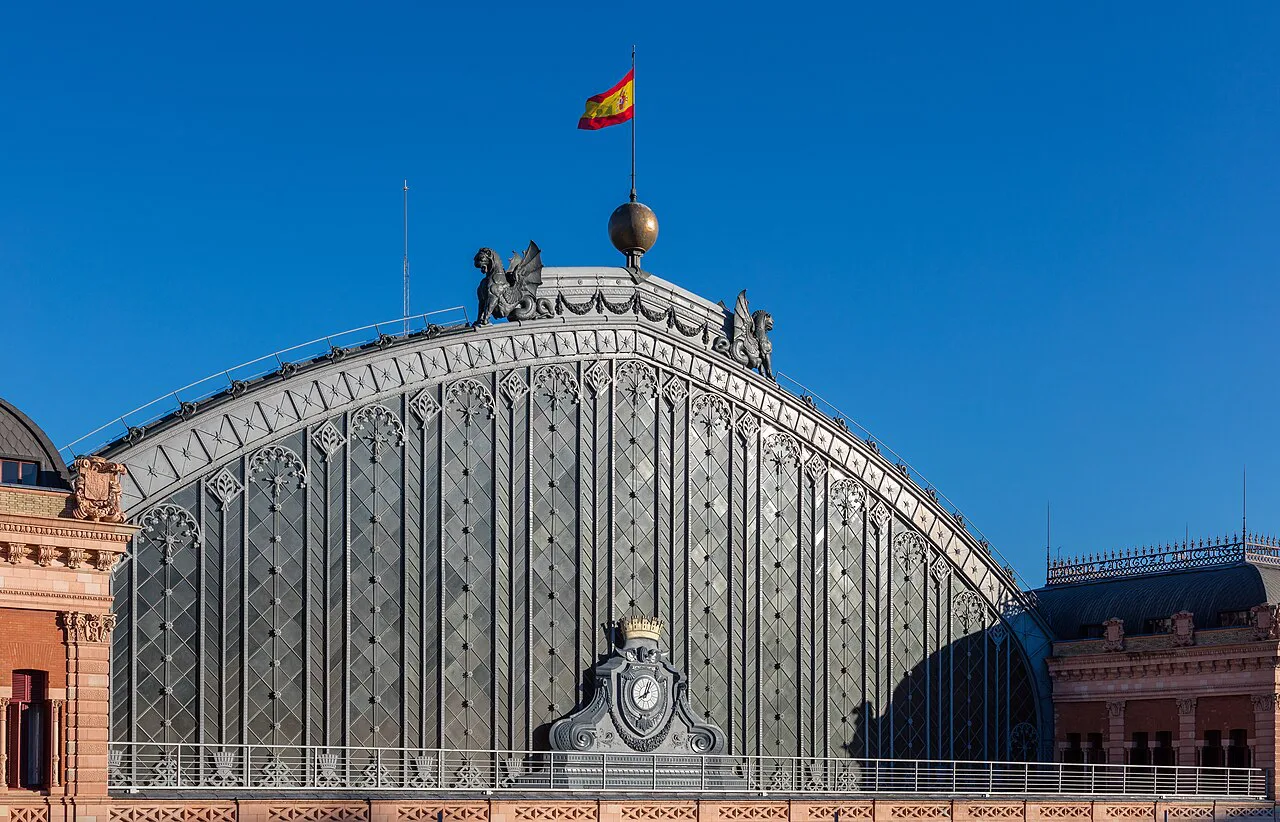
Featured image: Matthew Black, CC BY-SA 2.0, via Flickr.
What the AVE Train Is and How It Differs From Other Services
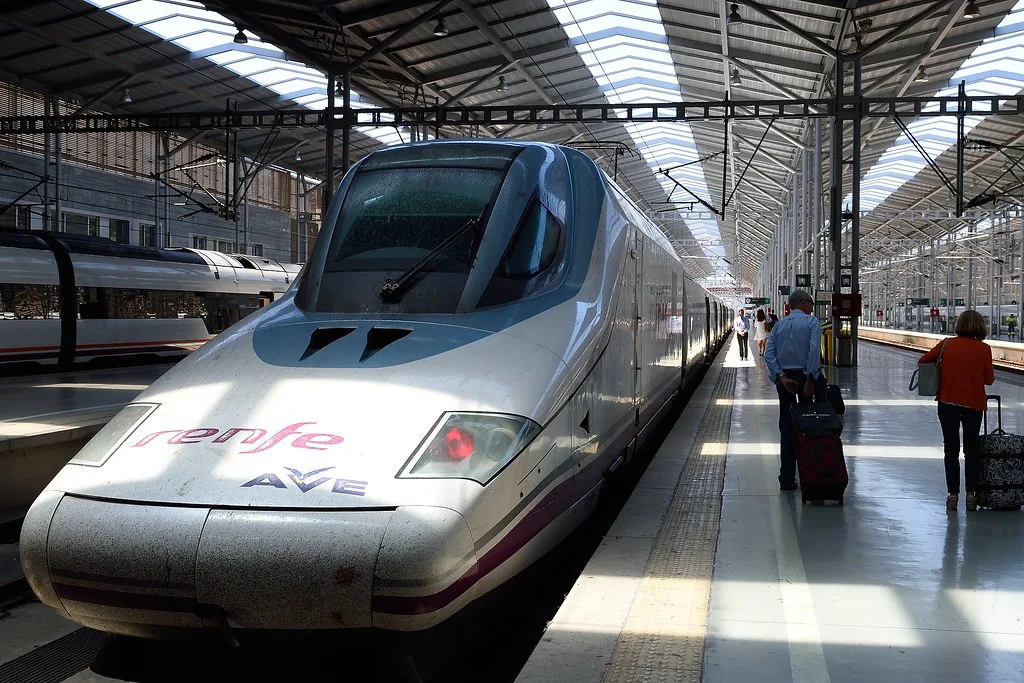
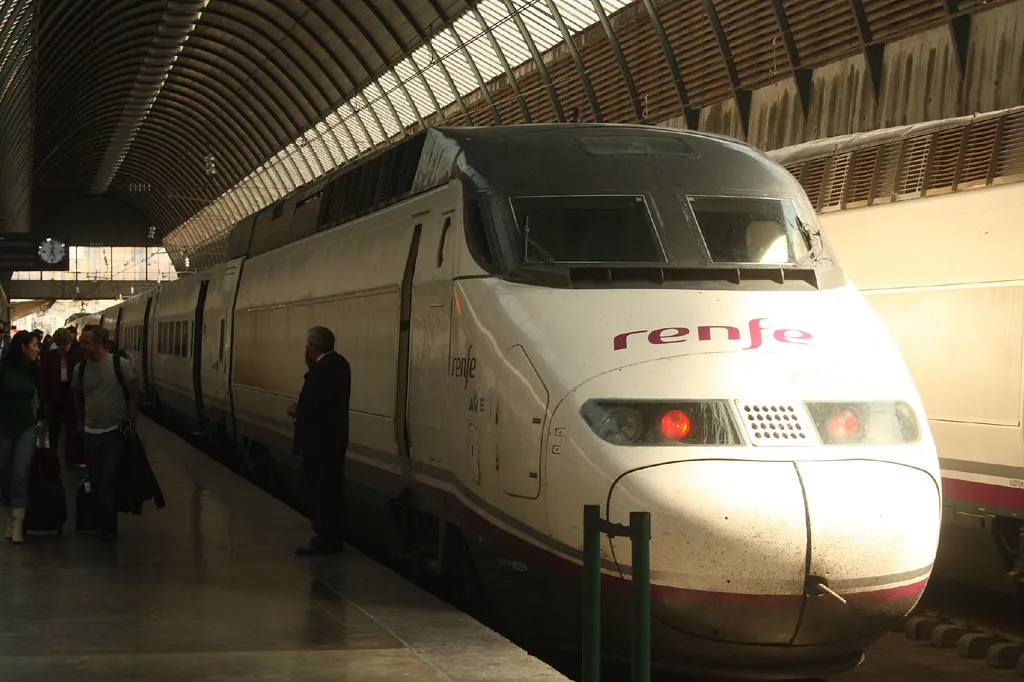
AVE is a Renfe brand for high-speed trains. Spain has no single AVE line. Services run over several high-speed corridors, and most fan out from Madrid. Many travelers mix AVE up with other names on the departure board, so the labels below are worth learning before you book.
- AVE: Renfe's high-speed brand for long-distance city-to-city trips.
- Avlo: Renfe's low-cost high-speed brand, with simpler fares and fewer extras.
- Alvia: a Renfe long-distance service that is not the same product as AVE.
- Euromed: a separate Renfe long-distance service name, so check the label before you book.
- Ouigo and Iryo: competing private operators, not Renfe brands.
Where the AVE Train Goes
Madrid is the hub. Renfe's own route listings also show Barcelona–Málaga, Barcelona–Seville, Madrid–Tarragona, Madrid–Alicante and Barcelona–Zaragoza among popular high-speed pairings. Corridor pages below cover each route in detail. Timetables change, so read the train type on the ticket screen rather than assuming a route is AVE.
- Madrid to Barcelona: see our Barcelona to Madrid train guide.
- Madrid to Seville: see our Madrid to Seville train guide.
- Madrid to Valencia: see our Madrid to Valencia train guide.
- Madrid to Málaga: see our Madrid to Málaga train guide.
- Madrid to Granada: see our Madrid to Granada train guide.
- Barcelona to Valencia: see our Barcelona to Valencia train guide.
- Barcelona to Seville: see our Barcelona to Seville train guide.
AVE Train Corridors That May Use a Different Service
Not every route you want is a plain AVE trip. Madrid to the north, including Madrid to Bilbao and Madrid to San Sebastián, may run under other Renfe service names. Short hops such as Seville to Córdoba and Barcelona to Girona may also use another train type. Treat the label on the booking screen as the answer. Barcelona to Paris is a cross-border service, so read our Barcelona to Paris guide separately.
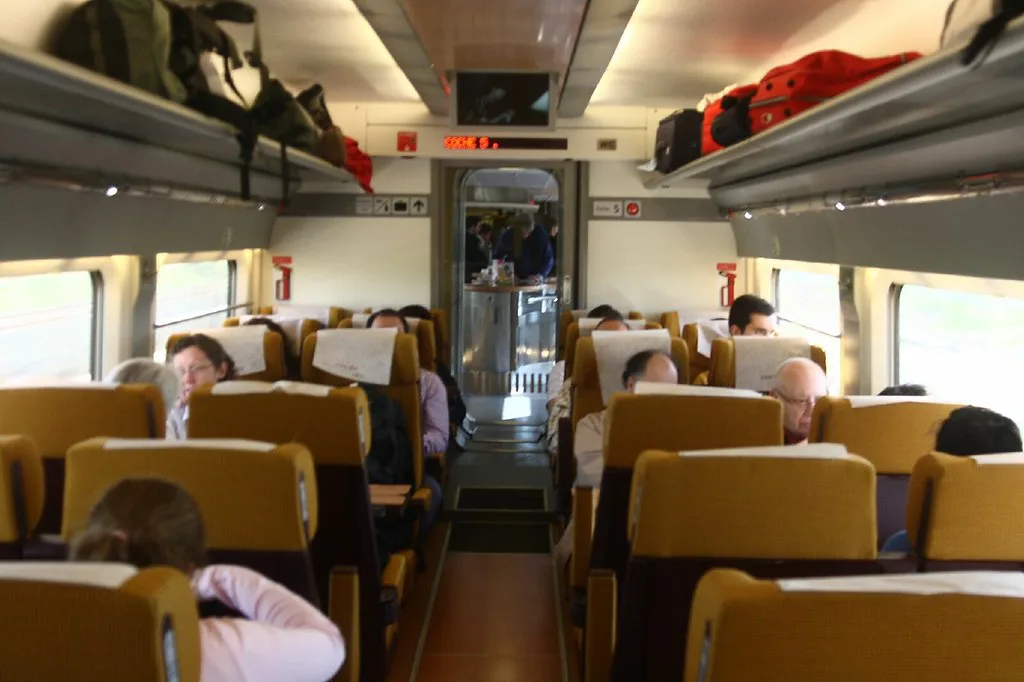
Classes on the AVE Train: Turista, Turista Plus and Preferente
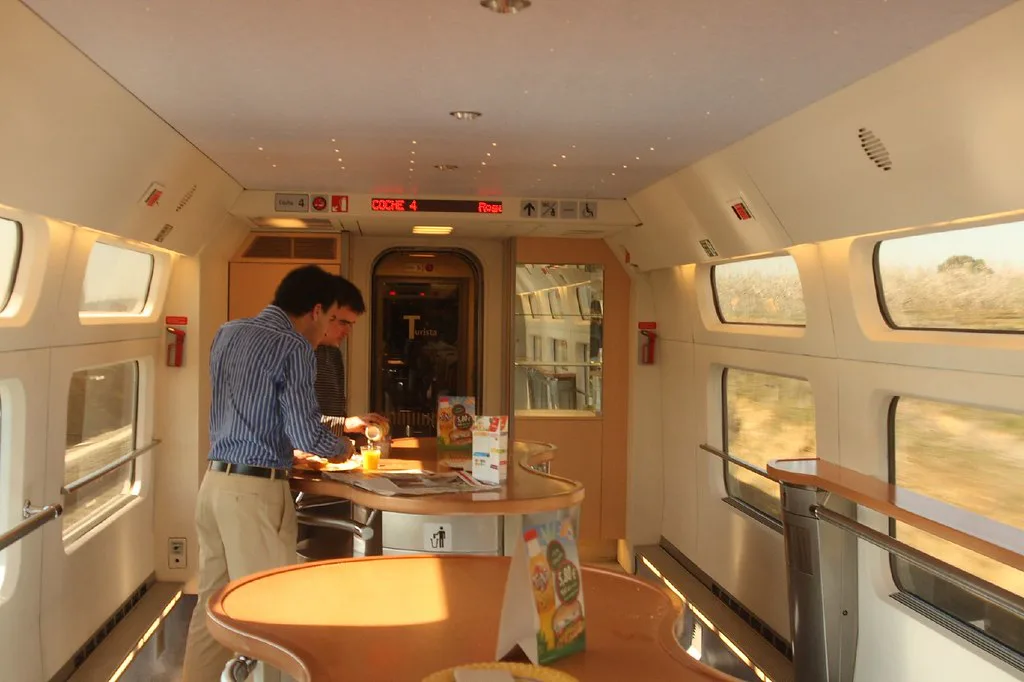
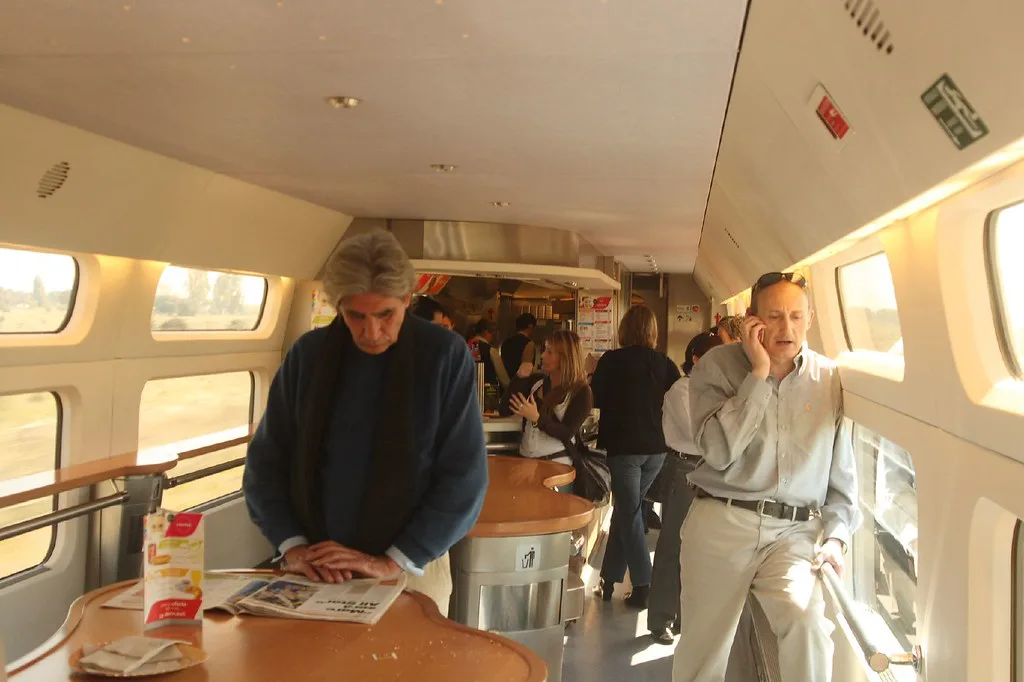
Turista is the standard class and covers most trips. Turista Plus adds wider, more comfortable seating. Preferente is the premium class, with extra space and services such as onboard food and, at some stations, lounge access. Perks differ by train series and fare, so check what your fare includes at checkout. Pay extra on a long day with work to do or a tight schedule. Skip it on a short hop where a standard seat already gets you there.
- Turista: standard seat, numbered seating, the usual choice.
- Turista Plus: more space; worth it on longer journeys.
- Preferente: premium extras; confirm meal and lounge access when you book.
How to Buy AVE Train Tickets
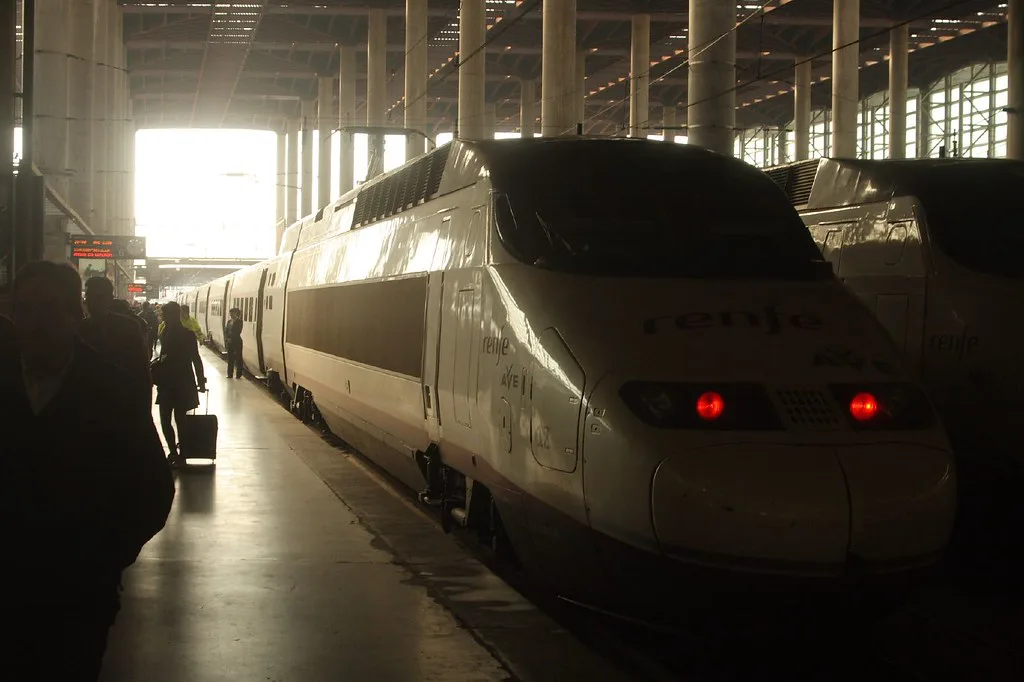
Buy straight from the Renfe official site or app when you can. Resellers add a layer between you and the operator, which can complicate changes and refunds. Flexible fares cost more than non-flexible ones, and booking early generally helps on busy corridors. Our Renfe tickets guide walks through the booking screens. Prices vary by date and fare, so compare the same day and time across fare types before paying.
AVE Train vs Ouigo, Iryo and Avlo
On corridors with several operators, the cheapest ticket is not always the best one. Compare price, flexibility, luggage rules and the departure station. OUIGO España runs a low-cost model with its own baggage and extras rules. Our Iryo, Ouigo and Renfe comparison goes deeper on each operator.
| Operator | Price pattern | Flexibility | Onboard extras |
|---|---|---|---|
| AVE (Renfe) | Mid to high; flexible fares cost more | Flexible and non-flexible fares | Classes from Turista to Preferente |
| Avlo (Renfe) | Lower, no-frills | Simpler, more limited fares | Fewer extras |
| Ouigo | Low base fare, add-ons extra | Stricter rules; check terms | Pay for extras |
| Iryo | Competitive, varies by fare | Check fare terms | Varies by fare |
Is a Rail Pass Worth It for the AVE Train?
For one or two fixed trips, point-to-point tickets often make more sense. A pass suits travelers who want flexible, repeated rides across several cities. Compare the pass price against your exact route list before buying. Our Spain rail pass guide explains how it works. The Eurail Spain page lists the pass options.
Stations and Day-of Logistics
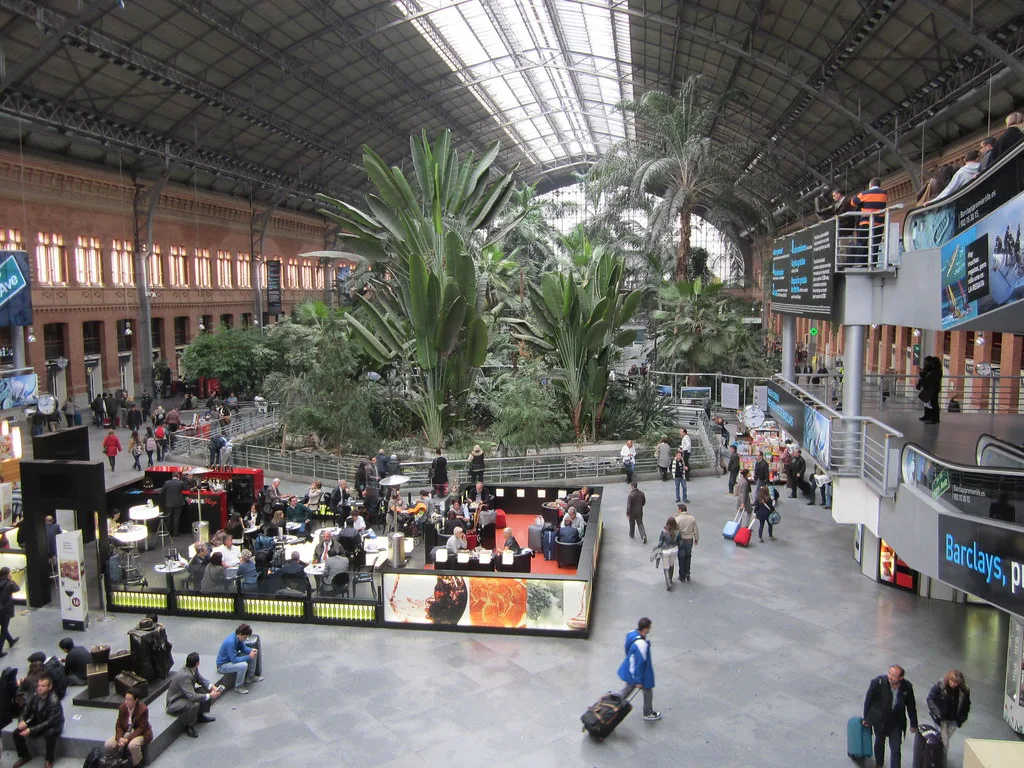
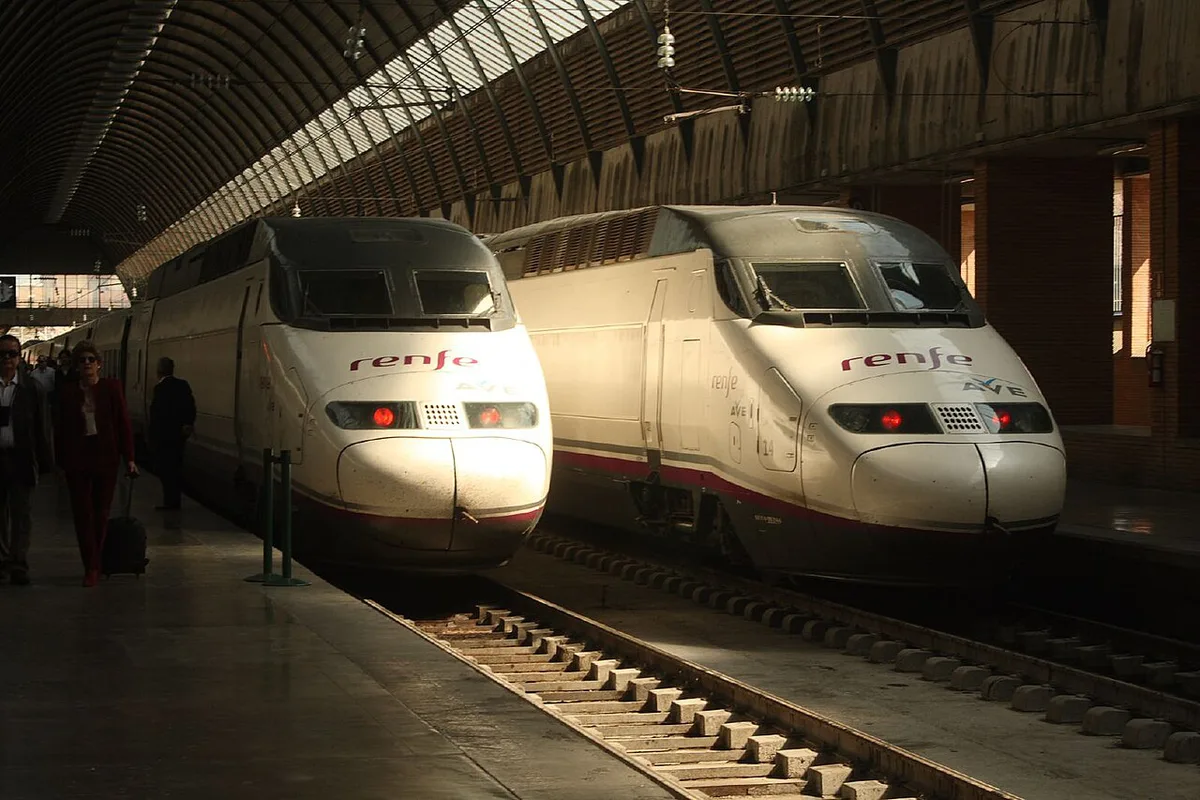
Madrid has two major stations: Madrid Puerta de Atocha - Almudena Grandes and Madrid Chamartín - Clara Campoamor. Read our guides to Madrid Atocha Station Guide: Trains, Garden, Transfers and Madrid Chamartín before departure day. In Barcelona, most travelers use Barcelona Sants Station Guide: Trains, Metro, Transfers. Commuter trains on Cercanías connect with stations in Madrid. Allow time for security checks, and read Renfe's current luggage and boarding rules before you travel.
Boarding, Luggage and Delays on the AVE Train
Boarding an AVE works more like catching a flight than a regional train. Knowing the routine before you reach the station saves the most stress on a first trip.
Security and boarding
- Security scan: bags go through an X-ray scanner before you reach the platform. Queues at Madrid Atocha and Barcelona Sants are longest at peak morning and Friday evening departures.
- Arrival time: Renfe's guidance for long-distance trains is to arrive about 30 minutes early. Treat that as a minimum at a large station you do not know.
- Gate closing: access to the platform closes shortly before departure, typically a couple of minutes. Arriving as the train is leaving the board means you will not get on.
- Platform number: it usually appears on the departure screens only a short time before departure, so stay near the boards rather than waiting at a far cafe.
Luggage
Renfe lets each passenger bring a limited number of pieces, commonly two suitcases plus one small hand bag, with a maximum size per suitcase. Limits are on Renfe's official site and can change, so confirm them for your fare. Low-cost operators such as Ouigo apply stricter allowances and charge for extra bags, so check them separately. Racks sit at the end of each carriage, and a suitcase out of sight is a small theft risk on busy trains, so keep valuables with you.
Your seat and your ticket
- Seats are assigned at booking. Your carriage (coche) and seat (plaza) are printed on the ticket, with the carriage number shown at the platform door.
- Keep the digital ticket downloaded on your phone in case the signal drops in the station.
- Names on the ticket may be checked against ID, so carry your passport or national ID.
If the train is late
Renfe has a punctuality commitment on AVE services that can return part or all of the fare after a delay beyond a set threshold. The threshold and the refund depend on the service and the length of the delay. Claim through Renfe's official site or app rather than waiting for an automatic credit, and keep your ticket and booking reference. If you booked through a reseller, you may need to claim through them instead.
Mistakes to Avoid With the AVE Train
Most problems come from small planning slips. Read the operator and station on the booking screen before you pay.
- Booking the wrong station: Madrid has two major stations, so confirm which one your train uses.
- Assuming every high-speed train is AVE: Avlo, Ouigo and Iryo are different products.
- Buying through resellers: you add a middleman for changes and refunds.
- Planning tight connections between stations: allow generous time to cross a city.
- Ignoring luggage and seat rules: low-cost operators apply their own policies.
See our tourism attractions guide for the broader city overview.
Frequently Asked Questions
Is AVE the same as Renfe?
No. Renfe is the operator, and AVE is one of its high-speed brands. Renfe also runs Avlo, Alvia and Euromed services.
How fast does the AVE travel?
Top speed depends on the train series and the line it runs on. Renfe's official site lists current service details for each route.
Rail notes for your next trip
Optional updates when our rail guides change.
Related guides
More guides
Picked from the same area