Europe Train Map: How to Read It and Plan Routes
Last updated November 2026: the best single Europe train map is the Eurail and Interrail coverage map, read alongside each country's national operator map. High-speed lines radiate from Paris, and Germany's ICE network links the north and south. Use the map to choose anchor cities, then check timetables and reservation rules for your actual travel date.
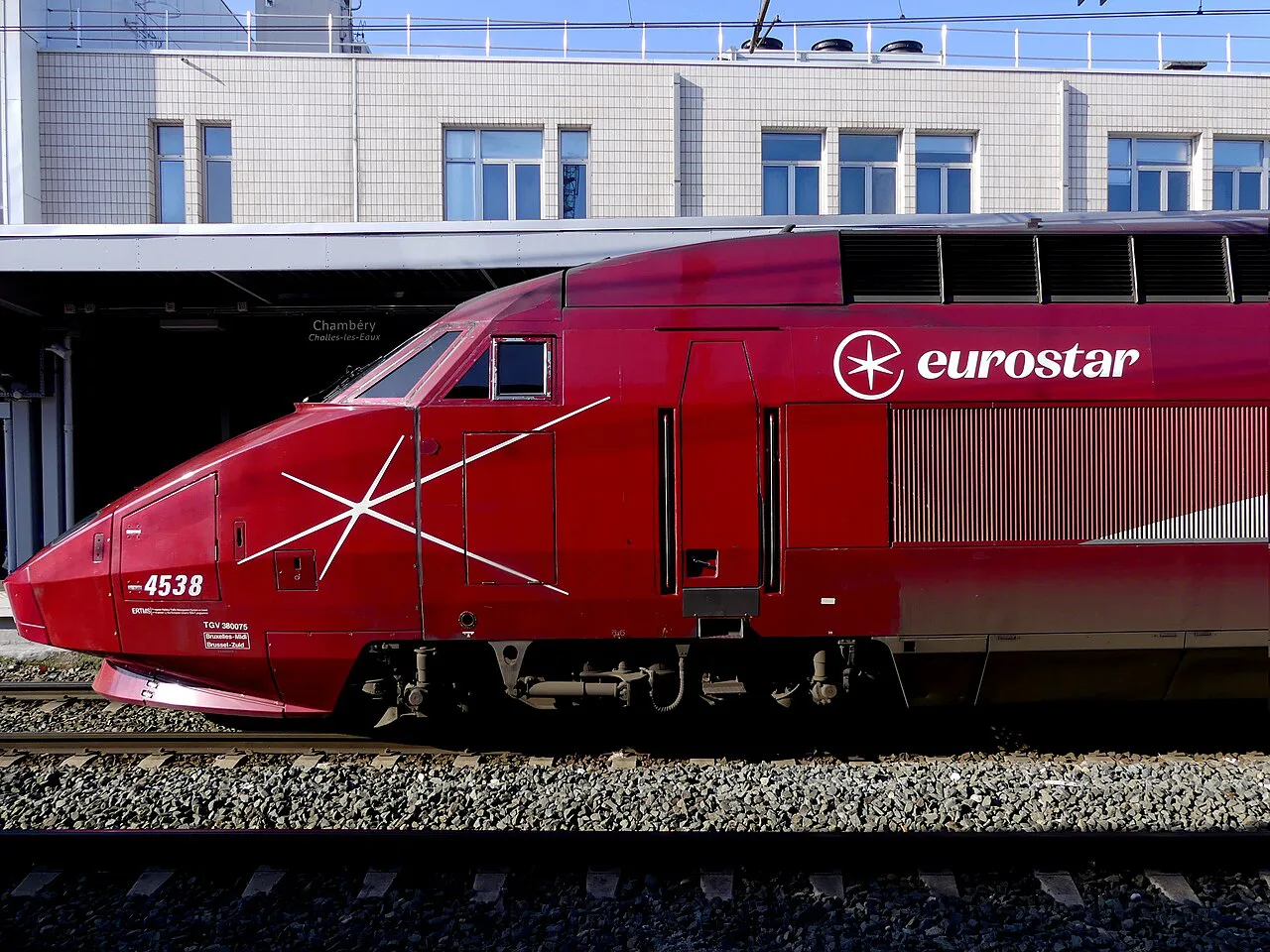
Featured image: Supporterhéninois, CC0, via Wikimedia Commons.

Europe Train Map at a Glance
A Europe rail map shows which cities connect directly, where fast lines run and where you will need to change trains. Start with the Eurail train map of Europe for the overall network shape. Pass holders can then check how Interrail works for coverage rules. Our full planning guide covers the wider trip. This page does not reproduce a map. It teaches you to read the official ones and turn them into a route. Board-game maps such as Ticket to Ride are a different thing, since they show invented routes rather than real timetables.
- Best first reference: the Eurail or Interrail coverage map.
- Best for exact services: the national operator's own map and timetable.
- Best for verifying a day's trip: the operator's booking page for your date.
How to Read a Europe Rail Map
Most rail maps use line weight and colour to separate service types. Thick or highlighted lines usually mark high-speed corridors. Thinner lines usually mark regional routes and slower sections. Night trains often get their own colour or a dashed style. Legends differ between publishers, so read the key before you read the lines. A printable Europe train map is handy for sketching an outline. Treat it as a planning aid and not a timetable.
| Map type | Best for | Limitation |
|---|---|---|
| Official operator network map | Seeing exactly what one railway runs | Usually stops at the national border |
| Pass-coverage map | Checking which operators a pass includes | A line on it does not guarantee a free seat |
| High-speed-only map | Spotting the fastest city pairs | Hides regional links to smaller towns |
| Interactive route planner | Real journey times and changes on a date | Needs a firm start and end point |
Main Rail Corridors and Hubs
On a high-speed train map of Europe, the densest pattern is the set of fast lines fanning out from Paris. Germany's ICE network forms a second dense web. Large capitals and big interchange stations tend to act as hubs, so a route that passes through one often has more onward choices. Our guide to high-speed trains in Europe explains the main services. For ready-made itineraries, see the best train routes. Specialist operators add other layers to the map, as listed below.
- Night trains: Nightjet, run by ÖBB, lists its overnight routes on its own site.
- New overnight services: European Sleeper routes are published by the operator.
- Scenic lines: Vy runs the Bergen Line in Norway.
- Central Europe: Czech Railways (ČD) and MÁV, the Hungarian State Railways, publish national timetables.
Where the Map Misleads You
A line on the map shows that tracks exist. It does not tell you how often trains run or how long the journey takes. Sparse areas, border crossings and seasonal services are where plans break. Check the operator's timetable for your date, especially for night trains and summer-only routes.
- Line does not mean frequent service: some rural routes run only a few times a day.
- Line does not mean pass validity: operators and reservation rules differ.
- Short distance does not mean short journey time: mountains and slow regional sections add hours.
- Gaps and sea crossings: some links rely on a ferry or a flight, which the rail map may not show.
Turn the Map Into a Route
Work in order. Pick two or three anchor cities first. Look up journey times between each pair on the operator's site. Count the transfers, because every change adds risk. Then set a pace that leaves a buffer. For very long legs, see the longest train journeys. The table below turns the map into a choice by trip style.

| Trip style | What to look for on the map | Typical trade-off |
|---|---|---|
| First-timer capital hop | Direct high-speed links between big hubs | Fewer small towns and higher demand |
| Multi-country loop | Hubs where several corridors meet | More transfers and more reservations |
| Slow scenic | Regional and mountain lines | Long journeys and few departures |
| Budget | Slower regional and night options | More time, more changes |
| Time-poor | Straight fast lines, few stops | Less flexibility if you miss a train |
Pass vs Point-to-Point Tickets
A coverage map shows which operators a pass includes. It does not show whether a seat is free or whether a reservation fee applies. Reservations are often required on high-speed and night services. A pass can suit a loop with many legs, while single tickets can suit a short trip with two or three. Our guide on booking train tickets in Europe covers the steps. If you want an app, compare Trainline and Omio. Comfort matters too, so read about first-class train travel before you choose a class. Before you book, check these points:
- The operator and the timetable for your date.
- Reservation rules for each leg.
- Transfer times at each station.
- The last departure of the day.
Train, Plane or Mixed? Using the Map to Decide
Where the map shows a dense, direct line, rail is usually competitive for city-to-city trips. Where it shows a gap, a thin line or a sea crossing, a flight or a mixed route may make more sense. Station-to-station travel avoids long airport transfers, but slow regional sections can cancel that advantage. For a fuller comparison, read train versus plane in Europe.
Regional Maps Worth Opening Next
Once you know the main network, open a regional map for the area you plan to visit. The network is sparser in the east, so Eastern Europe by Train: Routes, Tickets & Pass Tips needs closer timetable checks. For Czechia and Hungary, start with the national operators listed above. Mountain and coastal regions often need a bus or ferry link as well.
Frequently Asked Questions
Can you explore Europe by train?
Yes. The network links most major cities, and fast corridors cover many popular city pairs. Rural and island areas may need a bus, ferry or flight.
What is the best website to book train tickets in Europe?
The operator's own site is the most reliable source for a specific route. Booking apps can compare several operators in one search. Check the price and conditions before you pay.
How much does a train trip across Europe cost?
Cost depends on the route, the date and how early you book. Fares are usually lower on slower regional trains, and fast or night services often add reservation fees. Check current prices on the operator's site.
Rail notes for your next trip
Optional updates when our rail guides change.
Related guides
More guides
Picked from the same area