
Swiss Train First Class: Is It Worth It?
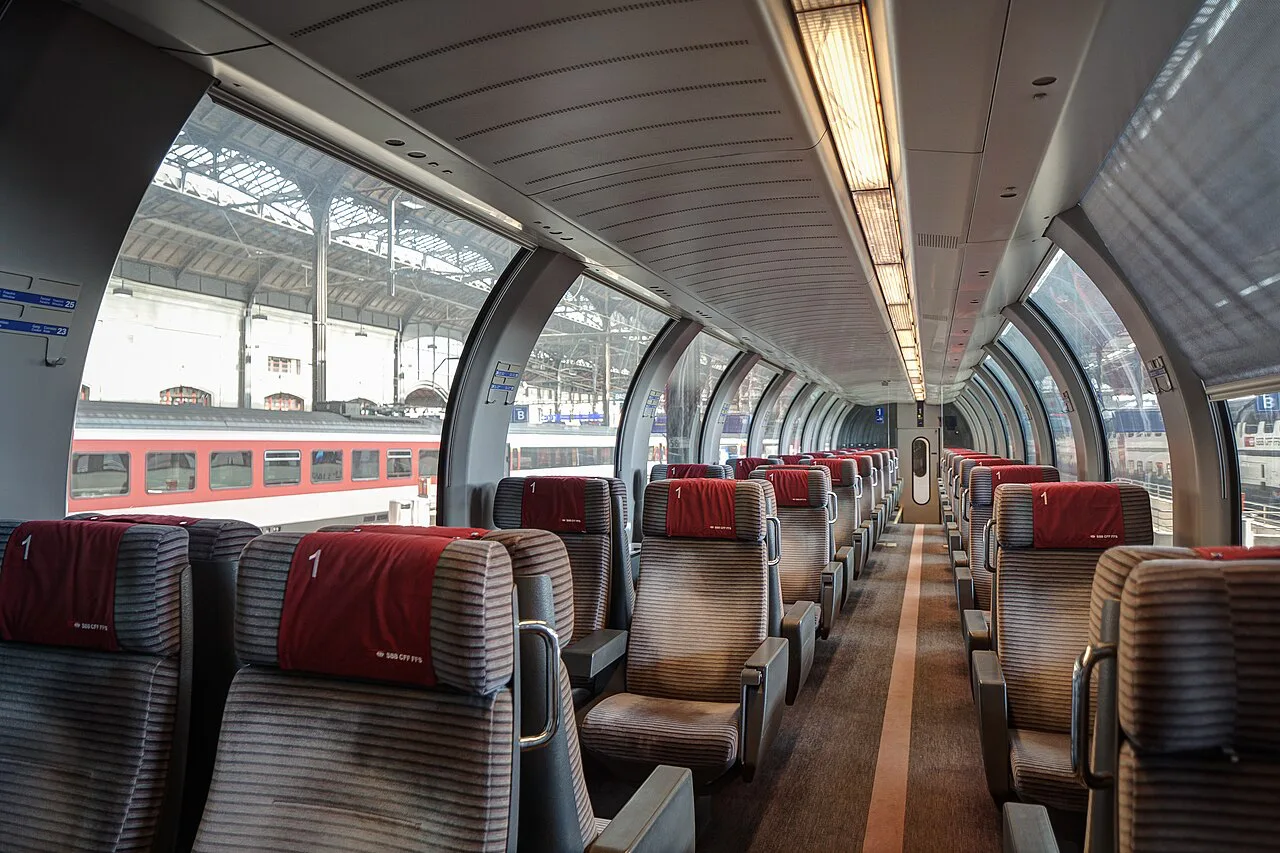
Last updated November 2026: Swiss train first class gives you more space and a calmer carriage, and it pays off most on long, busy or luggage-heavy journeys. It matters far less on short hops and regional services. How much extra you pay depends on your ticket type, your route and the fare you book. Use this page alongside our guide to train travel in Switzerland to decide before you buy.
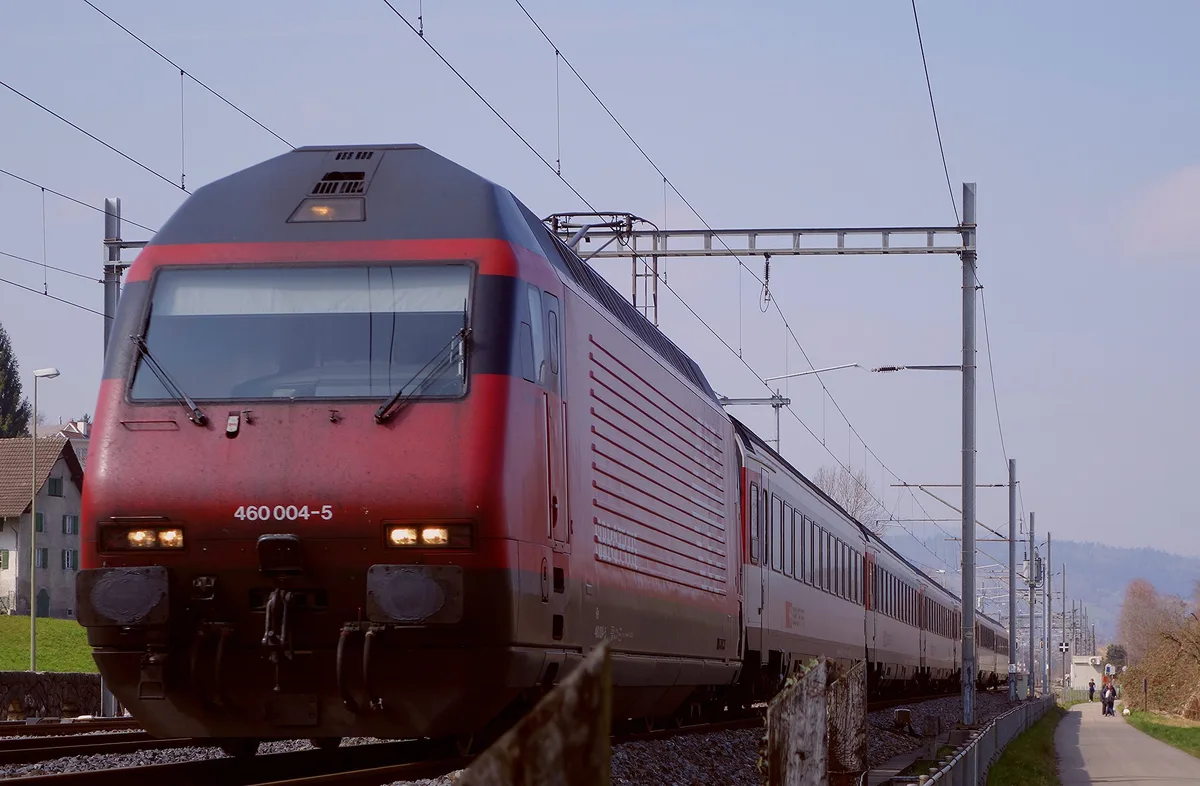
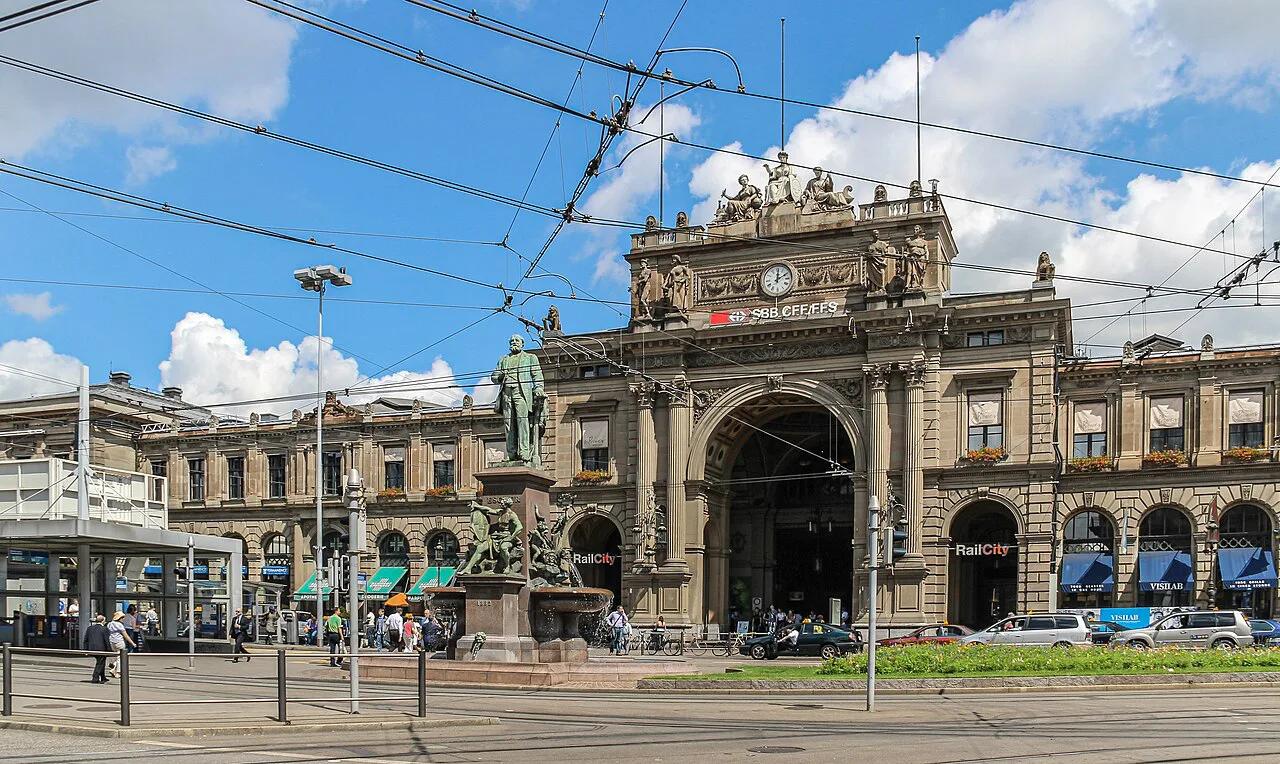
Featured image: ChristianSchd Christian Schröder, CC BY-SA 3.0, via Wikimedia Commons.
Swiss First Class at a Glance
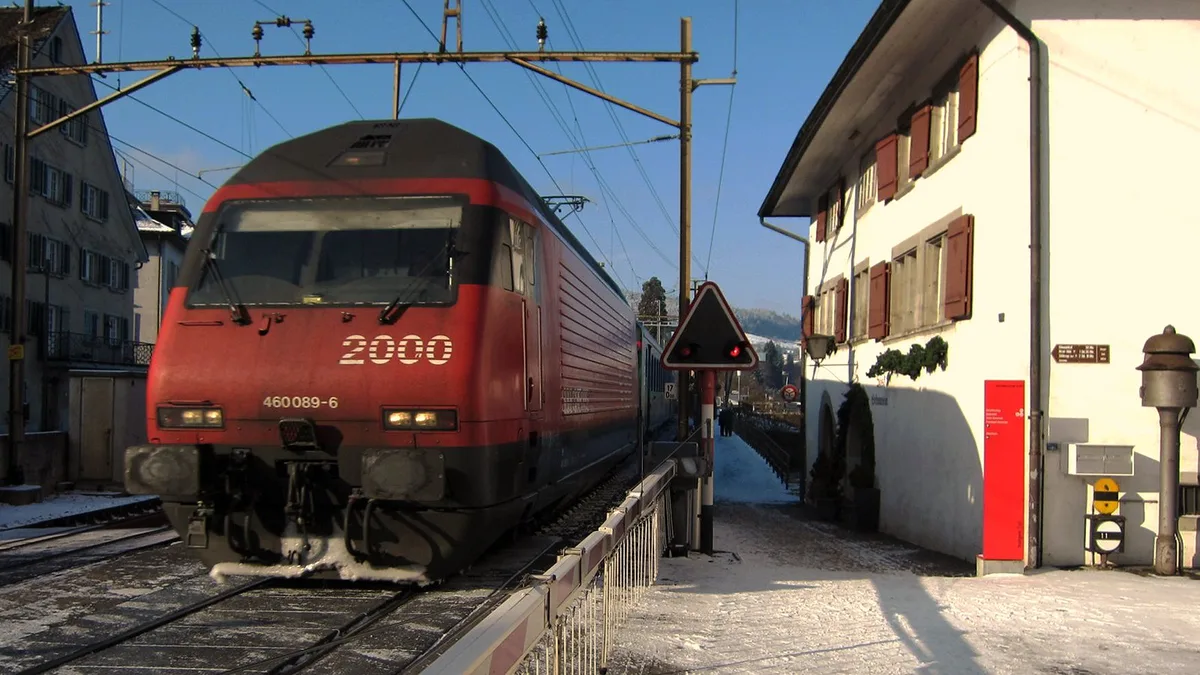
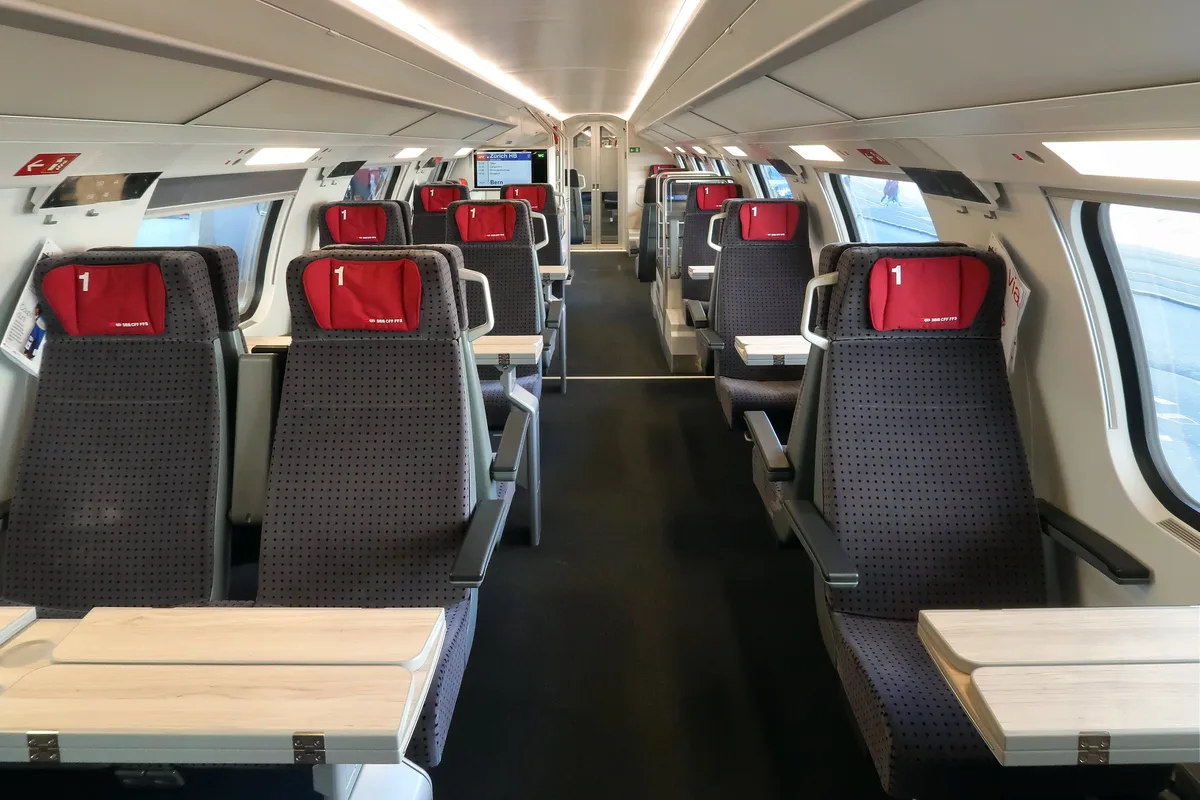
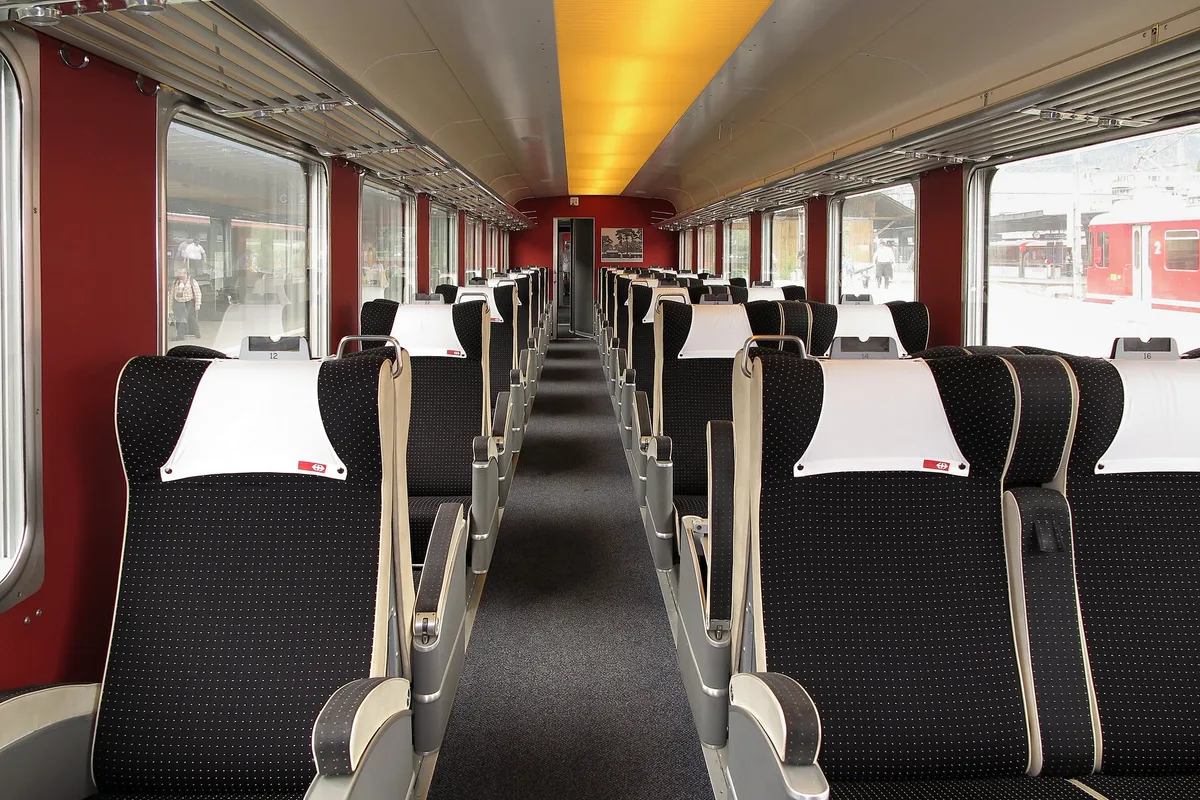
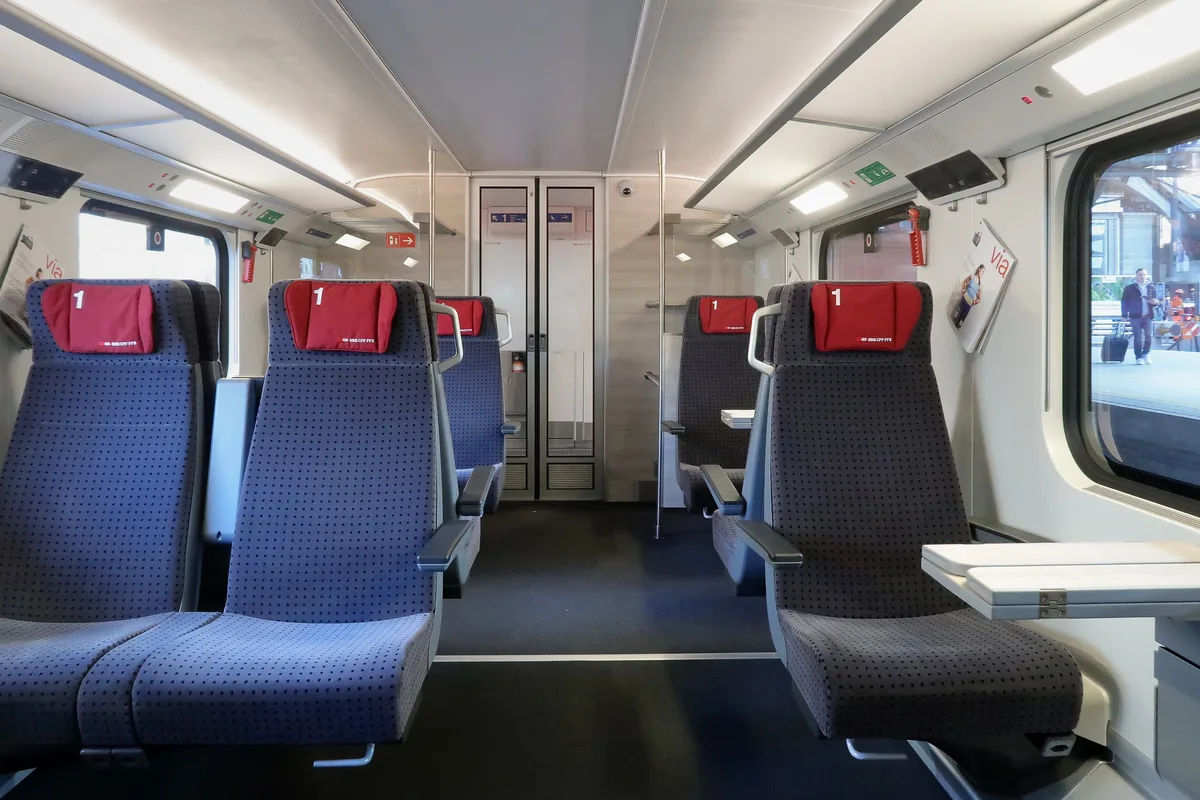
First class on Swiss trains is a separate set of carriages on most long-distance services. Seats are typically roomier and the carriage is usually quieter. Second class is comfortable and punctual, so first class is a comfort upgrade and not a necessity. Your decision turns on three things: how long you will sit, how crowded the train will be, and how much luggage you carry.
- Worth it: long rides on busy corridors, travel with big bags, or work on board.
- Worth it: peak commute hours, Friday and Sunday evenings, and school-holiday weekends.
- Skip it: short hops, regional trains, and midday off-peak trips.
- Skip it: tight budgets and itineraries made of many short rides.
First vs Second Class: What Actually Changes
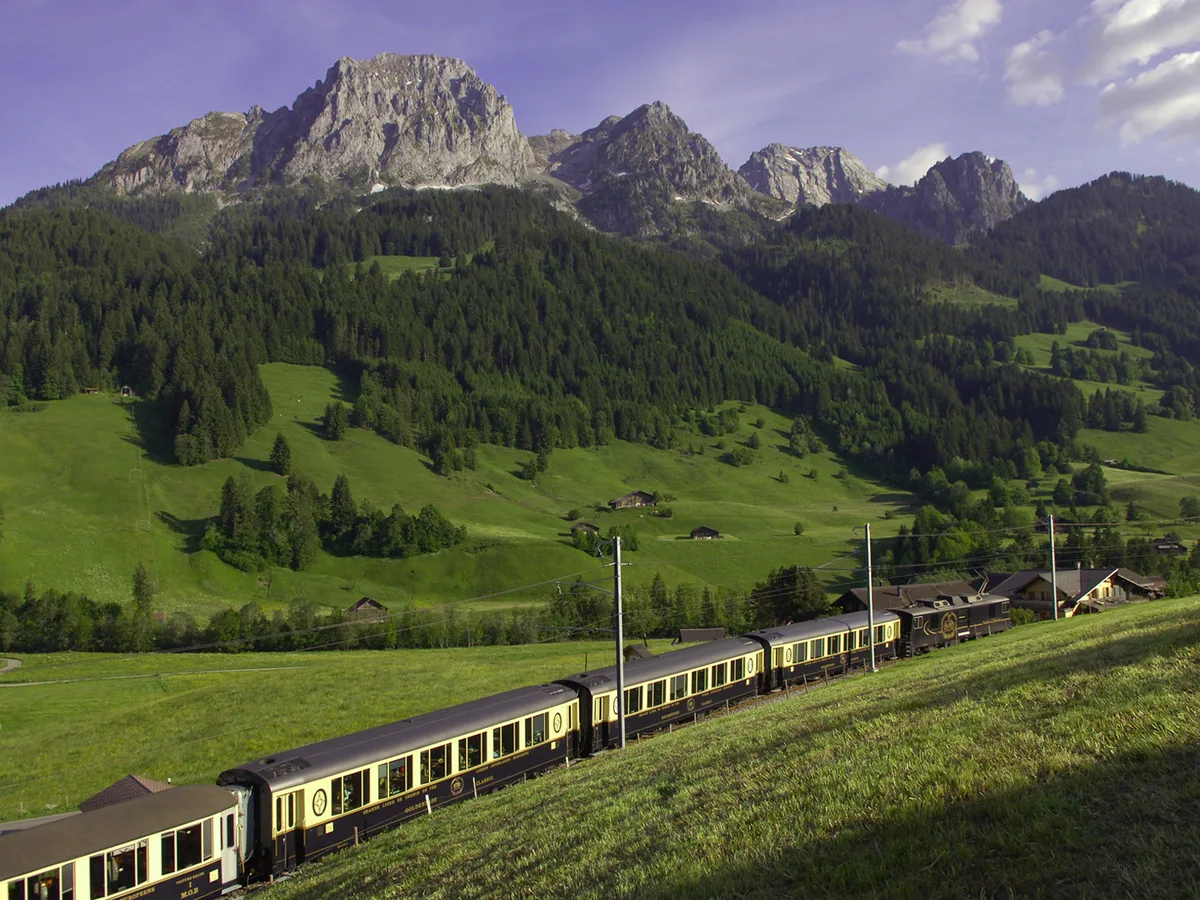
Differences vary by train type. InterCity and InterRegio services, panoramic cars, regional trains and narrow-gauge lines are not laid out the same way. Treat the table as a general pattern, not a guarantee for every carriage.
| Feature | First class | Second class |
|---|---|---|
| Seat space | Usually roomier, with more legroom and a wider seat | Standard seating, denser at peak |
| Crowding | Typically lighter, so you can often find a seat together | Fills first on commuter and weekend services |
| Noise | Generally calmer; quiet zones may be signposted on some trains | Busier, with more conversation and phone calls |
| Luggage | More room around your seat, though racks vary by train | Racks fill quickly on busy trains |
| Fixtures | Varies by train: tables and power sockets are not identical everywhere | Varies by train |
What First Class Costs: Tickets, Passes and Discounts
A first-class fare carries a clear premium over second class on the same route. The size of that gap changes by ticket type, route and booking date, so check the exact price for your journey in the SBB timetable before you commit. The Swiss Travel System lists the pass options and their class versions on its official travel planning pages. Prices and rules checked November 2026.
| Ticket type | First-class option | What to check |
|---|---|---|
| Point-to-point ticket | Available on the same route as second class | Compare both fares for your date and time |
| Swiss Travel Pass | Sold in a first-class and a second-class version | Price gap between versions; see our Swiss Travel Pass guide |
| Half Fare Card | Discounts tickets in both classes | Whether your fare type is eligible; see our Half Fare Card guide |
| Saver and discounted fares | Class availability varies by offer | Whether first class is offered for your date |
| Class upgrade | May be offered on some tickets | How an upgrade is priced in the SBB app |
When First Class Is Worth It (and When It Isn't)
Start with trip length. A long ride on a busy corridor is where extra space earns its cost. Zurich to Geneva is a good example, because the Zurich to Geneva route carries heavy commuter and weekend traffic.
Peak timing matters just as much. Commute hours, Friday afternoons and school-holiday weekends are when second class fills and standing becomes likely. If you need a guaranteed seat and a place for a laptop, first class buys real peace.
Luggage is the next test. Travelers moving between hotels with large suitcases gain from the extra room around the seat. That is common on the Zurich to Zermatt journey, where you carry bags for a mountain stay.
Group size also counts. Finding seats together is easier when the carriage is not full. On midday trains outside holidays, second class often has plenty of free seats, so the premium buys little.
Short rides rarely justify it. A hop of under an hour on a regional train gives you almost no time to enjoy the difference. If your plan is many short rides, second class usually keeps the budget intact.
First Class on Scenic and Mountain Trains
On scenic lines, first class helps less than the window does. A seat with a clear view matters more than the class printed on your ticket. Reservation rules and carriage layouts differ by railway, so read each operator's page.
For the Gornergrat railway, the Gornergrat Bahn site covers tickets and timetables. On the Brienz Rothorn steam line, the carriages are small, so check the operator's seating rules.
For the Centovalli route, class and reservation terms are set by the operators involved. Panoramic trains on the Albula line belong to the Rhaetian Railway, which lists its own seat reservation requirements. Never assume that a pass includes a seat reservation on these trains.
How to Book and Find Your Seat
Open the SBB App Guide: Tickets, Passes & Tips for Tourists and search your journey. The results show fares for first and second class, so you can compare them side by side. Choose a seat reservation where the app offers one, because it removes the guesswork on busy services.
At the station, use the platform sector displays to find where first class stops. At Zurich HB (Hauptbahnhof): Station Guide, Transfers & Connections, the display on the platform shows sector letters and carriage order for your train. Walk to the right sector before the train arrives.
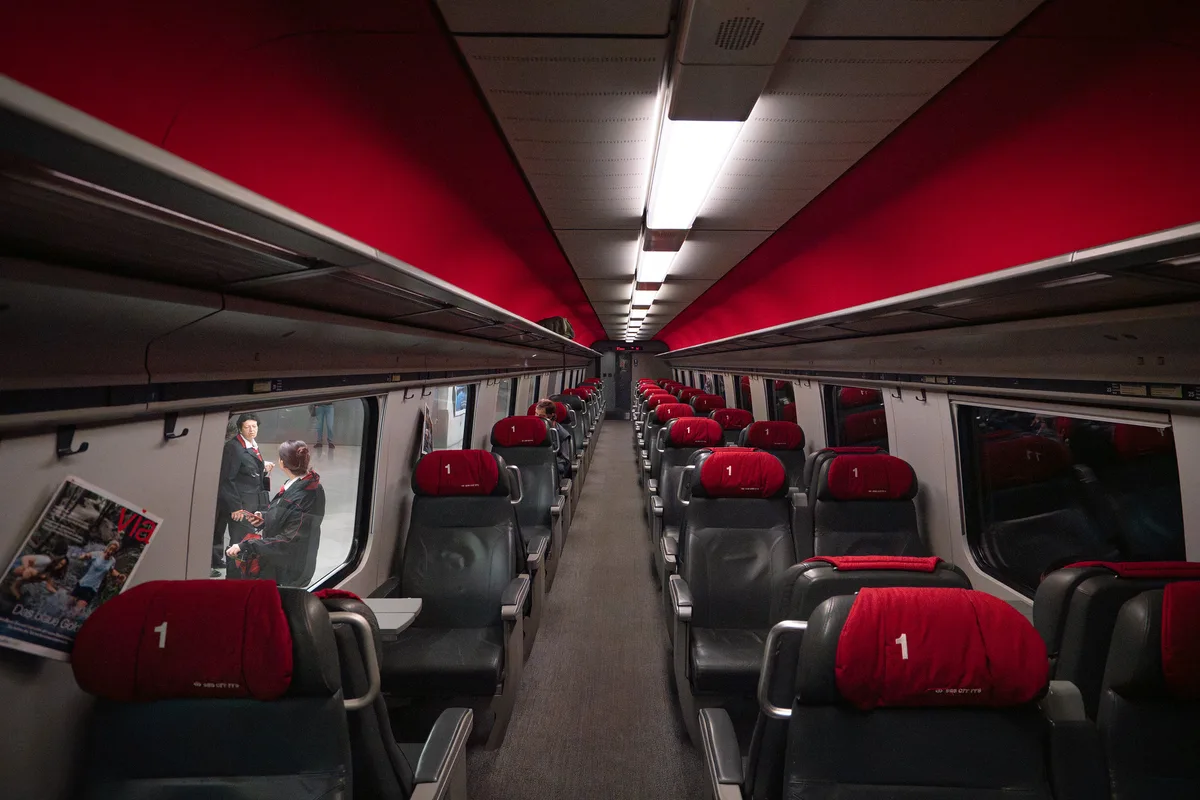
First-class carriages carry a "1" on the side of the car and beside the door. The same marking helps at Interlaken Ost Station Guide: Transfers, Lockers & Trains, where trains from different operators share the station.
Mistakes to Avoid
Most first-class errors come from assumptions, not from price. Watch for these four.
- Sitting in first class with a second-class ticket. You may face a supplement or fine, so check SBB's current rules.
- Assuming a pass includes seat reservations. Many scenic trains charge a separate reservation.
- Assuming the whole train has the same layout. Carriage types change between services.
- Missing the class marking. Look for the "1" on the carriage side and door before you board.
Frequently Asked Questions
What is the difference between first and second class on Swiss rail?
First class usually offers wider seats, more legroom and a calmer carriage. Second class is denser and fills first at peak times. Details vary by train type.
Can I sit in second class with a First Class ticket?
Yes, a first-class ticket is generally valid in second class too. The reverse does not work, so a second-class ticket does not cover a first-class seat.
Is it worth paying First Class on a train?
It is worth it on long, busy or luggage-heavy journeys. On short regional hops or quiet midday trains, second class does the same job for less.
Rail notes for your next trip
Optional updates when our rail guides change.
Related guides

More guides
Picked from the same area