
Albula Railway: Route, Trains, Tickets and Best Seats
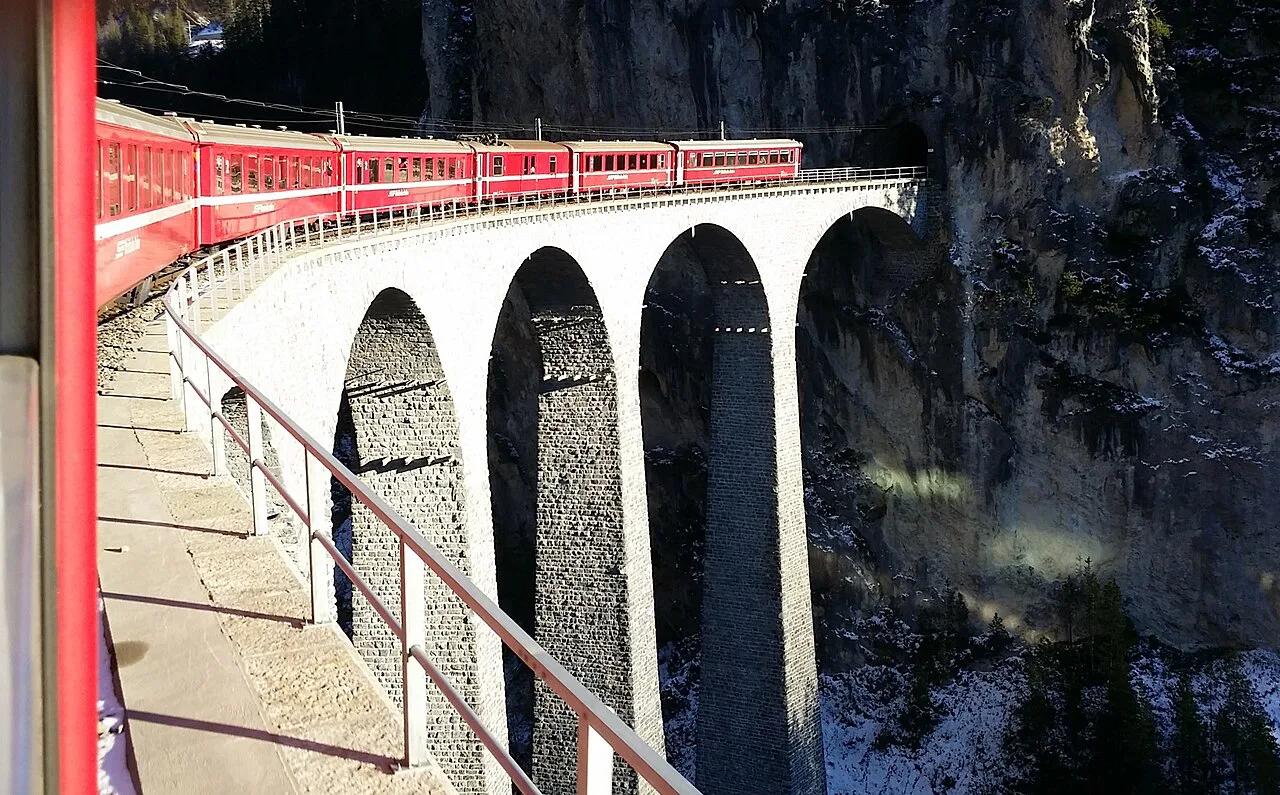
Last updated November 2026. The Albula Railway is the Rhaetian Railway line between Thusis and St. Moritz in the canton of Graubünden, and it forms part of a UNESCO World Heritage site. It is not the Bernina line, and it is not the same thing as the Bernina Express. This guide separates those three, then covers the route, the trains, the tickets and the best times to ride.
Featured image: Gabrielle Merk, CC BY-SA 3.0, via Wikimedia Commons.
Albula Railway at a glance
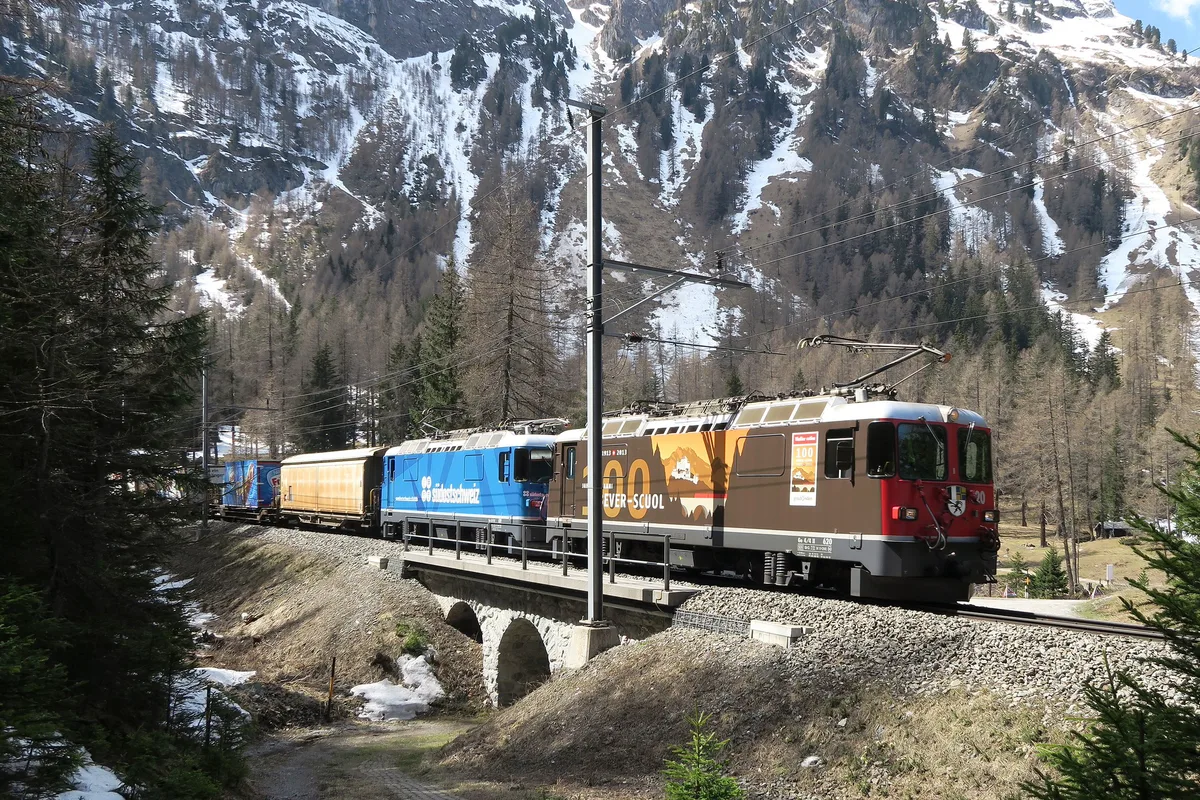
The Rhaetian Railway (RhB) owns and operates the line. It opened in 1903 and runs about 61.67 km on metre gauge, which means 1,000 mm between the rails. Power comes from overhead wire at 11 kV and 16.7 Hz AC. In 2008 the line was inscribed on the UNESCO World Heritage list as part of the Rhaetian Railway in the Albula / Bernina Landscapes. The Albula section is the northern half of that heritage site, and the Bernina line is the southern half.
- Operator: Rhaetian Railway (RhB)
- Route: Thusis to St. Moritz, via Filisur
- Opened: 1903
- Length: about 61.67 km
- Gauge: 1,000 mm (metre gauge)
- Heritage status: UNESCO World Heritage since 2008
Albula Railway vs. the Bernina line vs. the Bernina Express
Search results blur these three names, so it helps to separate them early. The Albula Railway is a physical line, and it ends at St. Moritz. The Bernina line is a different RhB line that continues south from the Engadin toward Italy. The Bernina Express is a named tourist train that uses both lines, running from Chur to Tirano. If you want the Albula scenery, any train over Thusis to St. Moritz covers it. If you also want the Italian border crossing, you need the Bernina Express or a regional connection onto the Bernina line.
- Albula Railway: the line from Thusis to St. Moritz
- Bernina line: the separate line south of the Engadin
- Bernina Express: a train that runs over both, Chur to Tirano
Route walk-through: Thusis to St. Moritz
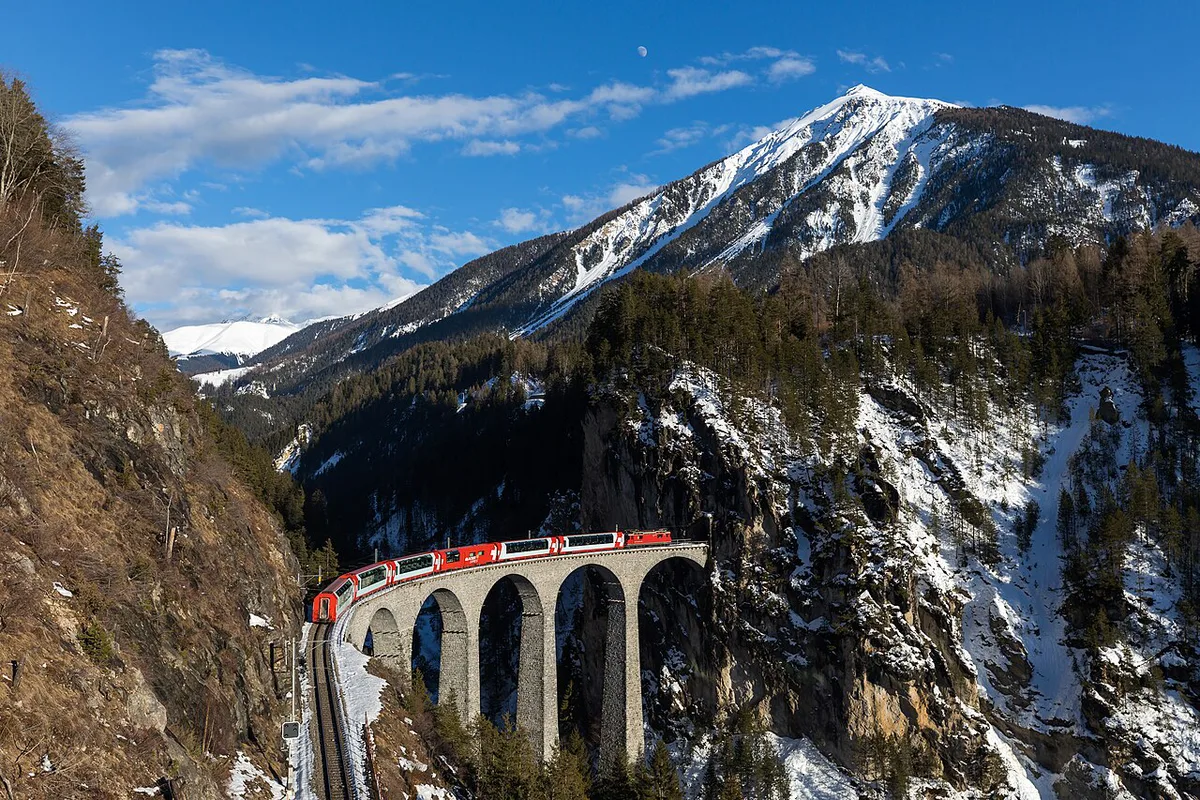
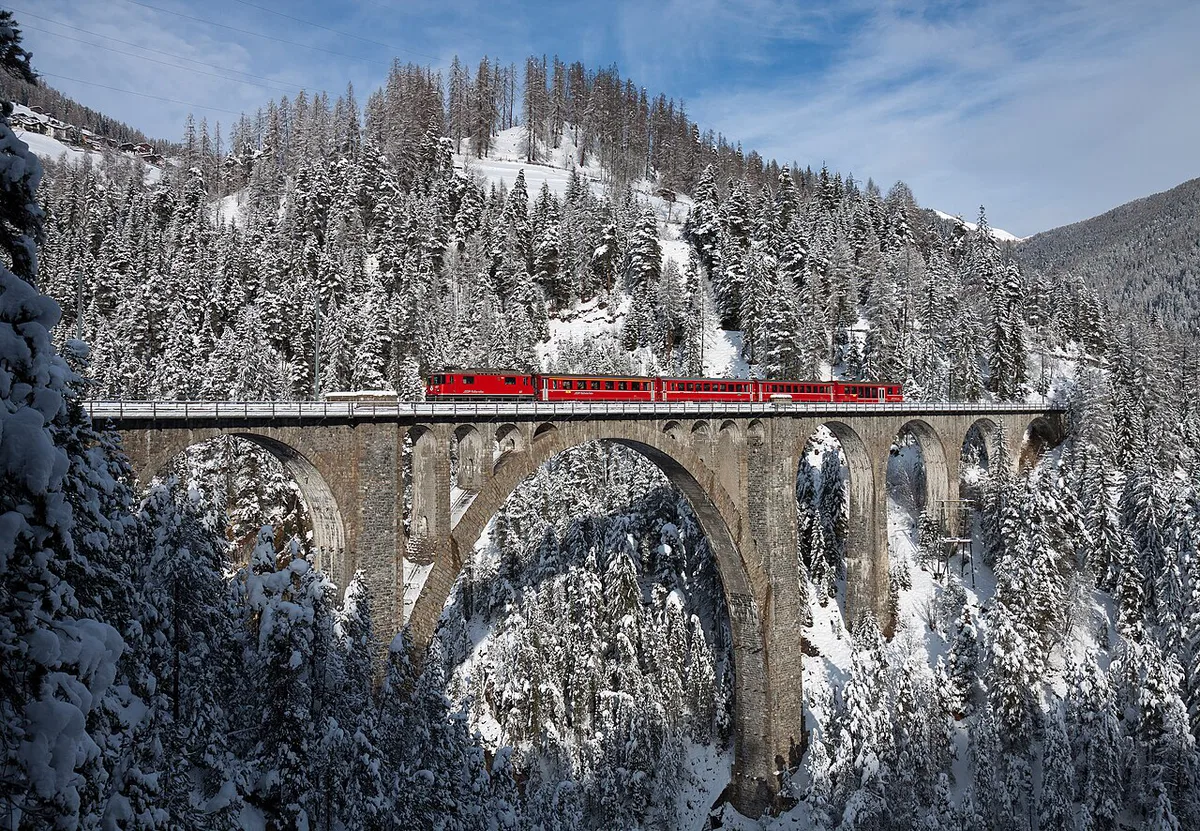
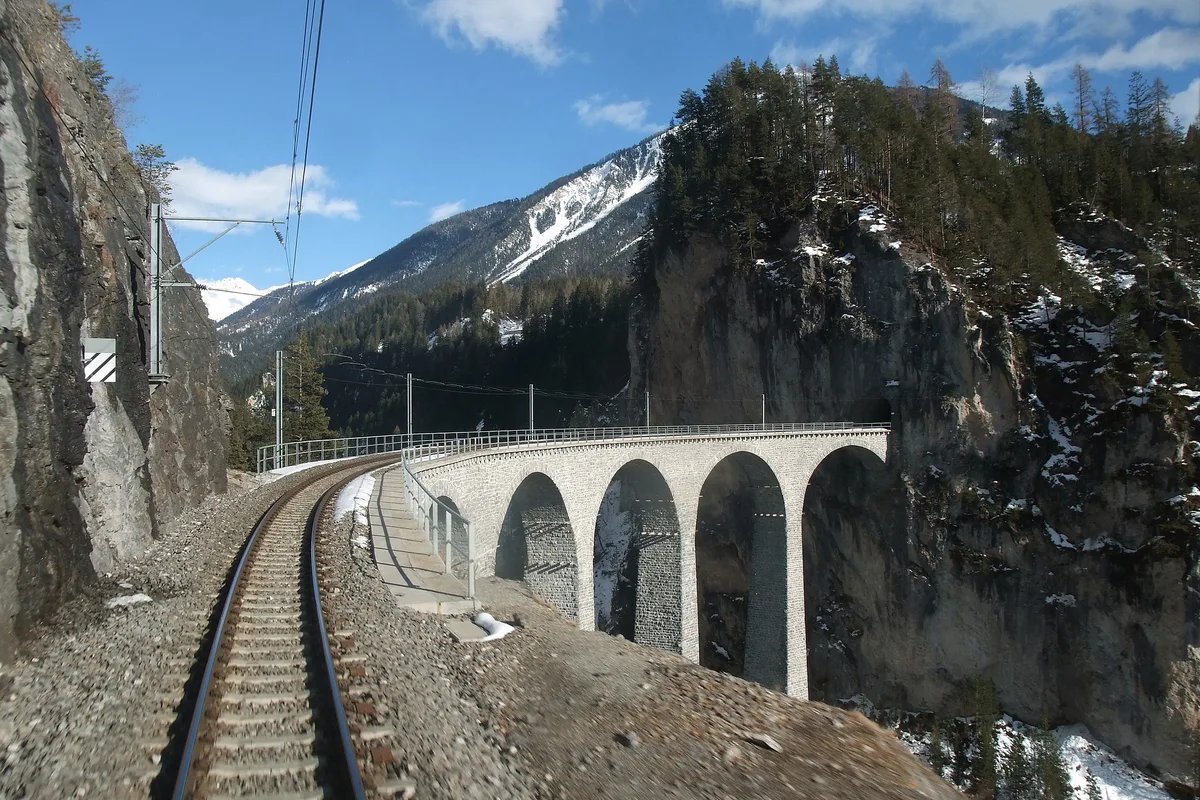
Going west to east, the line starts at Thusis and climbs through the Albula valley. Filisur is the main intermediate station on the line. Near it you cross the Landwasser Viaduct, the most photographed structure on the route. Spiral tunnels then help the railway gain height without a steep gradient. The line reaches the Engadin and finishes at St. Moritz.
- Thusis: the western end, reached from Chur
- Filisur: the main stop in the middle of the line
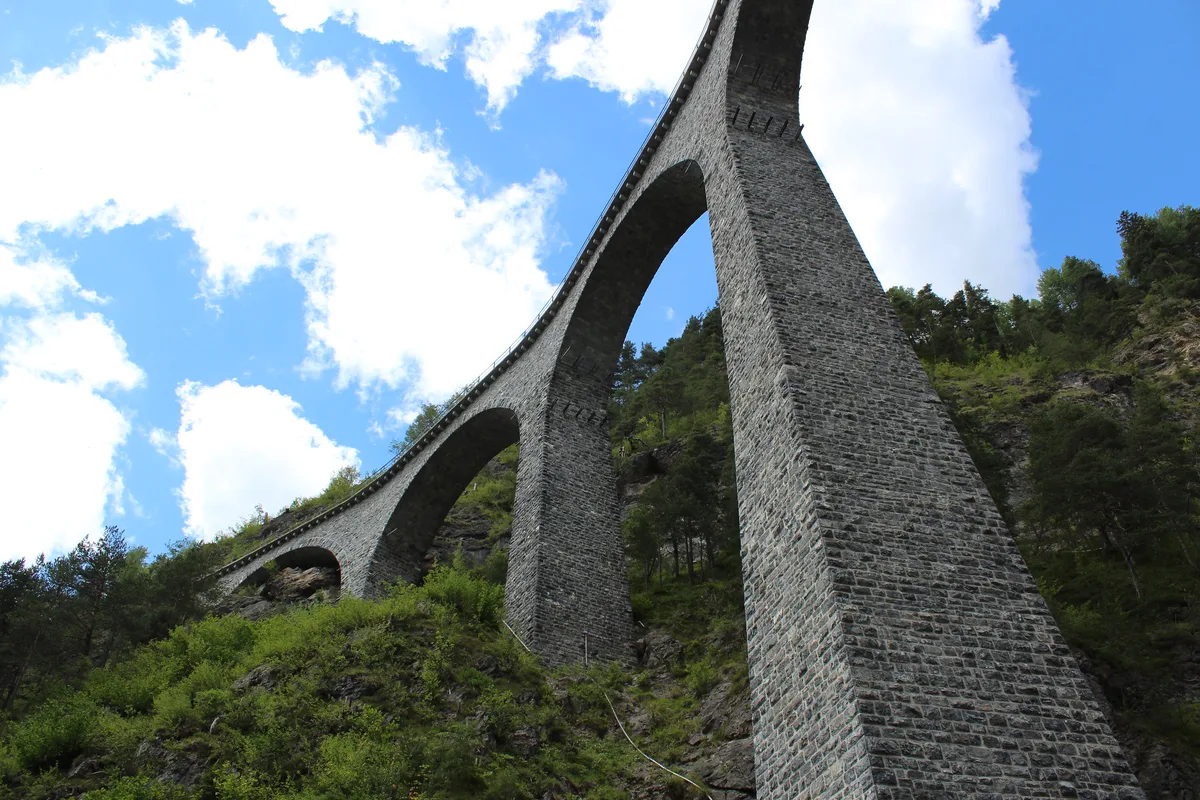
- Landwasser Viaduct: the best-known structure, near Filisur
- Spiral tunnels: loops inside the mountain that gain height
- Samedan and Bever: Engadin stations where the Bernina connection is made
- St. Moritz: the eastern terminus
Which train to take
Your choice comes down to scenery, reservations and flexibility. RhB publishes the current timetable, so check each service there before booking. The table below sets out the main trade-offs.
| Train | Route | Reservation | Best for |
|---|---|---|---|
| Regional RhB train | Thusis to St. Moritz and nearby stops | See RhB timetable | Flexible hop-on, hop-off travel |
| Bernina Express | Chur to Tirano, over both lines | Required, so book ahead | Seeing both the Albula and Bernina lines in one trip |
| Other through services on the line | See RhB timetable | See RhB timetable | Fast connections to the Engadin |
Tickets, passes and reservations
A point-to-point ticket covers a regional train on the line. Rail passes may also cover it, but panoramic trains add a reservation requirement. Read the pass for Swiss rail travel guide before you buy, then read RhB's official pages for coverage. A half-fare discount works differently from a pass, so check how it applies to your train. Use the SBB timetable app for live times and reservations. Compare carriage options in our first-class carriages guide. Switzerland Tourism explains national travel options in more detail. Prices are not quoted here because RhB sets them and they change, so check current fares in CHF on the operator's site.
How to get there
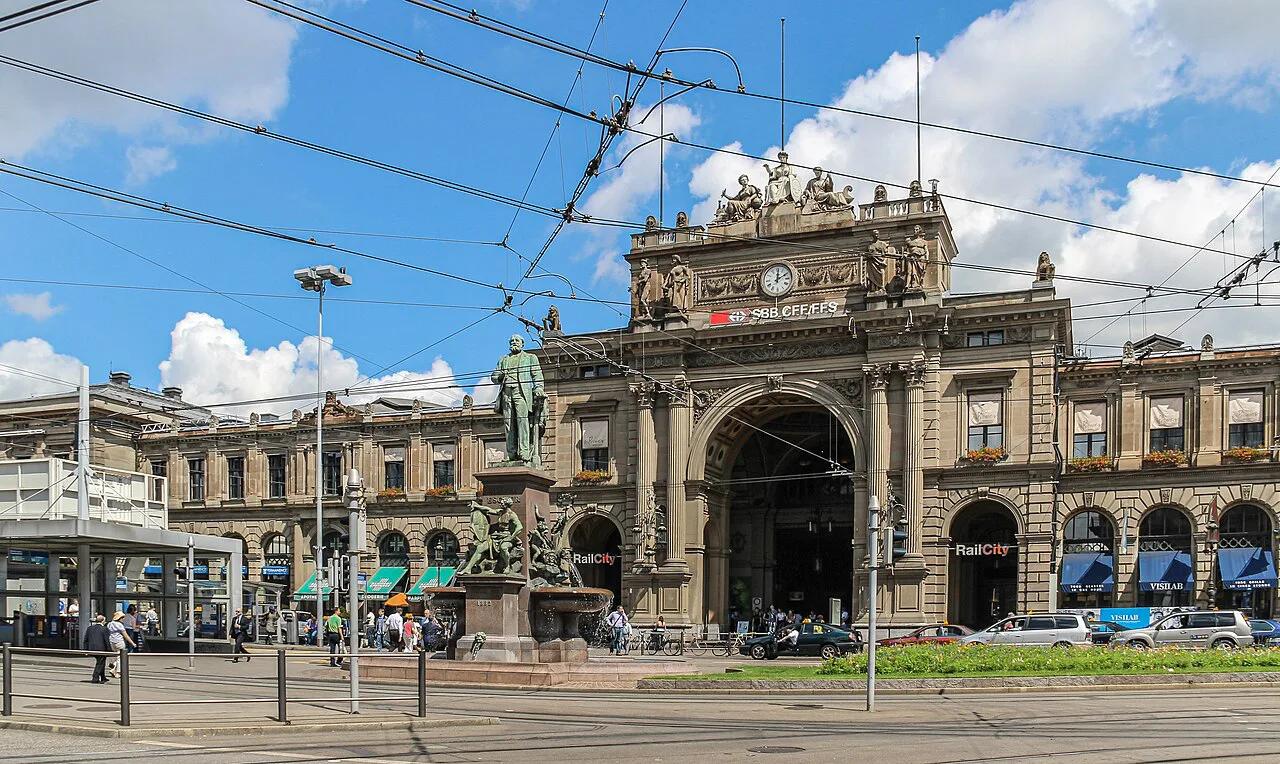
Most visitors arrive from Zurich, and they change at Chur for Thusis. Start at Zurich main station if you are coming from the north. Our Zurich-to-St. Moritz rail guide covers that full journey. For wider planning, the Swiss rail network guide shows how routes connect. Allow generous time for any change at Chur or Samedan, because the Albula line is single track in places and delays can ripple.
Best time to ride and what to expect
Winter brings snow, shorter daylight and a risk of weather disruption. The snow-covered Albula valley looks very different from the summer landscape. Summer is the busiest season, with crowds at the windows and photo congestion at the best viewpoints. Autumn is a good middle ground for clearer light and fewer visitors, but conditions vary year to year. Before you travel, check RhB's live disruption page for current line status.
Sample plans
Three structures work well, and each has a different cost in time.
- Day trip from Zurich: Zurich to Chur, then Chur to Thusis and on to St. Moritz, returning the same day. This is quick but long, so it suits travelers who accept a tight schedule.
- Overnight in the Engadin: base yourself in St. Moritz or Samedan, ride the Albula line in daylight and return the next morning. This gives you time to enjoy the Engadin and avoid a late return.
- Switzerland to Italy over the Bernina: take the Bernina Express from Chur to Tirano, then continue by rail. Our Zurich-to-Milan rail guide covers the standard alternative route.
Mistakes to avoid and who should skip it
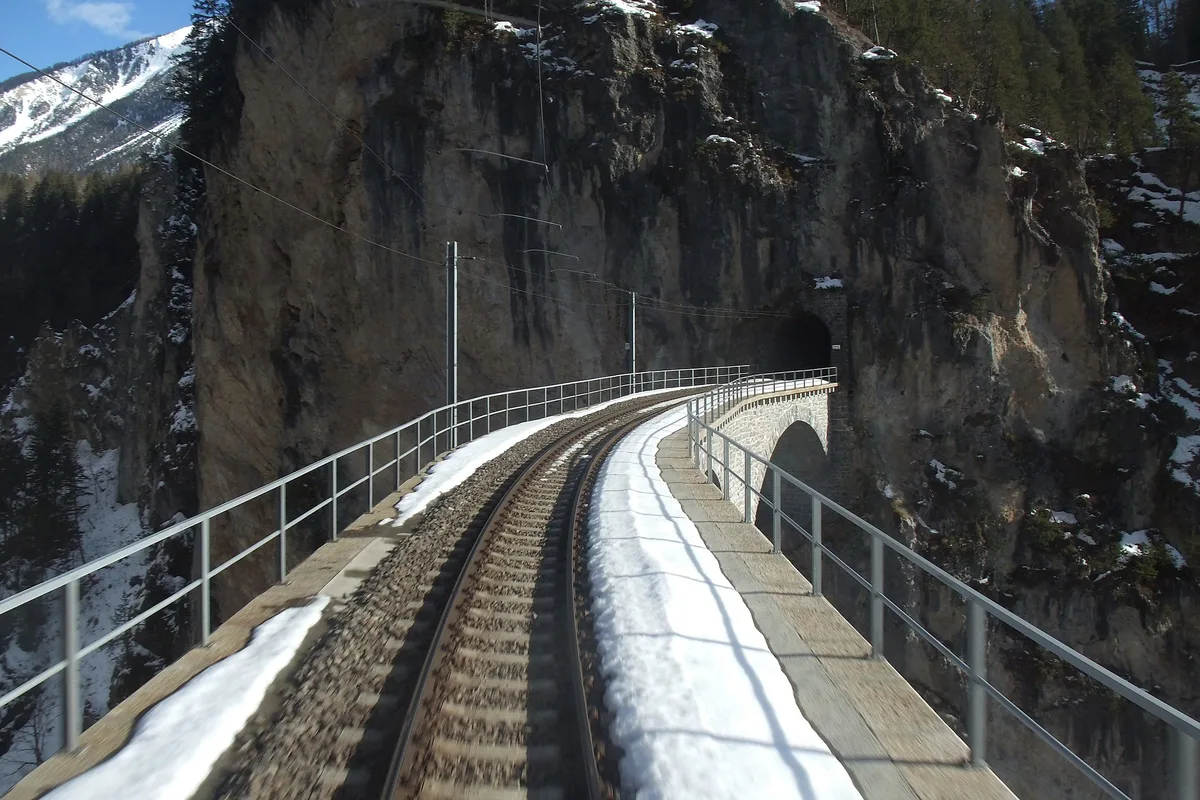
Several common errors cause the most disappointment. Do not assume the Bernina Express needs no reservation, because it does. Do not book the wrong train for the scenery you want. Do not ignore the question of open versus closed windows on panoramic cars. Do not plan tight connections at Chur or Samedan. Do not travel without checking the live timetable. Skip this line if you have a very short window, a pass with limits, a reservation-only plan, or a fear of heights and narrow ledges. For other scenic rides, try the Gornergrat line, the Brienz Rothorn ride or the Centovalli line.
The Albula Tunnel: the route’s high-mountain crossing
The route’s decisive engineering feature is the Albula Tunnel, which carries trains beneath the mountain crossing before they reach the Engadin. It explains why the railway can make a dramatic climb without relying on a rack system. The line opened in 1903, when this tunnel and its approach works made an all-weather rail link to St. Moritz possible.
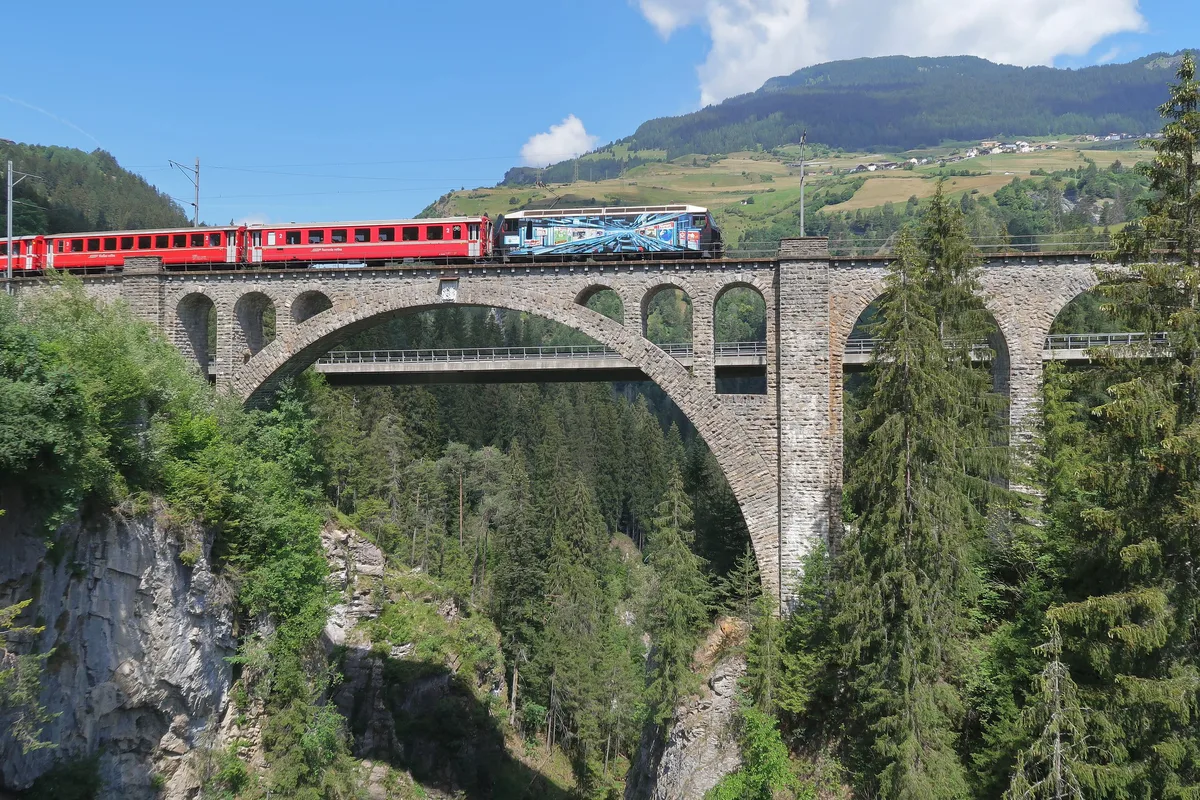
Allow time to enjoy the approach rather than treating the tunnel as a blank interval. Over its 61.67 km, the Albula Railway uses viaducts and spiral tunnels to manage a maximum gradient of 35‰. The enclosed tunnel section offers no views, so use it to switch sides, check your connection, or prepare for the Engadin landscape after the exit.
On regional RhB services, sit where you can move between windows before the climb. Panoramic Bernina Express carriages offer a different experience, but still require a reservation. Check the current RhB timetable before choosing a specific train.
Frequently Asked Questions
Where does the Bernina Express start and finish?
The Bernina Express runs from Chur to Tirano, using both the Albula and Bernina lines. Check RhB for the current timetable before you travel.
Is the Bernina Express worth it?
It suits travelers who want one long scenic ride over both heritage lines. Skip it if you have a short window or no wish to reserve a seat in advance.
Rail notes for your next trip
Optional updates when our rail guides change.
Related guides

More guides
Picked from the same area