
São Bento Station Porto: Tiles, Trains & Visit Guide
Last updated November 2026: sao bento station is a working terminus in central Porto, and its azulejo-tiled hall is free to enter. Local and regional trains use it, while long-distance services stop at Campanhã. Rail users need the station-choice advice below, and sightseers only need a short stop, so this guide covers both and links to our Portugal rail network guide.
Featured image: Portuguese_eyes, CC BY-SA 2.0, via Flickr.
Is São Bento Worth Visiting? (Quick Answer)
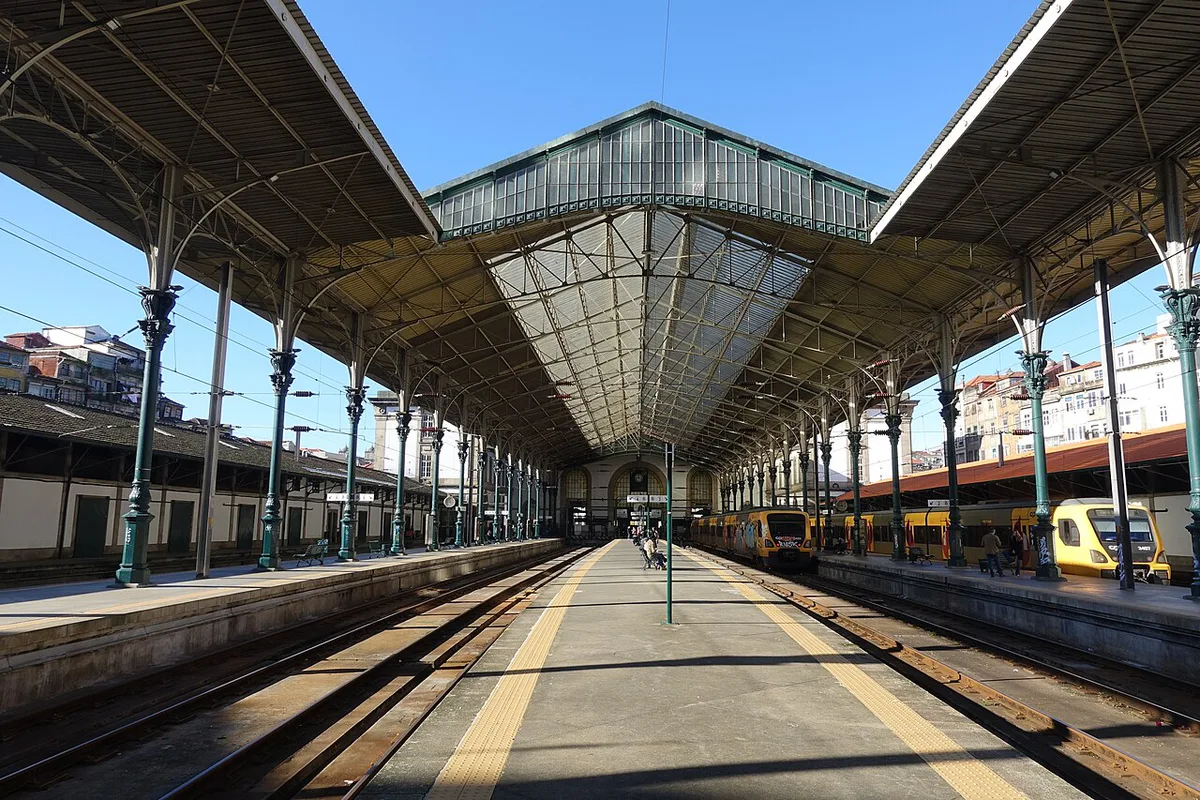
Yes, even if you are not boarding a train. The hall is a public space, and a typical sightseeing stop takes 20 to 40 minutes. Tile panels by Jorge Colaço cover the walls, and the station is still in daily use. Most visitors pair it with a walk through the old town.
Photo-focused visits run 30 to 45 minutes, against 20 to 40 for a pure stop. Pick the longer slot if you plan to shoot the tiles.
- Entry: free, with no ticket needed for the main hall.
- Time needed: 20 to 40 minutes for a pure sightseeing stop.
- Best for: rail users on local and regional lines, plus anyone exploring central Porto on foot.
- Not for: travellers arriving on long-distance trains who only need the platform at Campanhã.
São Bento vs Campanhã: Which Station Do You Need?
Long-distance trains do not stop at São Bento. Services such as the Alfa Pendular Guide: Routes, Tickets & Is It Worth It and Intercidades arrive at Campanhã, Porto's main long-distance station. From there, a short local hop reaches São Bento in the historic centre. Many long-distance tickets cover that connection, so read your fare conditions on the CP passenger site. Our CP ticket guide explains how fares work. For the other station, see our Porto Campanhã guide. Coming from the capital, start with the Lisbon to Porto train guide.
- São Bento: local and regional trains, central location, tiled hall. Best for sightseeing and regional day trips.
- Campanhã: long-distance arrivals, including Alfa Pendular and Intercidades. Best for Lisbon and other national connections.
- Connection: a short local train links the two stations. Look up the current timetable and whether your ticket includes it.
- Skip the transfer: if your hotel is elsewhere, Porto's metro may be easier. Look at the route map first.
What to See in the Hall
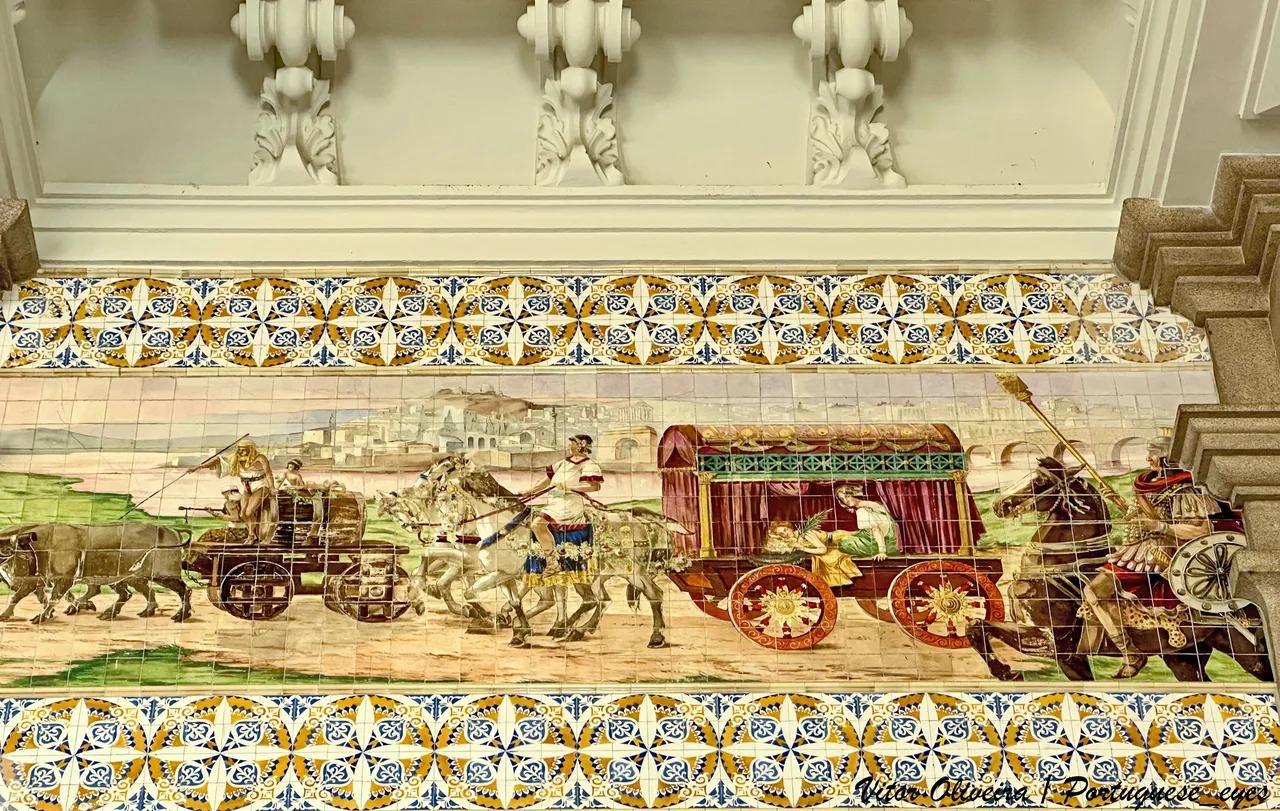
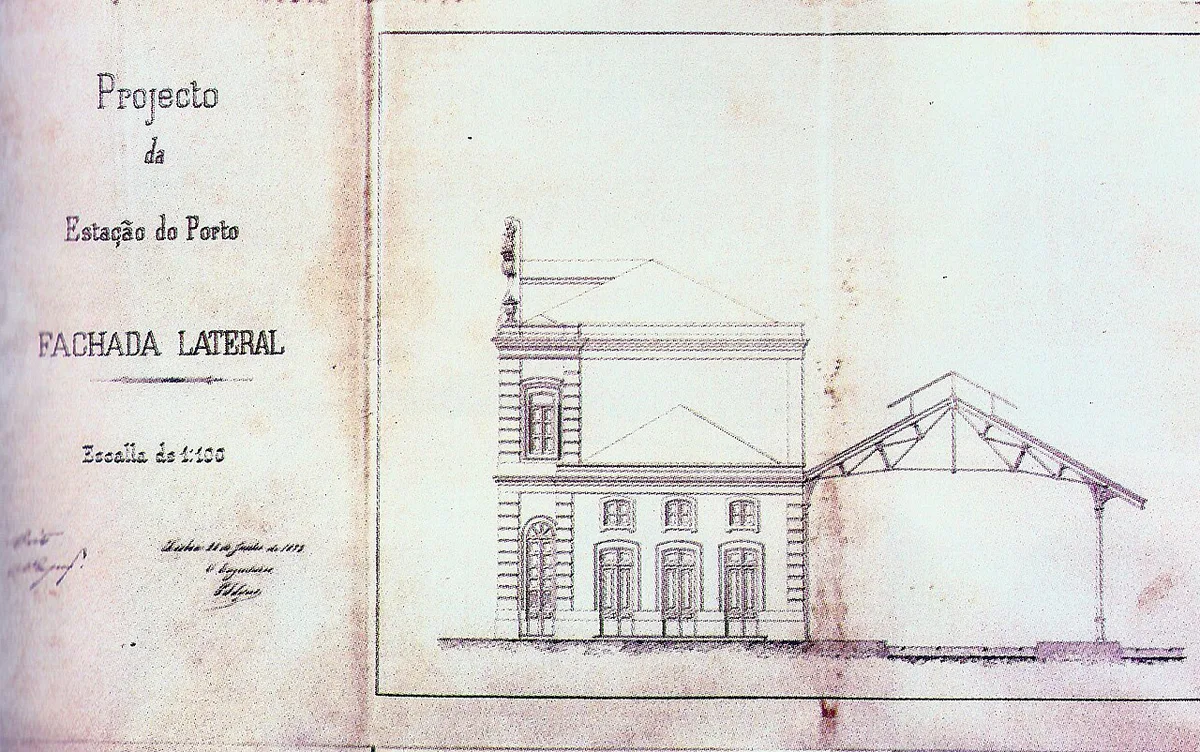
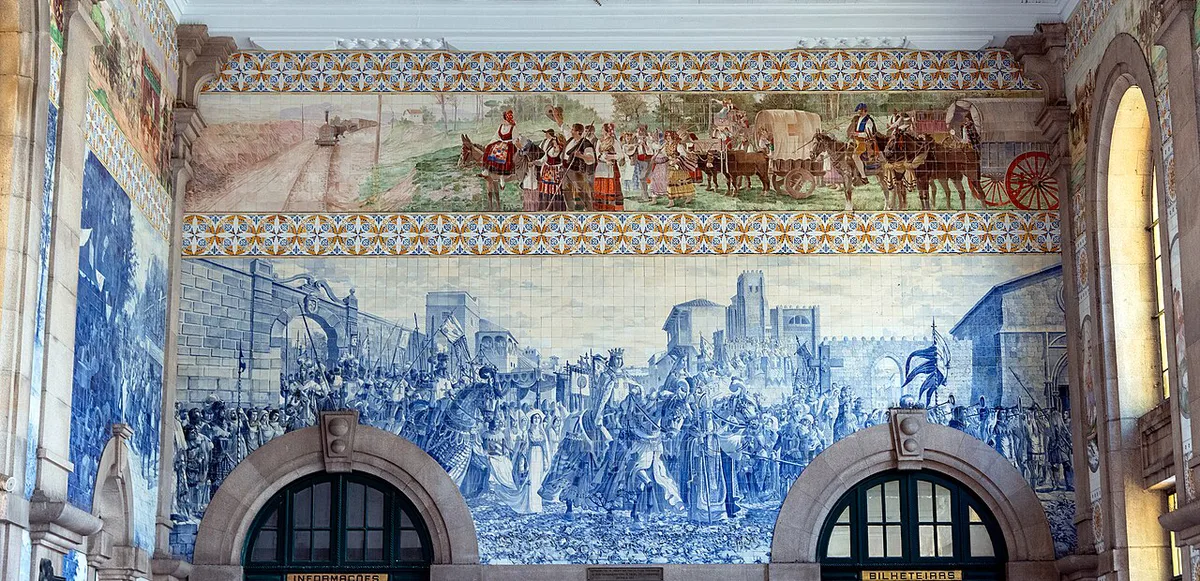
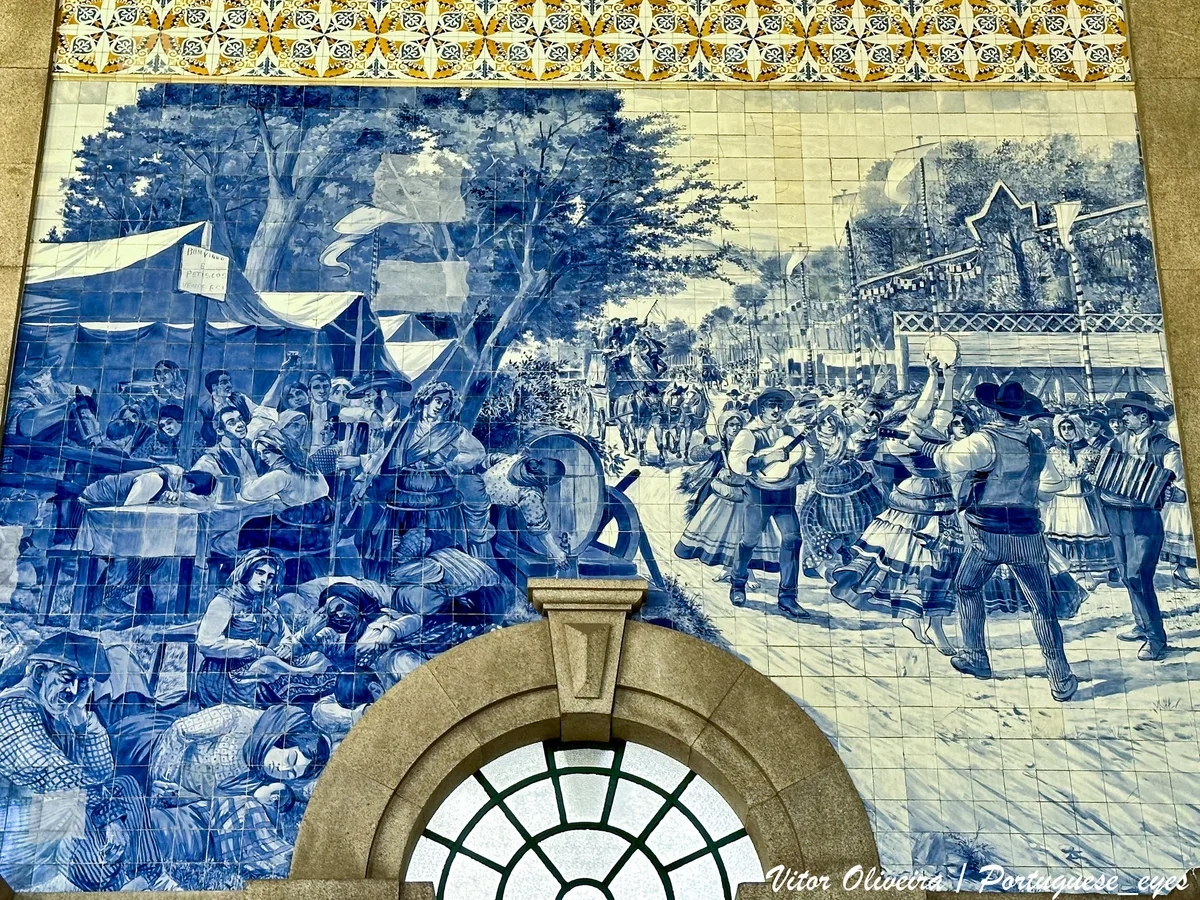
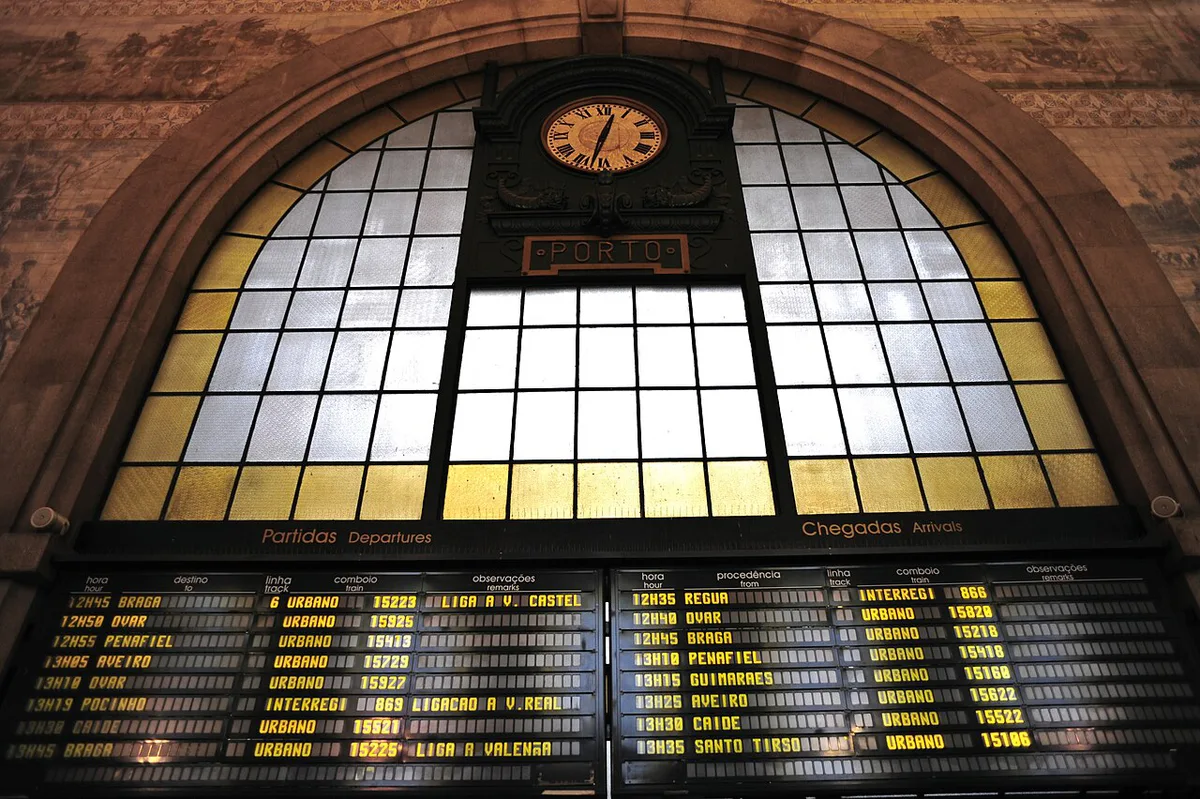
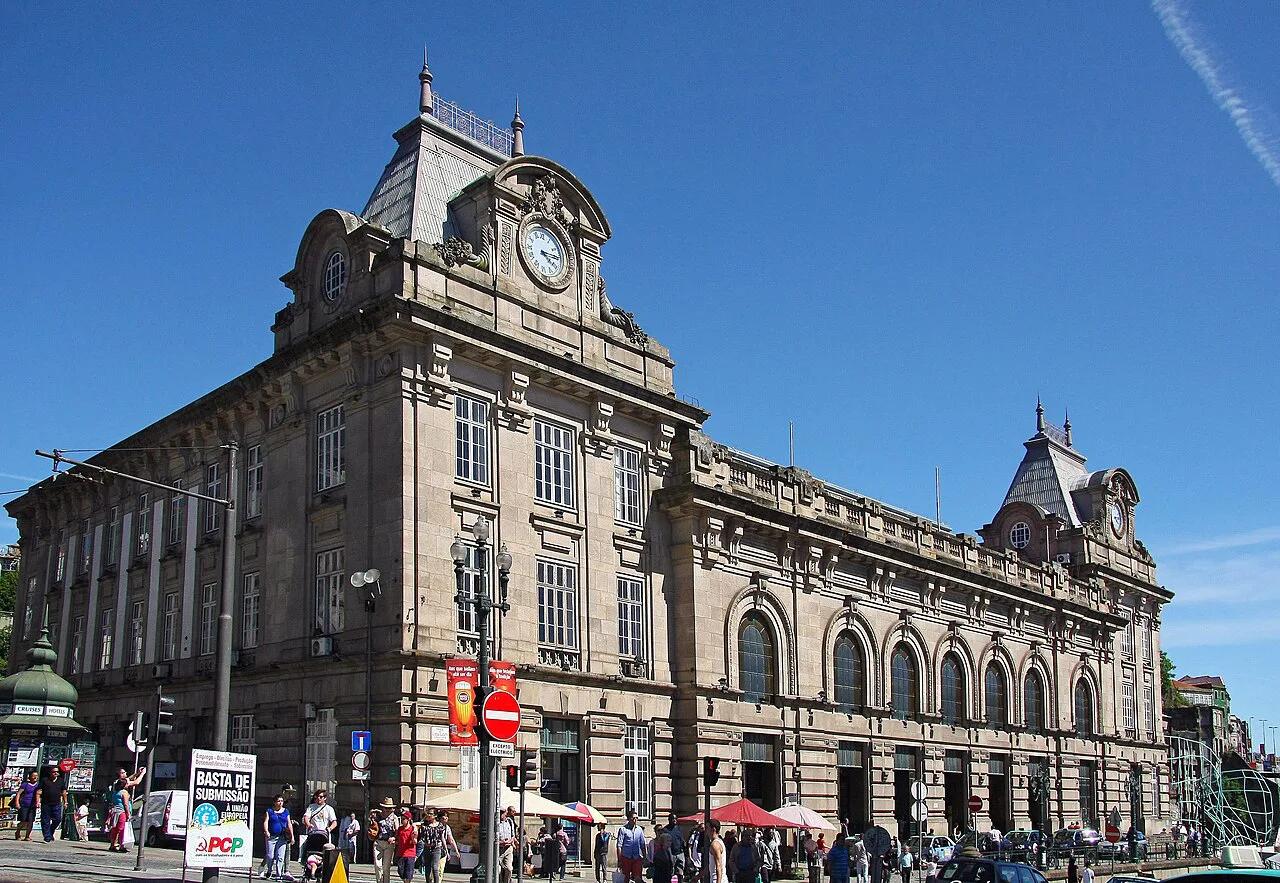
José Marques da Silva designed the station, and construction began in 1904. Colaço's azulejo panels date from about 1905 to 1916, and the station was inaugurated in 1916. Roughly 20,000 tiles cover the main hall. The large blue-and-white scenes show episodes of Portuguese history, including the Battle of Valdevez (1140) and the Conquest of Ceuta (1415). Lower coloured friezes show rural life, such as markets and festivals. Look up for the clock above the platform doors and the high windows that light the tiles. The building stands on the site of a former Benedictine monastery.
Photographing the Azulejo Hall: Light, Angles and Etiquette
The hall is one of the easier interiors in Porto to photograph, but the tiles are large and the space is busy. A few decisions before you raise the camera make the difference between a flat snapshot and a clean frame.
Light inside the hall
Daylight reaches the panels through the high windows, so the blue-and-white scenes read best when the hall is bright but not harsh. Quieter early-morning and late-evening hours give you fewer people crossing the frame. Mid-morning is livelier, and you will be waiting for gaps. Glazed tile reflects, so step a little to one side of a panel rather than shooting it dead-on, and you will pick up fewer glare spots.
Angles that work
- Wide-angle from a corner: this takes in the upper scenes, such as the Battle of Valdevez and the Conquest of Ceuta, together with the lower coloured friezes.
- Straight-on detail shots: a phone or short zoom isolates a single scene without distortion at the edges.
- Clock and doorways: include the clock above the platform doors for scale and for a clear sign that this is a working station.
- Keep verticals upright: tilting the camera upward makes the walls lean, so step back or shoot level and crop later.
Etiquette
Passengers have priority. Avoid tripods in busy periods, keep clear of the platform doors, and do not stop in the middle of walkways. If a train is about to depart, take the shot after the crowd has passed.
A short photo route
Allow 30 to 45 minutes in the hall, then continue on foot to Porto Cathedral, about 0.3 km away, and on to the Ribeira waterfront, around 0.6 km from the station. That gives you tile interiors, a hilltop terrace and river views within an easy morning or evening walk.
Trains From São Bento
Regional and local services run from São Bento. Guimarães, Braga and the Douro line are the destinations most often named. The Douro line usually involves a short connection at Campanhã, so plan it with our Porto to Douro Valley train guide. Use the CP timetable for your date, because platforms and frequencies change. For Spain, read the Porto to Vigo train guide and confirm which Porto station your departure uses. Do not assume it is São Bento.
How Long to Stay and When to Go
General guidance puts early morning and late evening as calmer, with mid-morning busier. That is a pattern, not measured crowd data. Commuter and regional departures also change how full the hall feels. Plan your time around your train and your goal.
| Visit profile | Time budget | Best hour | Prioritise |
|---|---|---|---|
| Sightseeing stop | 20 to 40 minutes | Mid-morning is livelier; early or late is calmer | Main panels, coloured friezes, clock |
| On the way to a train | Arrive early; add 10 to 15 minutes | Whatever your departure allows | Read the departure board, then look up |
| Photo-focused visit | 30 to 45 minutes | Early morning or late evening | Wide-angle shots from a corner of the hall |
Getting There and Around
From Campanhã, take a local train to São Bento. From Francisco Sá Carneiro Airport, metro Line E runs toward the centre, and you may need to change or walk to reach the station. Check current station names on the metro map. On foot, São Bento sits near Avenida dos Aliados, with Porto Cathedral and Palácio da Bolsa nearby. Streets around the station slope, so a suitcase is harder on the way back uphill. For the wider network, return to our Portugal by train overview.
Visiting the Hall: Etiquette, Access and Common Mistakes
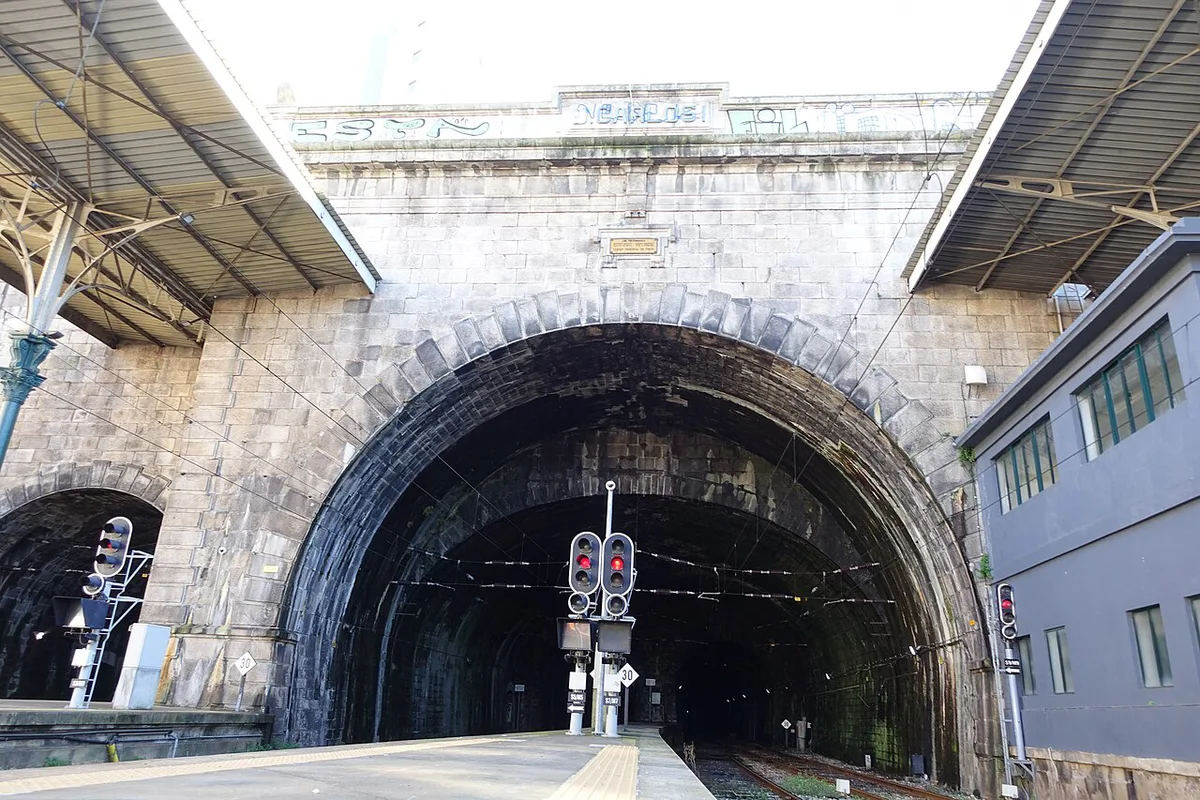
Treat the hall as a working station. Keep walkways clear and avoid tripods in busy periods. The main hall is generally accessible, but some areas may involve minor height changes. Travellers with reduced mobility should check facilities with Infraestruturas de Portugal before travelling. Ticket counters and machines are on site, and cafés are just outside. Keep an eye on your belongings in crowded moments.
- Mistake: assuming long-distance trains stop at São Bento.
- Mistake: arriving with a tight connection and no time to see the hall.
- Mistake: treating it as a ticketed attraction. It is free.
Where to Stay Nearby
Choose by criteria, not a list. Walking distance to the station matters most for early trains. Hill gradients make luggage harder, so check the route from the door to the station. Streets around Aliados can be noisy at night, so ask for a quiet room. If you leave on a long-distance train, remember it departs from Campanhã, not São Bento.
A Short Walk Beyond the Station
Start in the hall, then walk to Porto Cathedral, which stands about 0.3 km away. Continue to Palácio da Bolsa and finish in Ribeira, around 0.6 km from the station. Aliados is the other easy direction, with cafés and bakeries. With only an hour, see the hall, the cathedral and the Ribeira waterfront, and skip the rest.
Rail notes for your next trip
Optional updates when our rail guides change.
Related guides
More guides
Picked from the same area