
Marseille to Nice by Train: Times, Prices & Tickets
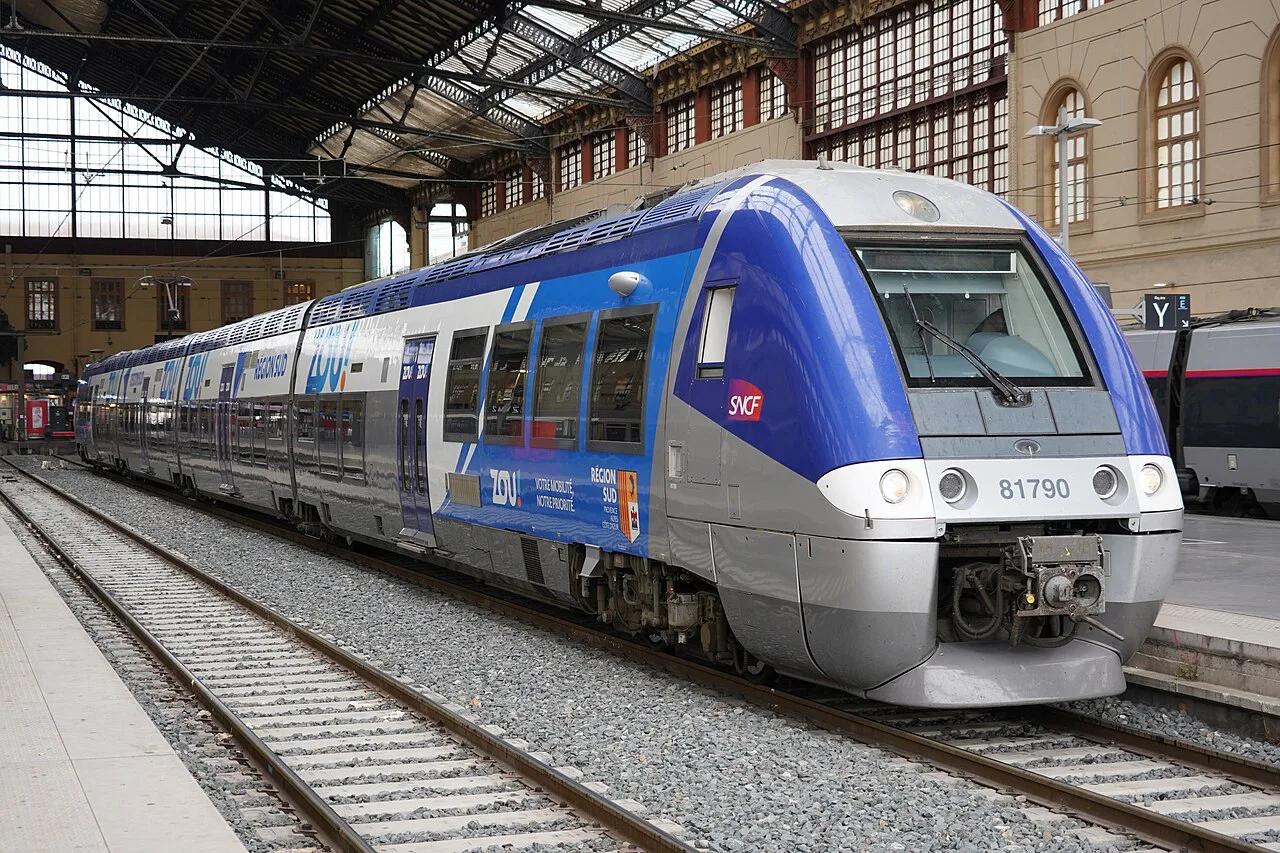
Last updated November 2026: the Marseille to Nice train is a direct ride from Marseille-Saint-Charles to Nice-Ville that takes roughly two and a half hours. Direct TER regional trains run along the Riviera line, and TGV INOUI services also run on some days. Book through SNCF Connect, reserve a seat if your train is a TGV, and read on for stations, fare types and the mistakes that cost travelers money.
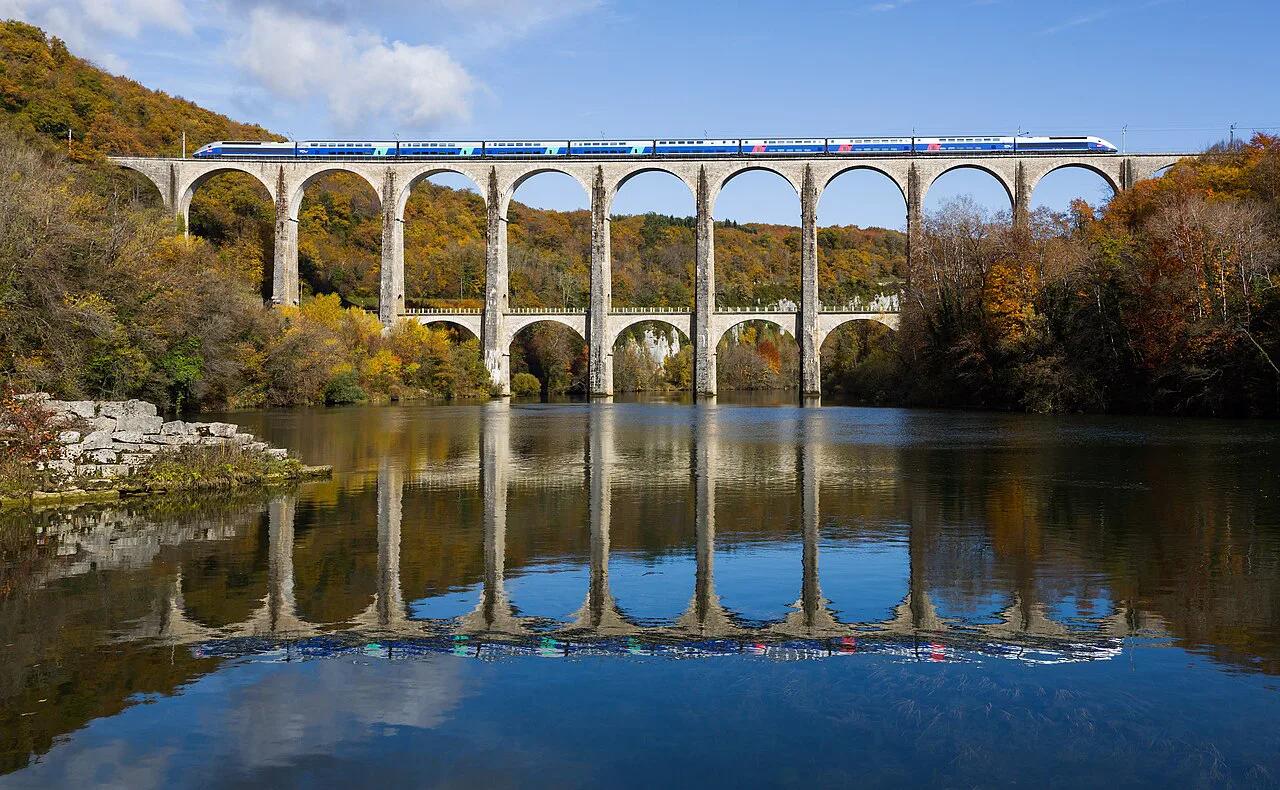
Featured image: Remontees, CC BY-SA 4.0, via Wikimedia Commons.
Marseille to Nice train: times, frequency and stations
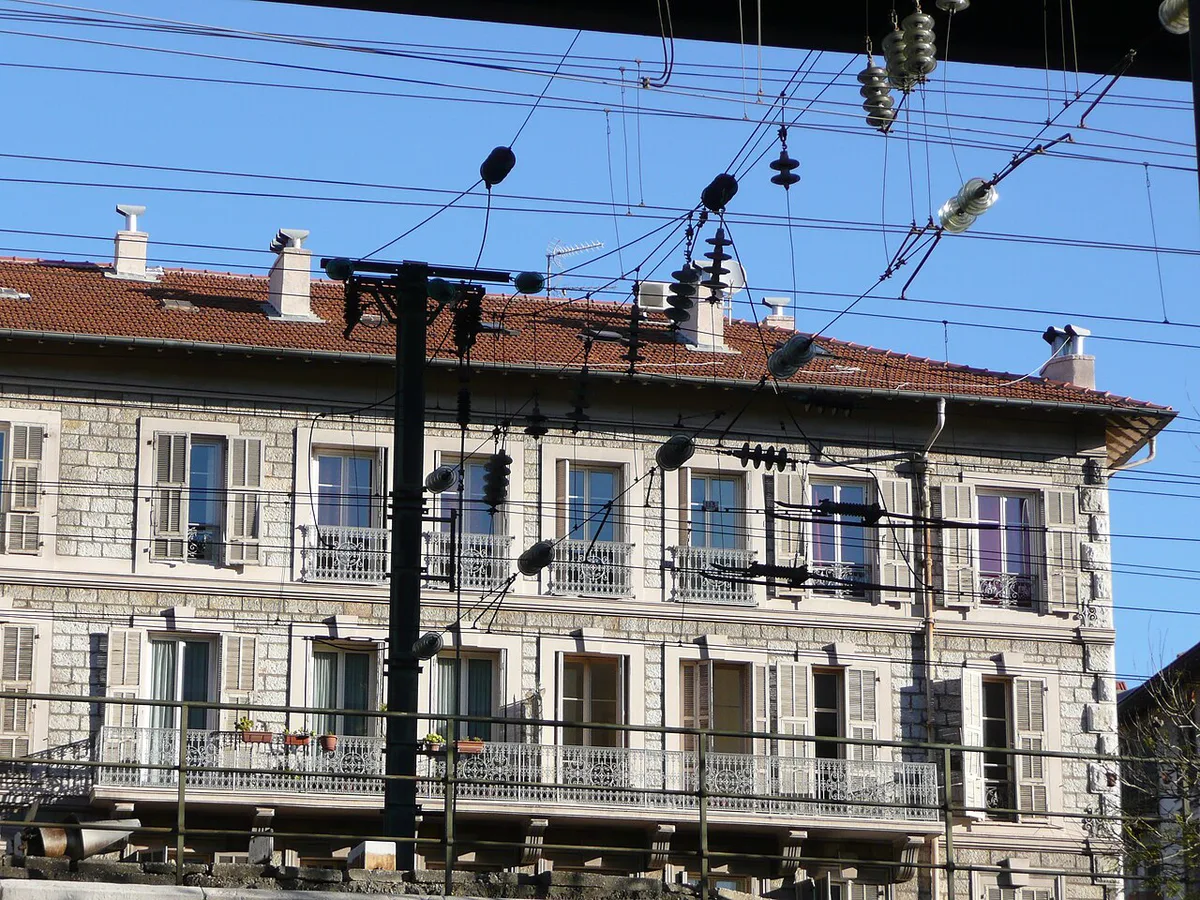
Direct trains leave Marseille-Saint-Charles and arrive at Nice-Ville. Typical direct journeys take about 2h32 to 2h38, so plan on roughly two and a half hours door to platform. Timetable data on the route lists departures through the afternoon and evening, for example around 14:57, 15:57 and 16:57. Those times are samples, not a fixed pattern. SNCF Connect shows the trains running on your date, and times change with the season and with engineering works.
Marseille-Saint-Charles is the city's main station and the only departure point most travelers need. In Nice, Nice-Ville on Avenue Thiers is the main station. Some listings also show arrivals at Nice Saint-Augustin and Nice Riquier, which are smaller stations on the same coast. Check the arrival station on your ticket before you pay, because the old town and the promenade are far easier from Nice-Ville.
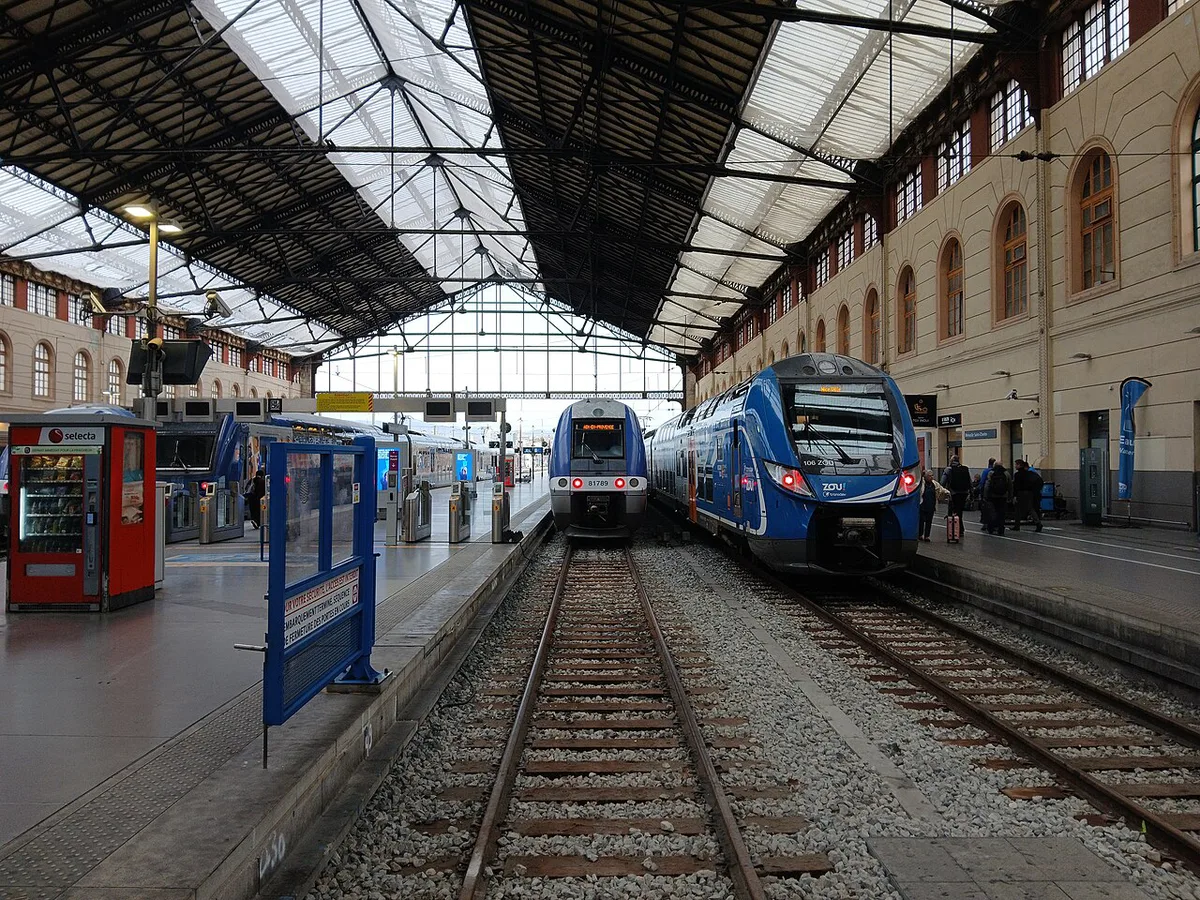
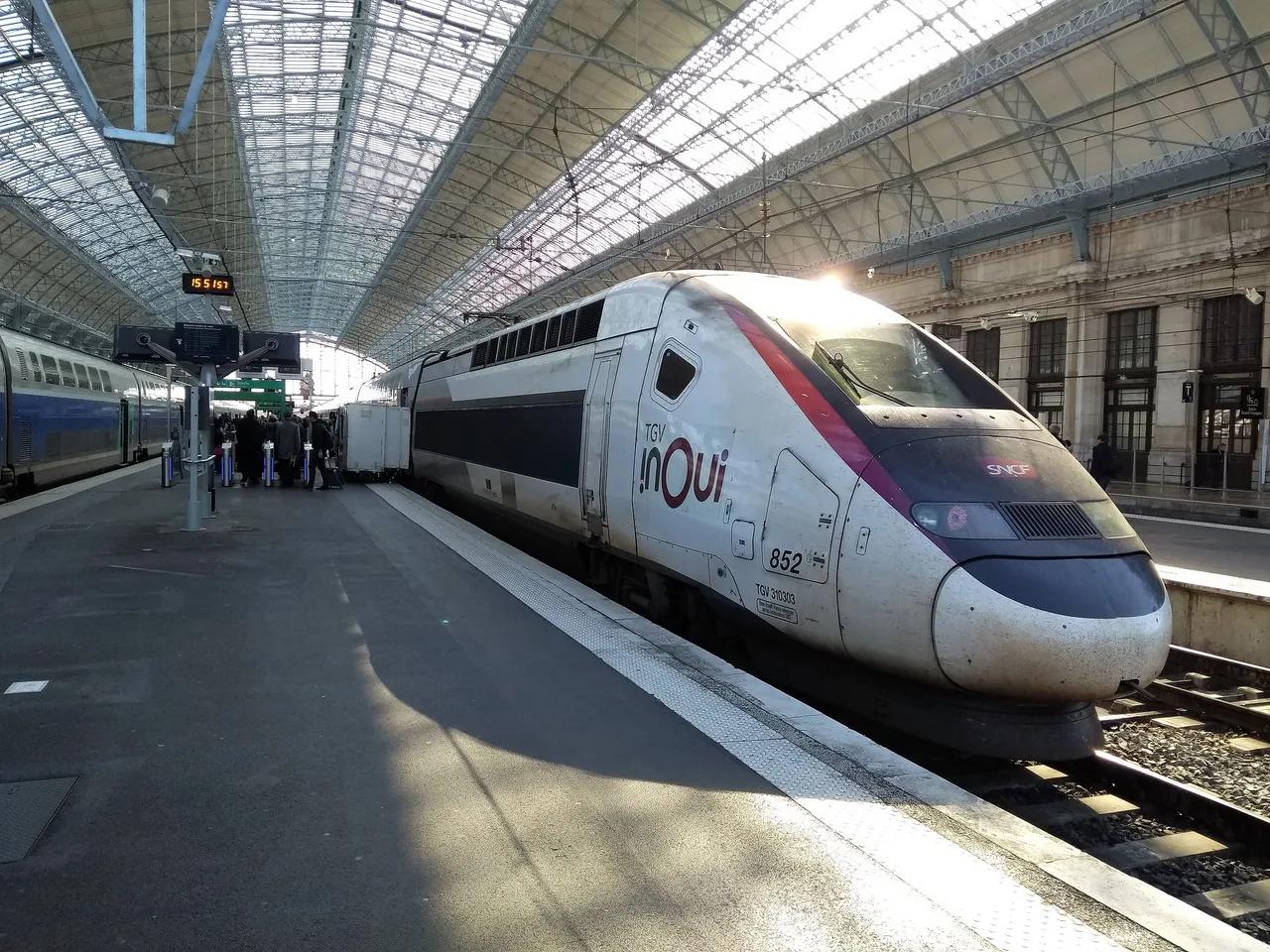
Not every departure is the same product. Some are TGV INOUI trains with compulsory seat reservations. Others are TER regional trains that cost less and are more flexible to board. Use the train type shown on the booking screen to tell them apart.
- Departure station: Marseille-Saint-Charles
- Arrival station: Nice-Ville is the one to choose for most hotels
- Typical direct journey: about 2h32 to 2h38
- Look up the exact train type and time on SNCF Connect for your date
TGV INOUI vs TER vs bus vs car: which to pick
The train is the simplest option for most travelers because it runs station to station along the coast. A TER is the slower, flexible choice on days when it is the cheaper product. TGV INOUI suits travelers who want a reserved seat and a fixed departure. Bus and car are alternatives when you need door-to-door flexibility or are carrying a lot of luggage. Use relative cost as a guide, because fares move with the booking date.
Prem's fares start from €15, but pass holders on a TGV still need a seat reservation, so factor in the fee before you assume the pass covers the trip.
| Option | Journey time | Cost level | Best for |
|---|---|---|---|
| TGV INOUI | Roughly 2.5 hours | Mid, from about €15 for early Prem's fares | Fixed times, reserved seat |
| TER regional train | Around 2.5 hours on direct services; check changes | Cheapest to mid | Flexible boarding, lower fares |
| Bus | Varies with road traffic | Cheapest to mid | Budget travelers with time to spare |
| Car | Varies with traffic and parking | Highest once fuel, tolls and parking are added | Groups and stops off the rail line |
- Choose TGV INOUI if you want a reserved seat and a predictable arrival time.
- Choose a TER if a direct regional train fits your schedule and the fare is lower.
- Choose the bus if price matters more than speed and you can handle road delays.
- Choose the car if you plan stops in villages that have no station.
Ticket prices and how to book
Prices and hours checked November 2026. Fares depend on train type, class and how early you book. TGV INOUI Prem's fares start from €15 and are the cheapest advance product. Second-class tickets bought three to four months ahead can save about 35% compared with later fares. Tickets for a TGV are usually released well ahead of departure, so booking 90 to 180 days out gives the widest choice of low fares. Advance fares can come with stricter change and refund rules than flexible fares.
Book through SNCF Connect, the official operator site and app. Buying from the operator means you see the fare rules before you pay. Resellers may add booking fees, so compare the final price at checkout before you commit.
The Carte Avantage costs €49 and gives 30% off for adults. It suits residents and frequent riders more than a visitor taking one trip, so work out the saving before you buy it. A single Marseille to Nice journey rarely justifies the card on its own.
Rail pass holders such as Eurail and Interrail travelers should expect to need a seat reservation on a TGV. Reservation rules and fees change, so check the pass operator and SNCF Connect for the train you plan to take. If you are building a longer trip, our guide to TGV reservations and fare classes explains how the network works.
What it's like onboard, and the scenic stretch
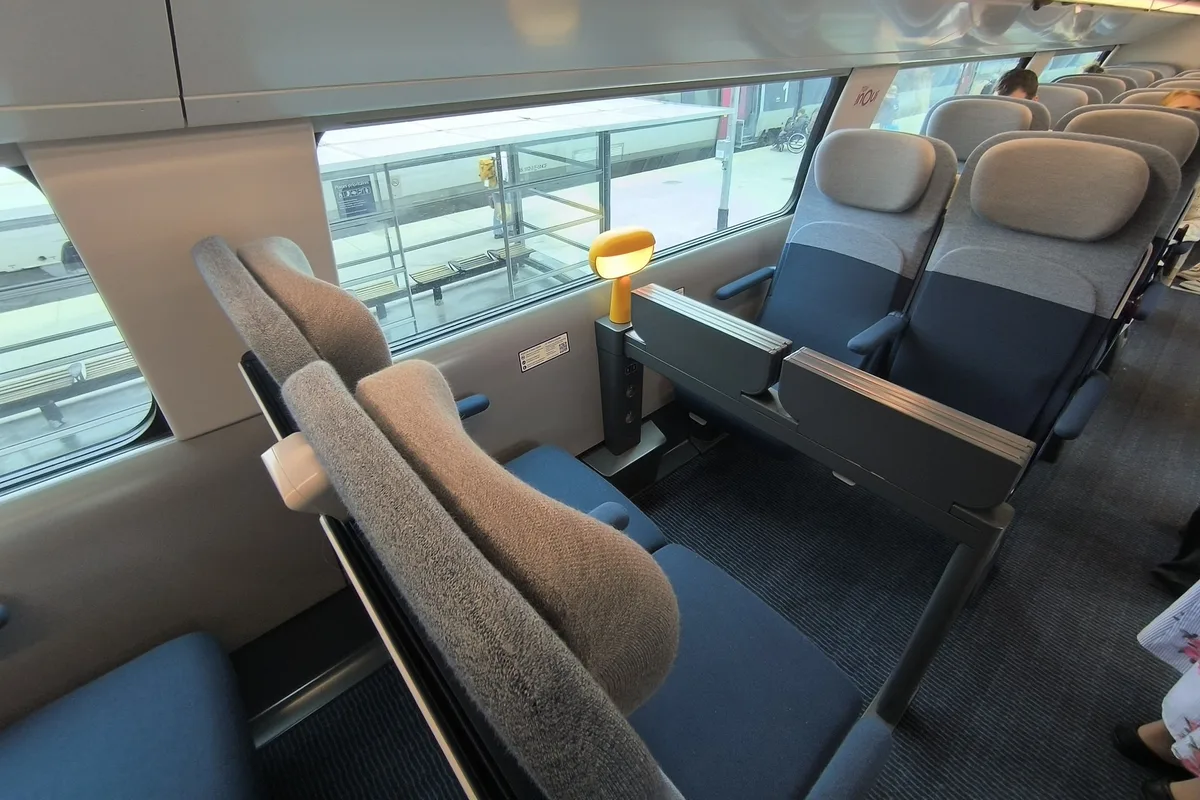
TGV INOUI trains have luggage racks at the carriage entrances and overhead shelves for smaller bags. Power sockets and fold-down tables are standard, and first class gives each passenger a separate socket. First class also uses three-abreast seating instead of four, which means more legroom.
The main reason to take the train is the Riviera coast. The line runs close to the Mediterranean on the approach to Nice, and the view is worth watching for. Sit by a window and look up from your phone once the train passes the Cannes and Antibes area. Seat-side advice depends on direction and on the specific train, so choose a window seat rather than relying on a side rule.
Stations and getting around at both ends
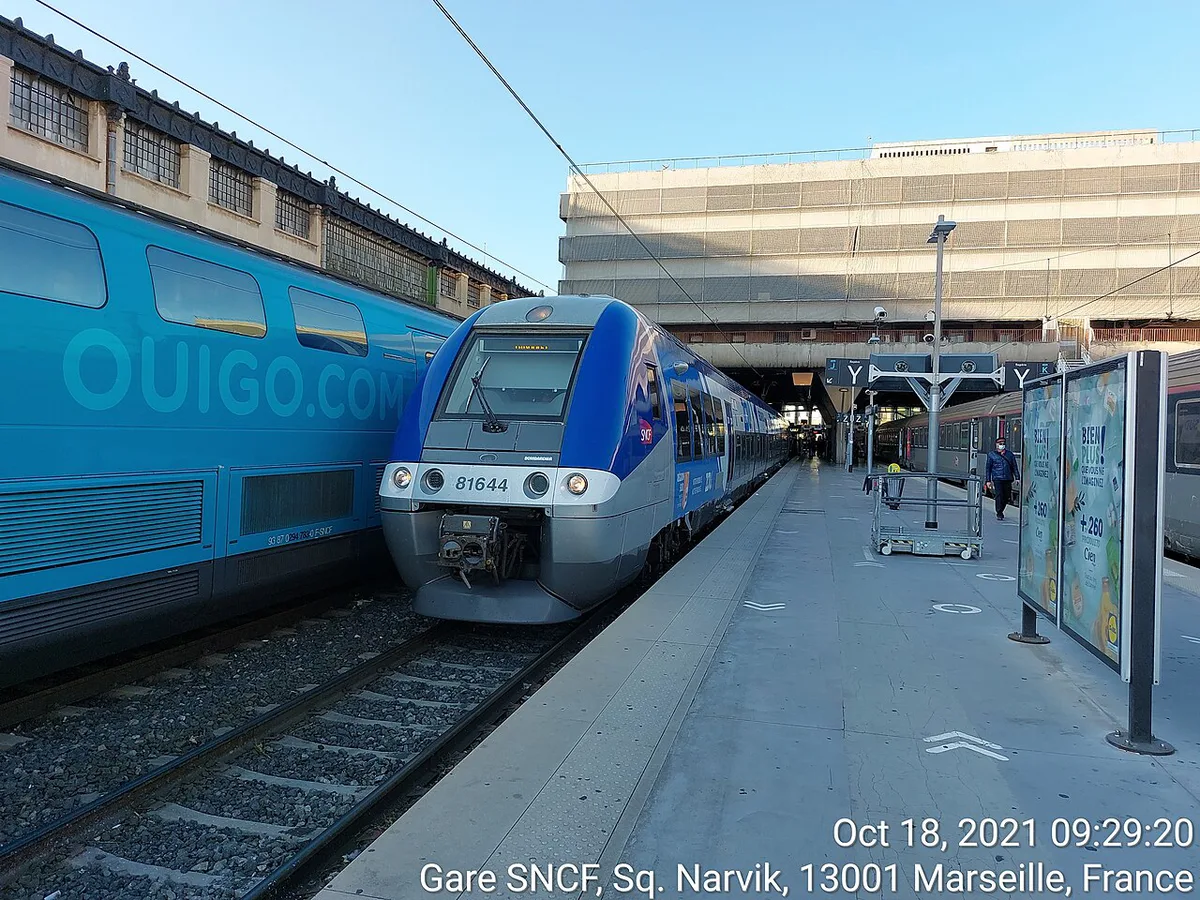
Marseille-Saint-Charles has left-luggage services, which makes a stopover easier if you arrive early or leave late. The metro runs from the station to Vieux-Port, and trams and buses leave from the same area. The current RTM network map shows the line you need.
Nice-Ville also has left-luggage services. The tram from the station is the easiest way toward the old town and the promenade. Walking is possible for many hotels, but a tram saves time with bags. Check Lignes d'Azur for current lines and ticket prices.
Travelers flying into Marseille Provence airport should not look for a rail platform there. Timetable listings show an airport bus as a connection point instead. The airport's official page lists the shuttle; then continue by train from Saint-Charles. If your route starts in Paris, our guide to reaching Marseille from Paris covers the first leg. For a direct Paris link to the Riviera, see the Paris-to-Nice rail route.
Is Marseille to Nice worth doing as a day trip?
A same-day return is possible but tight. With roughly two and a half hours each way, five hours go to the train alone. That leaves a short window in Nice, and a late departure risks missing the last return. Know the last train on your date before you commit.
A better plan is to stay overnight in Nice, or to break the trip with a stop. Cannes, Antibes, Toulon and Saint-Raphaël are named as stops on the Riviera line, but which trains call at each varies by service. TER trains are the most likely to stop at the smaller towns. Check your specific train on SNCF Connect before you plan a stop. If you are coming from the north, an Avignon stopover from Paris fits before Marseille.
Common mistakes
A few errors cause most of the problems on this route.
- Skipping the seat reservation: TGV INOUI seats are reserved, so travelers with passes need one too.
- Assuming every train is direct: watch the booking screen for changes before paying.
- Picking the wrong Nice station: choose Nice-Ville unless your hotel is near Saint-Augustin or Riquier.
- Paying a reseller fee: SNCF Connect shows the full fare with no middleman.
- Booking a tight connection: allow extra time if you arrive from Paris or the airport bus.
Onward from Nice
Nice is the base for the French Riviera and for trips toward Italy. If your journey continues east, our guide to rail options to Rome shows how long-distance routes connect. A separate page covers rail travel toward Venice.
Frequently Asked Questions
Is there a train station at Marseille airport?
No rail platform is listed at Marseille Provence airport. Timetable data shows an airport bus as a connection point instead. Take the bus to Marseille-Saint-Charles and continue by train from there.
Is there a high-speed train from Paris to Marseille?
Yes, TGV services connect Paris and Marseille. Our Paris to Marseille route guide covers times and tickets. You can then continue to Nice from Saint-Charles.
Rail notes for your next trip
Optional updates when our rail guides change.
Related guides

More guides
Picked from the same area