
Copenhagen Central Station Guide: Tracks, Metro & Trains
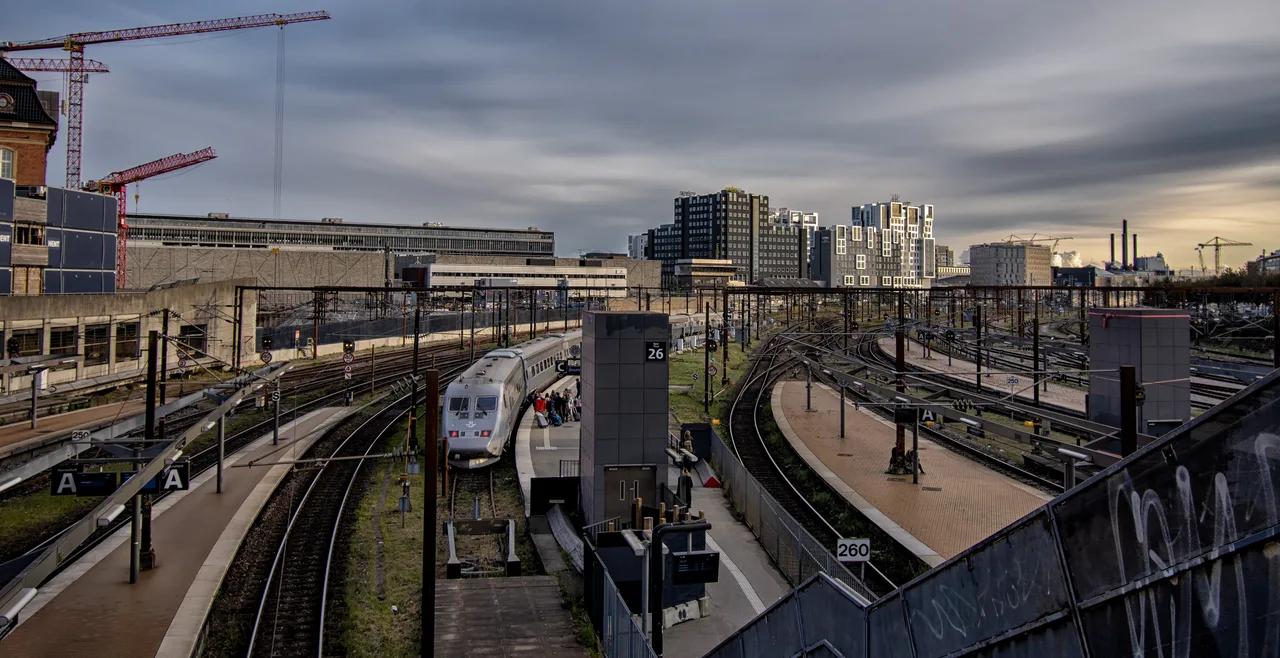
Last updated November 2026: Copenhagen Central Station, called København H on every departure board, is Denmark's main rail hub, with about 100,000 passengers a day according to DSB. S-trains use tracks 9 to 12, while long-distance, regional and Øresund trains use tracks 1 to 8 plus the awkward track 26. This guide covers the layout, the metro, the airport run and the onward trains.
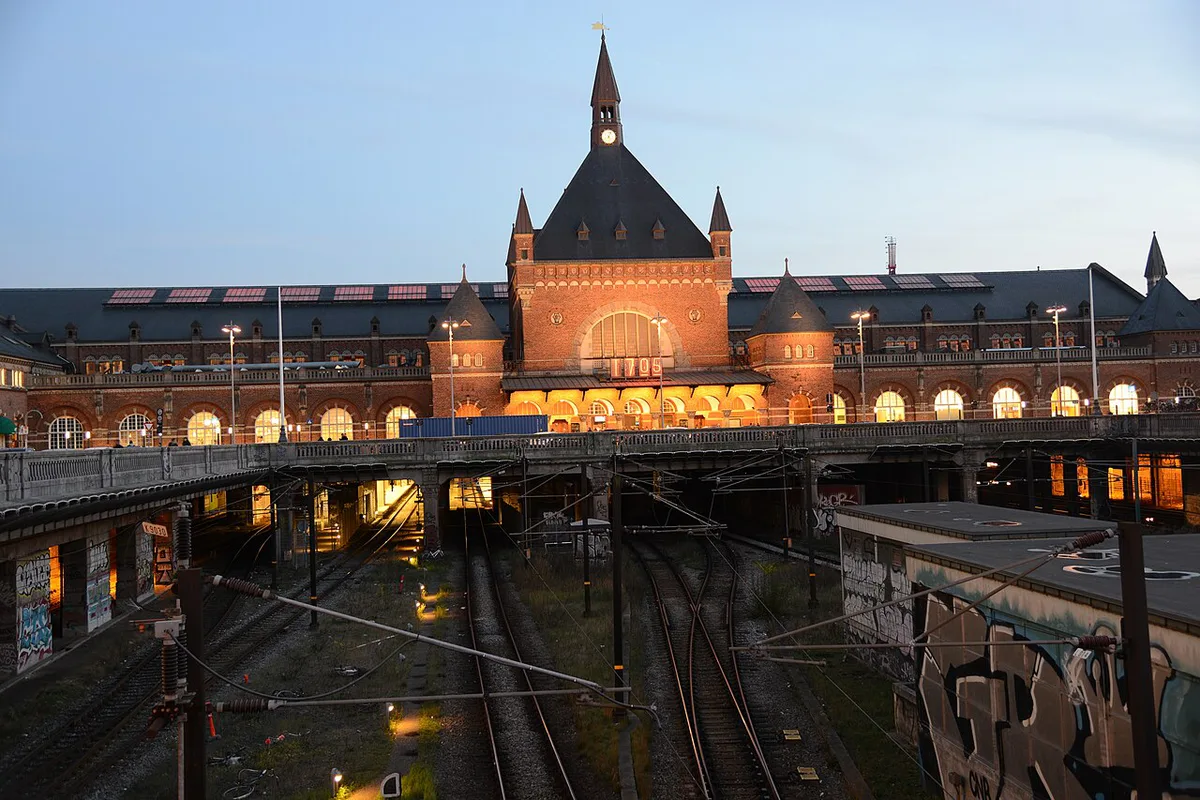
Featured image: goatsgreetings, CC BY 2.0, via Flickr.
Copenhagen Central Station at a Glance
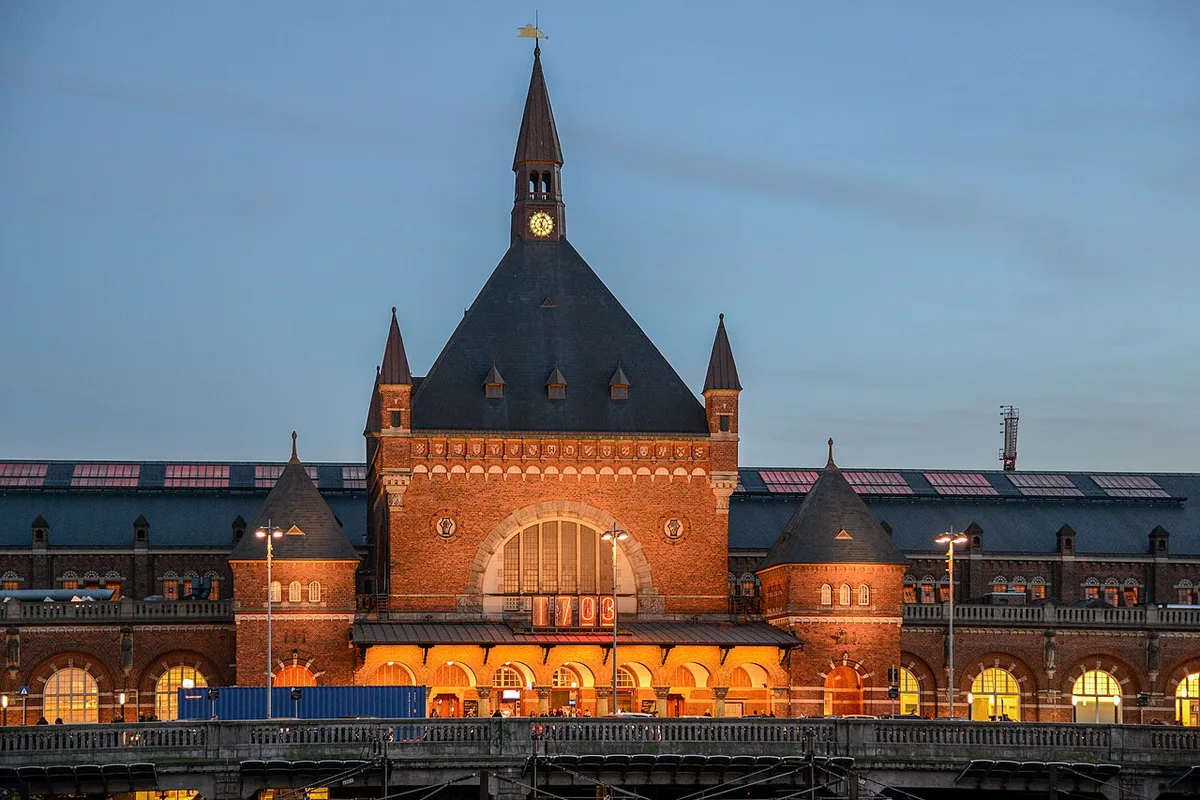
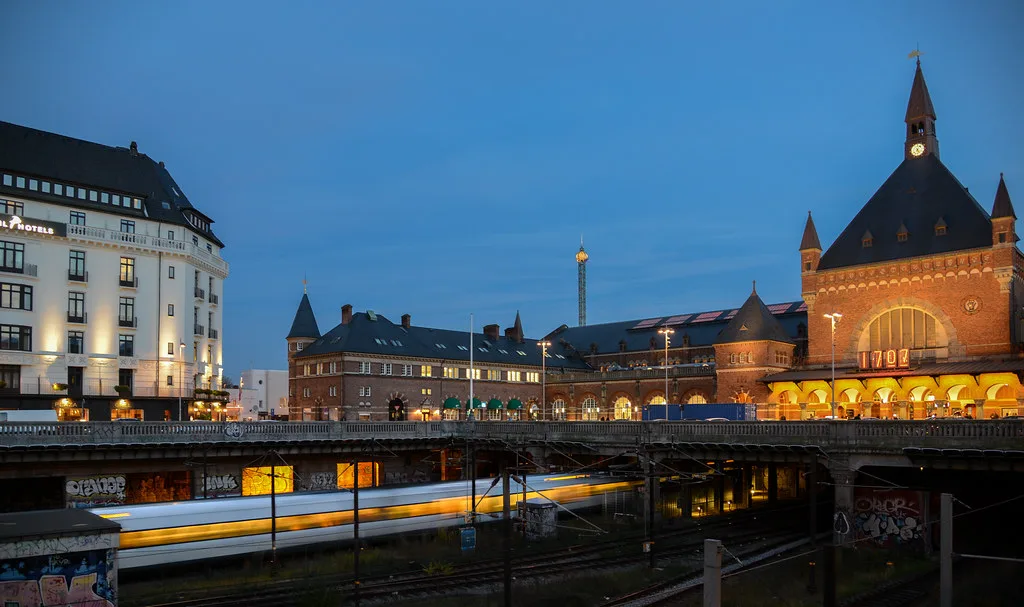
København H opened in 1911 to a design by Heinrich Wenck. Inside one brick hall sit two railways. S-trains use tracks 9 to 12, and every other service uses tracks 1 to 8 plus track 26. Two hanging signs split the hall by exit. One points to Bernstorffsgade, taxis and tracks 1 to 6 plus 26, and the other points to Reventlowsgade and tracks 7 to 12. Bernstorffsgade is also the side for Tivoli, while Reventlowsgade opens onto the start of Istedgade in Vesterbro. Metro riders have a separate street entrance on Stampesgade.
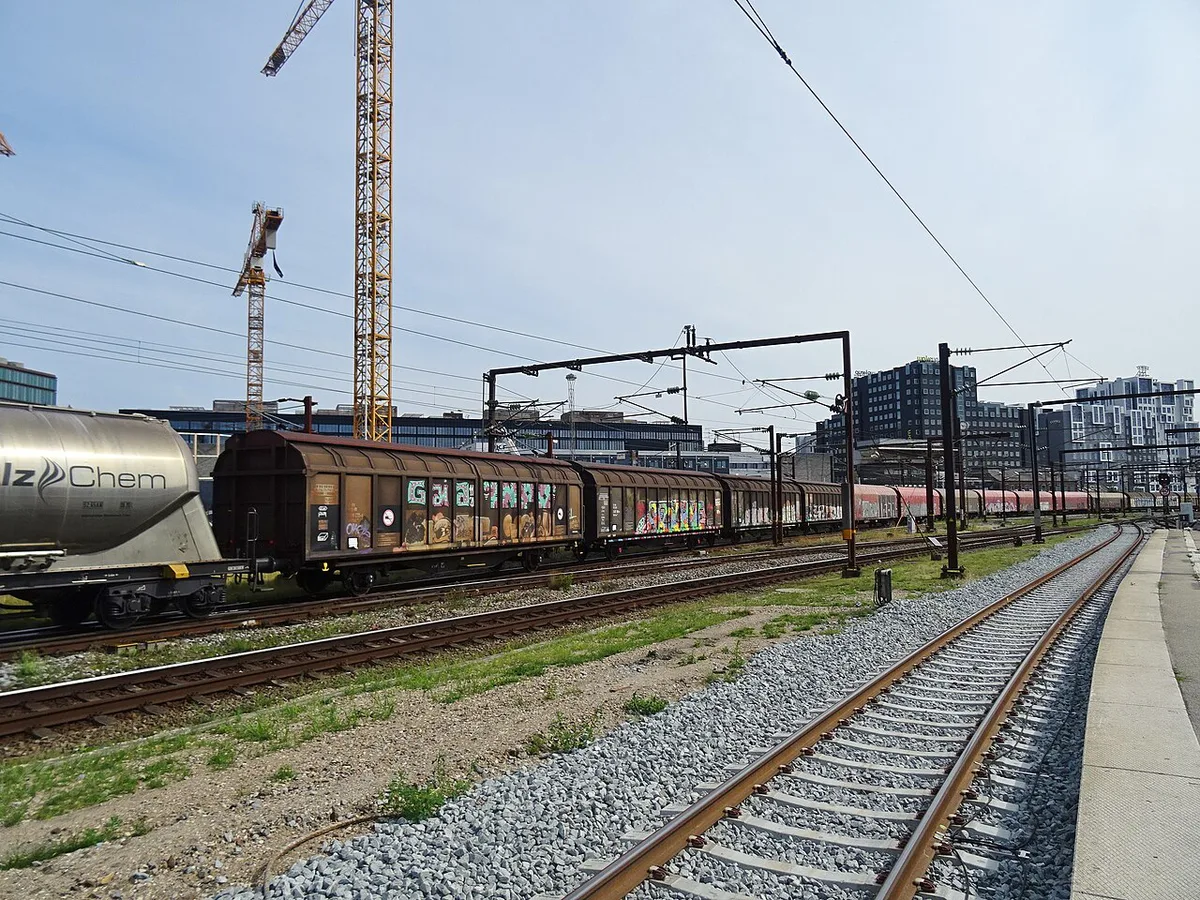
Which Track? S-Trains 9–12, Everything Else 1–8 and 26
S-trains, the red suburban trains, run on tracks 9 to 12. Electrification of the local half as the S-train network came in 1934, and that split survives today. Banedanmark, which runs the rails, describes those tracks as physically separate from long-distance services. Tracks 1 to 8 carry InterCity trains to Aarhus. Regional trains to Roskilde and Helsingør use them too, as do Øresund trains to the airport and Malmö. Track 26 is the one that catches people out. Added in 2002, it takes only shorter trains, and Banedanmark's own planning report says passengers find it awkward to reach. If your departure shows Spor 26, follow the Bernstorffsgade signs, which carry the 26, and leave a few spare minutes. Spor means track, and it is the column to read on the boards. Platforms change, so check the board again once you are down there. Lettered signs along each platform mark its sections (perronafsnit). Five mistakes catch travellers here:
- Taking the M2 for the airport. It does not stop at København H.
- Leaving the track 26 walk until the last minute.
- Staying on the airport train past Københavns Lufthavn and crossing into Sweden without a passport.
- Trusting an old saved map during the rebuild.
- Queuing at the desk for a city ticket that the app sells in seconds.
Onward Trains From Copenhagen H
Buffer time matters more than speed here. When changing from the airport train, an S-train or the metro to a long-distance train, leave extra minutes for the stairs and for track 26. Metro riders can use the pedestrian tunnel to reach the platforms without climbing to the hall. Track assignments change, so read the board and never rely on a track you saw on an earlier trip. Øresund trains carry on into Sweden, so bring photo ID on any Malmö trip. Border-control rules can change, so check current requirements before you travel. For Stockholm, read our X2000 train guide. Seat and fare advice sits in our SJ ticket advice. Your arrival point is Stockholm Central. For the wider picture, start at our Scandinavia rail planning hub. Use this table to decide which part of the station to head for.
Trips to Sweden on Øresund trains need 24 hours allowed for travel, and any Malmö trip needs photo ID, so plan both before boarding.
| Destination | Service | What to look for | Route guide |
|---|---|---|---|
| Malmö | Øresund trains across the bridge | Malmö on the board; tracks 1 to 8 side | Malmö rail route |
| Stockholm | Direct or X2000 services | Stockholm on the board; confirm the Spor | Stockholm rail route |
| Hamburg | Long-distance international train | Hamburg on the board; confirm the Spor | Hamburg rail route |
| Oslo | Long-distance international train | Oslo on the board; confirm the Spor | Oslo rail route |
| Aarhus and Jutland | DSB InterCity | Aarhus on the board; tracks 1 to 8 side | Danish rail network guide |
| Airport | Øresund train, about 15 minutes | Get off at Københavns Lufthavn | See the airport section below |
Metro: M3 and M4 (Not the Airport Line)
København H has had a metro stop since the M3 City Circle opened in 2019. The M4 shares the tracks here. Rådhuspladsen is the first stop, then Gammel Strand, then Kongens Nytorv, three stops out, with Nyhavn just off the square. A pedestrian tunnel links the metro with the train platforms, and the metro station has two lifts. Trains run all night. After midnight on Friday and Saturday they come about every 8 minutes, and on other nights about every 20 minutes. The line that does not stop here is the M2, the airport metro, which runs through Nørreport and Kongens Nytorv instead. For the airport, take the train.
After midnight on Friday and Saturday the metro runs about every 8 minutes, but the M2 airport line skips this station, so use the train for the airport.
Getting to Copenhagen Airport From the Station
Take the train. It runs about 15 minutes to Københavns Lufthavn and needs a three-zone ticket, 30 DKK for an adult in 2026. Prices and hours in this guide were checked November 2026. Some airport trains are Øresund trains that continue across the bridge, so get off at Københavns Lufthavn. Stay on and your next stop is in Sweden, where you need your passport. Coming back, city trains leave Terminal 3 from tracks 1 and 2. A taxi makes sense only with heavy luggage.
Tickets: App, Machine or Desk
For anything inside the city, buy on your phone. The Rejsebillet app and the DSB app both sell tickets for trains, metro and buses. A two-zone ticket covers central Copenhagen and costs 24 DKK for an adult. Children under 12 ride free with an adult, two per adult. Riding without a valid ticket brings a control fee of 750 DKK. Red DSB ticket machines stand near the entrances. The staffed desk, DSB Salg og Service, is open 07:00 to 20:00 on weekdays and 08:00 to 18:00 at weekends. Queue there for long-distance or cross-border tickets, not for a hop to Kongens Nytorv.
| Item | Price (2026) | Best for | Pays off when |
|---|---|---|---|
| Two-zone city ticket | 24 DKK adult | Rides inside central Copenhagen | You make one or two trips |
| Three-zone airport ticket | 30 DKK adult | Station to Københavns Lufthavn | You travel to the airport |
| City Pass Small | 100 DKK for 24 hours, zones 1 to 4 | Airport plus city rides | An airport trip is added to three rides around town |
| Self-service locker | 70 DKK small, 90 DKK large per 24 hours | Card-paying, self-serve storage | You need up to 7 days |
| Bagagecenter | 75 DKK small, 95 DKK large per started 24 hours | Prams, bikes and staffed handover | You arrive between 05:30 and 01:00 |
| Toilet | 5 DKK | Accessible toilet included | Any stop in the hall |
| Control fee | 750 DKK | Nothing; avoid it | You ride without a valid ticket |
Lockers and Left Luggage: Which to Choose
DSB runs two options, and they suit different travellers. Self-service lockers take card payment only and hold a bag for up to 7 days. They suit anyone who wants to drop and go at any hour the hall is open. The staffed Bagagecenter costs slightly more but takes prams and bikes. It opens 05:30 to 01:00 Monday to Saturday and from 06:00 on Sundays. With only an hour to spare, skip storage and walk to Tivoli Food Hall instead. Hotel storage works if you have a booking nearby. Follow the signs for bagagebokse rather than an old map.
Food, Coffee, Toilets and Accessibility
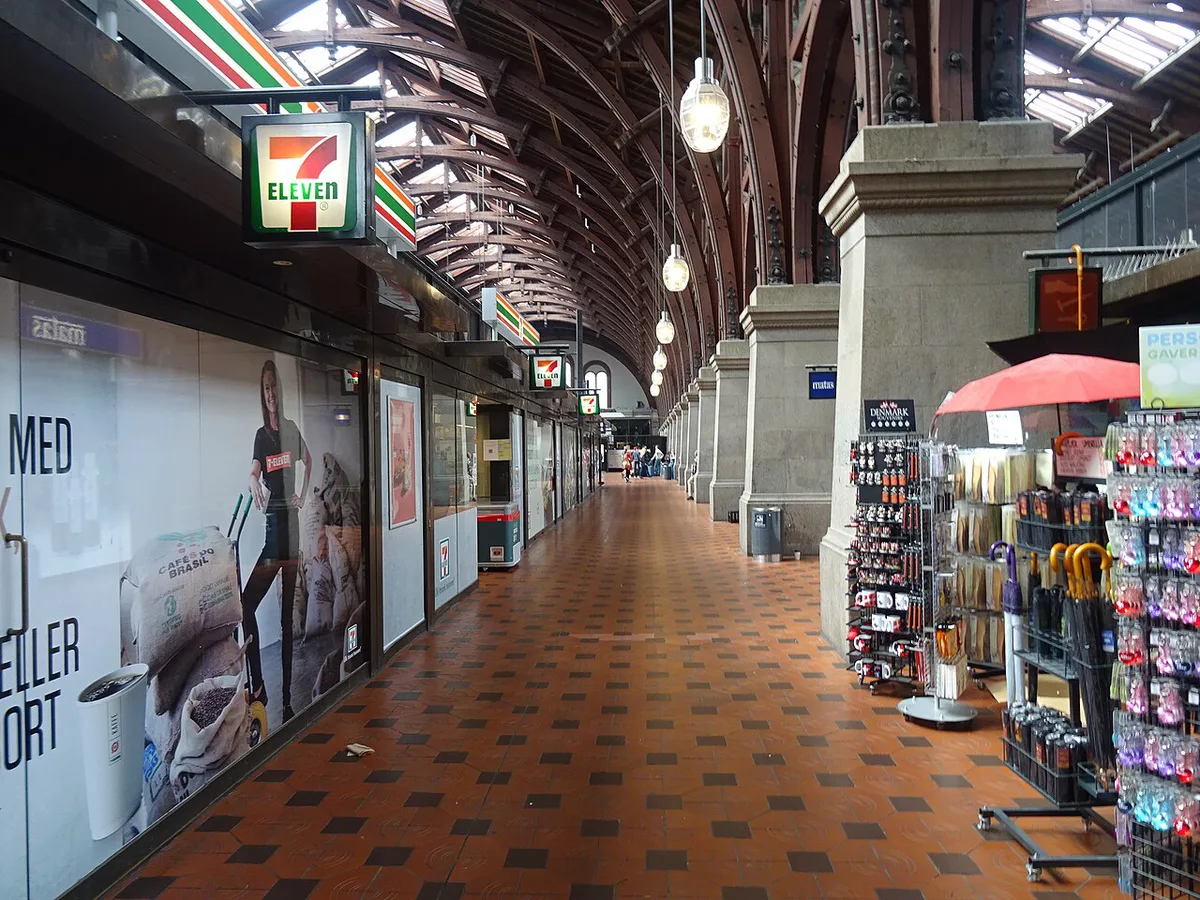
A 7-Eleven in the hall opens 05:00 to 01:00 on weekdays and round the clock at weekends. It suits a coffee before an early train. For a real meal, Tivoli Food Hall opens 11:00 to 22:00 daily, and you can walk in from the street without a Tivoli ticket. Toilets cost 5 DKK, and the accessible toilet is included. For help boarding, book DSB's Handicapservice at least 12 hours before departure. Allow 24 hours for travel to or from a Swedish Øresund station. Booking is through dsb.dk.
The Rebuild Until 2028: What Changes
Modernisation of the main hall began in April 2026 and is due to finish in 2028. DSB is replacing the shop pavilions and moving ticket sales. Trains keep running throughout. Hoardings and desks move as work proceeds, so follow signs rather than a saved map. Check DSB's station page for current opening times.
Rail notes for your next trip
Optional updates when our rail guides change.
Related guides
More guides
Picked from the same area