
Last updated November 2026: the Vienna to Prague train runs direct with no change and takes roughly 4 hours. ÖBB Railjet and RegioJet are the main operators, and České dráhy (ČD) also runs services on the corridor. Advance fares start around €12 to €15, so the train is the default choice for most travelers, with the bus as the only serious budget rival.
Featured image: dadobaca, CC BY-SA 2.0, via Flickr.
Vienna to Prague at a glance
Direct trains leave Wien Hauptbahnhof and arrive at Praha hlavní nádraží, with around 14 to 16 services a day. The first departure is around 05:10, and the last leaves between about 22:10 and 22:38. Prices and hours checked November 2026, but timetables change each December, so confirm your date in the live planner. Most trains take between 4 and 4.5 hours, and the fastest run is about 3 hours 56 minutes. For hub-level context on the wider network, see our guide to Austrian trains.
| Mode | Typical time | Indicative fare | Best for |
|---|---|---|---|
| Direct train | About 4 to 4.5 hours, centre to centre | From €12 to €15 in advance; typically €15 to €65 | Most travelers and first-timers |
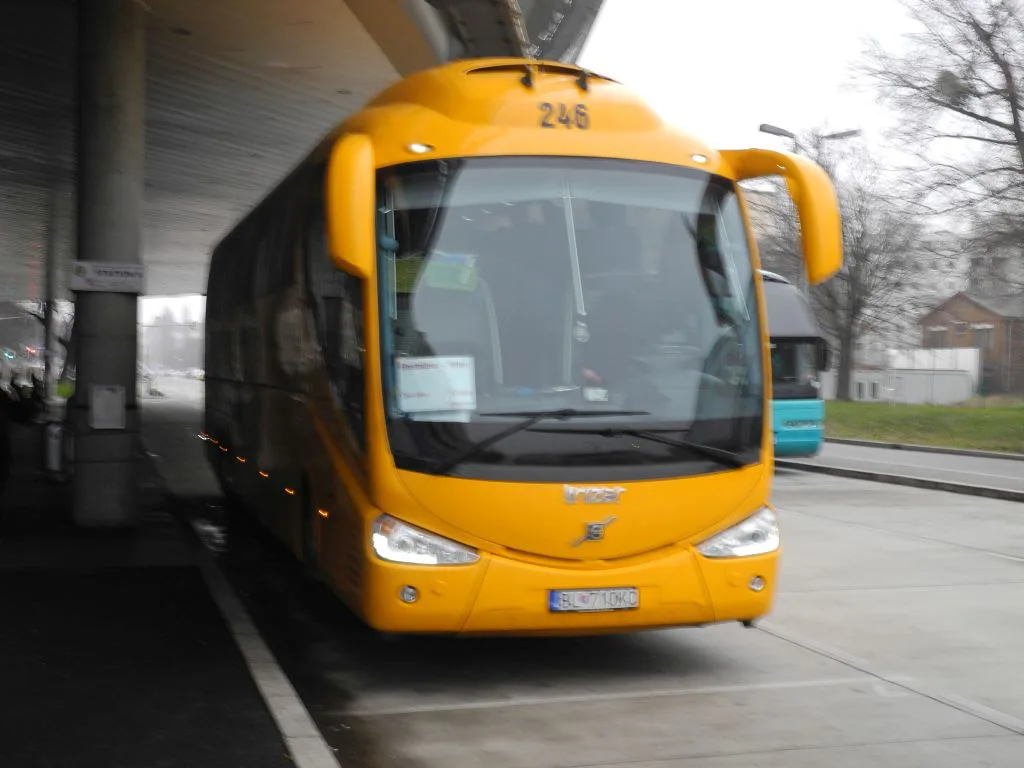
| Bus | From about 3 hours 55 minutes | From about €15; average €18 to €26 | Tight budgets and flexible timing |
| Flight | About 50 minutes in the air; 2.5 to 4 hours door to door | From about €130 | Travelers already connecting through Vienna airport |
ÖBB Railjet vs RegioJet vs ČD: which Vienna to Prague train to pick
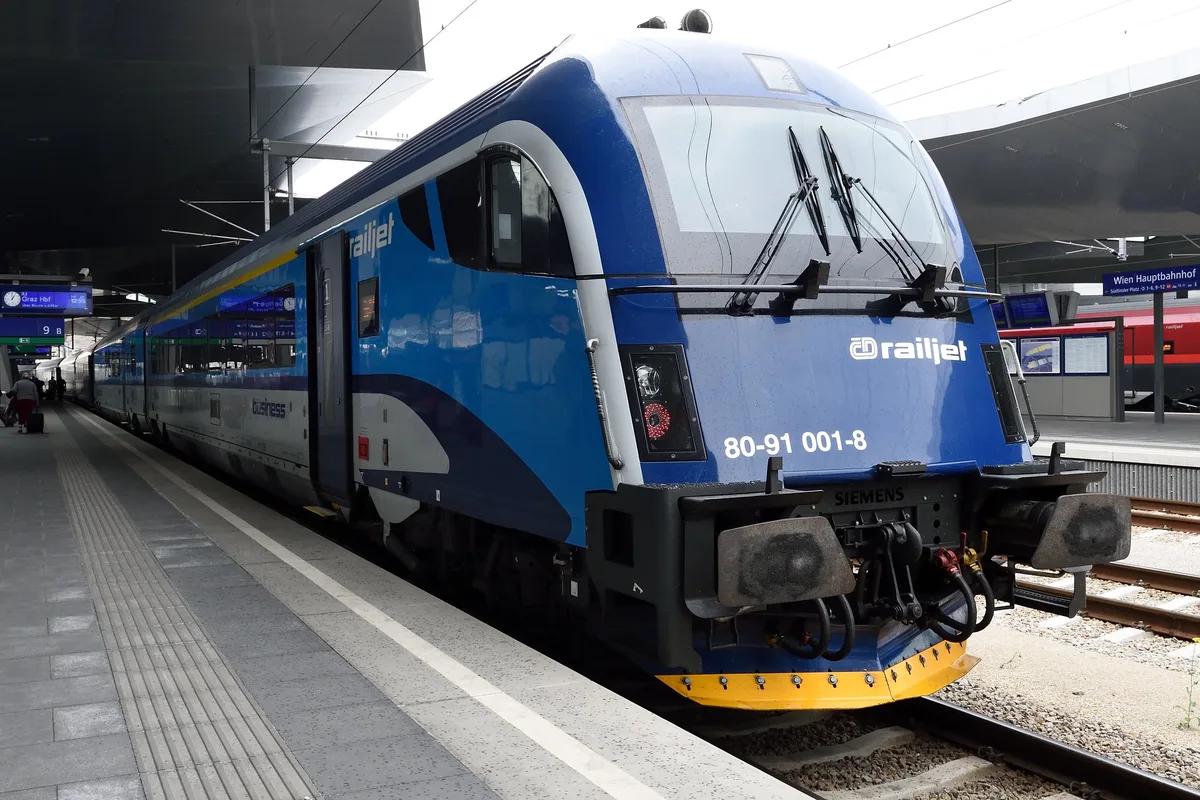
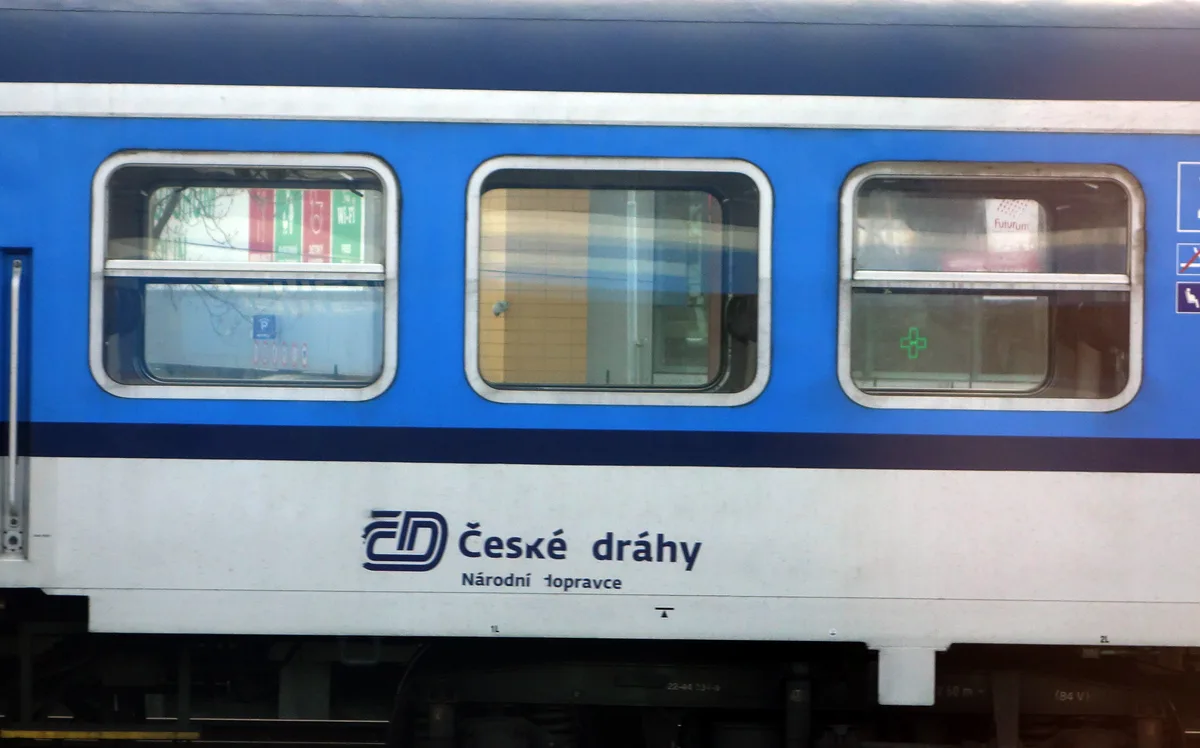
Your choice mostly comes down to price, comfort and where you buy. Railjet trains are Austria's premium intercity service, with a bistro car, power sockets and a reputation for punctuality. RegioJet is the private Czech operator, and it tends to post the lowest floor fares on this route. ČD also runs some services, and you can book them through its own site. Second class on a Railjet is comfortable for a 4-hour ride, so there is little reason to upgrade unless you want the quiet of first class. Compare live fares on the ÖBB timetable and on RegioJet's site, then decide.
| Operator | Strength | Onboard | Where to book |
|---|---|---|---|
| ÖBB Railjet | Frequent, consistent service | Bistro car and power sockets | oebb.at |
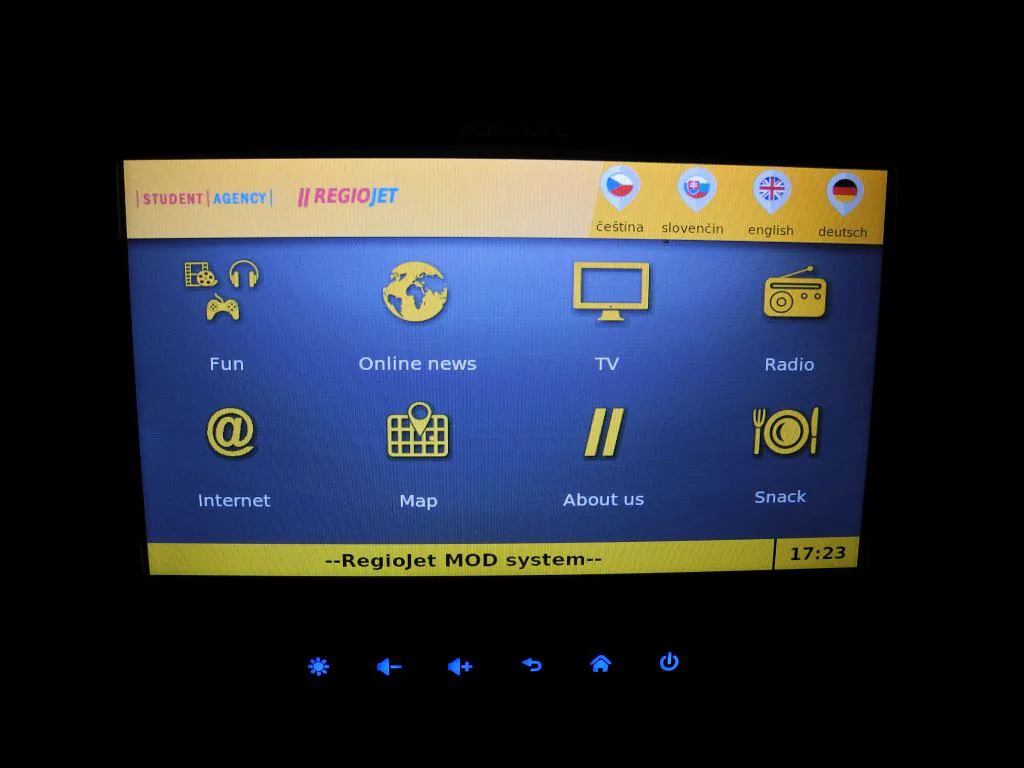
| RegioJet | Often the lowest advance fares | Free coffee in some classes | regiojet.com |
| ČD (České dráhy) | Some departures on the corridor | Standard Czech national rail service | cd.cz |
- Cheapest: RegioJet or an early-booked ÖBB saver fare.
- Easiest for first-timers: any direct train into Praha hlavní nádraží.
- Best on a pass: whichever train accepts your pass, so check the reservation rules first.
Timetable strategy: which departure to choose
Pick a departure by what you do on arrival, not by price alone. An early train around 05:10 puts you in Prague before lunch, though it means a pre-dawn start at Wien Hauptbahnhof. A midday train is calmer and works well for a hotel check-in. Evening services running until roughly 22:38 suit travelers who want a full last day in Vienna. A day trip is not a good idea, because 4 hours each way leaves little time on the ground. Check live times on the ČD timetable before you commit.
- First-day arrival: take a morning train and drop bags before noon.
- Onward connection in Prague: leave a buffer of at least 1 hour after the scheduled arrival.
- Late checkout in Vienna: take an afternoon or evening departure.
Tickets and booking strategy
Book directly with an operator when you can. Direct booking gives the widest choice of fare classes and the simplest refunds. Aggregators help you compare, but always check the final price against the operator's own site, because some add service fees at checkout. Saver fares appear 7 to 14 days ahead, and prices can more than double in the final 48 hours. Friday afternoons and Sunday evenings are the busiest. For Austrian purchases, our ÖBB ticket guide covers the booking steps. Reserve a flexible fare if your plans may change, since the cheapest tickets are usually the hardest to alter. On passes, the Klimaticket does not cover this international leg, so budget for a separate ticket. On an Interrail or Eurail pass, check each train's reservation rules, because advance point-to-point tickets are usually cheaper than pass reservations on this corridor.
- Booking from an aggregator without checking the final price.
- Assuming every bus leaves from the main station; some depart from Vienna's Erdberg bus station.
- Buying a non-refundable fare for a tight itinerary.
- Arriving at Hauptbahnhof with no time buffer.
- Assuming a national pass covers the international leg.
Vienna departure logistics
Trains leave from Wien Hauptbahnhof, which the U1 metro line serves. The station has luggage storage, cafés and a supermarket, so you can stock up before boarding. Arrive at least 20 to 30 minutes early, and check the platform on the departure board. Our Vienna Hauptbahnhof guide maps the concourse and facilities. If you arrive from another city, leave extra time to cross the station. Some services may use other stations, so check your ticket for the departure point.
- Metro: U1 to Hauptbahnhof.
- Waiting: cafés and the supermarket inside the station.
- Luggage: storage available if you arrive early.
Onboard and border: what to expect
Reserve a seat when the fare allows it, and choose a quiet-zone seat if you want to work or rest. Pick a window seat for the Czech countryside, which is a pleasant part of the ride. Luggage racks sit at the end of each carriage, so keep valuables with you. Railjet has power sockets and a bistro car. The border between Austria and Czechia is no longer a hard stop for EU and Schengen travelers. Staff may still check tickets and ID on some services. Non-EU travelers should carry a passport for the whole journey. Czechia uses the koruna (CZK), not the euro, so withdraw a small amount on arrival. Check your roaming plan before you cross, because mobile rates differ outside the EU bundle.
Arriving in Prague
Praha hlavní nádraží is the main station and sits on Prague metro Line C. From the platform you can reach the city centre by metro within minutes, so most travelers skip a taxi. Buy a transit ticket at the station machines or on the transport app before you ride. Taxis queue outside, but metro or tram is cheaper. Keep an eye on your bags in the concourse, which gets crowded at peak hours. Check the Prague public transport site for current ticket prices.
Train vs bus vs flight: the honest trade-offs
The train wins on comfort and convenience for most travelers. Fast buses run about 3 hours 55 minutes, which matches the quickest trains. Fares start around €15 and average €18 to €26. Traffic around Prague can slow a coach, so a bus is less predictable than a train. Flying takes about 50 minutes in the air. Add airport transfers, security and baggage, and door to door lands between 2.5 and 4 hours, from about €130. Vienna International Airport sits roughly 18 to 20 km from the city centre, so the transfer eats the time you save. Fly only if you are already connecting through the airport.
If something goes wrong
Delays happen on any international route. If your train is late or cancelled, ask staff or the operator's app for the next departure, and keep your ticket. EU passenger rights set refund and compensation rules for delays, and each operator publishes its own conditions. Flexible fares make changes easier, while saver fares often limit them. If a platform changes, follow the departure board at Wien Hauptbahnhof. Check the operator's conditions on its official site before you claim.
Combining Vienna to Prague with other trips
A two-city trip works even on a long weekend. If you are continuing east, take the Vienna to Budapest Train: Times, Tickets & Tips afterwards. For a short hop, the Vienna to Bratislava by Train: Stations, Times, Tickets takes about 1 hour. Heading north to Poland, see the Vienna to Krakow Train: Time, Tickets & Reservations for a longer route.
Frequently Asked Questions
How to buy a train ticket from Prague to Vienna?
Book on the operator's own site: cd.cz, regiojet.com or oebb.at. Compare the final price before you pay, and buy 7 to 14 days ahead for the cheapest fares.
Is Prague to Vienna train scenic?
Yes, reasonably. The route passes through Czech countryside, especially after you cross the border. A window seat is the best choice.
How far is it between Prague and Vienna?
The straight-line distance is roughly 250 to 300 km. The rail route is somewhat longer, and direct trains take about 4 hours.
Rail notes for your next trip
Optional updates when our rail guides change.
Related guides

More guides
Picked from the same area